Peadar Ó Conaill – Peter O’Connell
On the 13th September 2026 we celebrated the Bi-Centenary of Peter O’Connell. What a wonderful day it was of catch ups, storytelling and sharing of history. With visitors from Galway, Dublin, Wexford, Limerick, Cork, Meath, Kerry, London and even Bolivia we had a brilliant day both in the hall and at the grave, sharing Peter’s history.
These things don’t happen without a lot of work and help so we’d like to thank everyone who had any part in making today what it was. To our readers, the local schools, the local fás members, the tea committee, Pat McMahon our drone man, the parish council, the locals who shared their knowledge and everyone who came and supported us on the day, thank you so much, it would have been nothing without you.
Also a special thanks to Michael Talty, who joined us today, and the Clare libraries/Clare County Council who financially supported us in making this day come to pass.
For those of you that missed the day you can enjoy a brief history of Peter below, with a recording of the day and pictures shared at the bottom of the page.
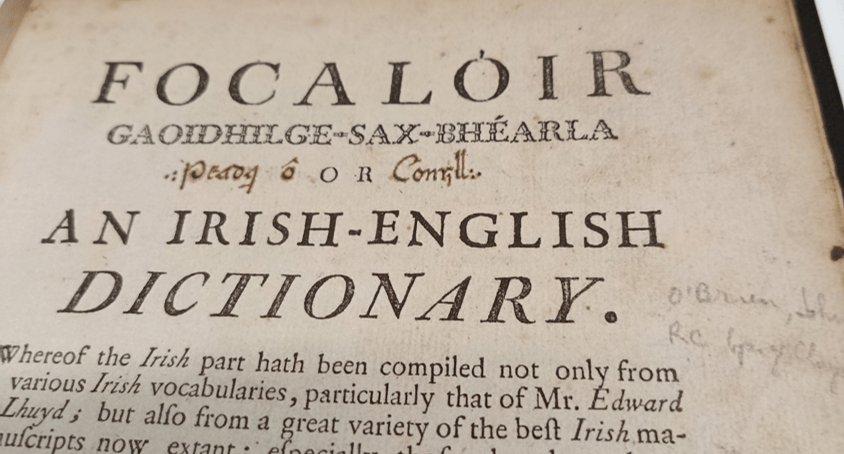
The life of Peter O’Connell, a lexicographer, from the parish of Killimer, is the story of a man who came from humble beginnings and turbulent times to create one of the most detailed Irish/English dictionaries of its time. A man who started his education as a young pupil in a hedge school, to work in Universities, and then to end up back where he came from, this time as a school teacher, at his school in Moyne, Kilrush. An account of his early years are limited, as we rely on a letter that was written by Pat Cleary of Ballymacrinan to Stephen Hanrahan of Monvana, Kilrush in 1948. Every great person, when their story is passed down, is part reality and part myth.
Even starting out about the life of Peter, there is a dispute about the year of his birth. Most people say its 1775, but it has also been posted as 1746. We will stay with what was written on his headstone, in Burrane graveyard, 1746. Peter O’Connell whose life as a lexicographer and a transcripter of manuscripts was in itself an epic story, but since the time he was born, until the time he died, he lived through a very turbulent time in Irish history. He was born into a countryside that was reeling from the scars of the Famine of 1740-41, so poverty was rife through out Ireland.
He also saw life in Ireland during the 1798 rebellion, where thousands of Irish lost their lives fighting for freedom. It was a land he was born into, that was tortured by the Penal Laws. He would have gone to a Mass Rock, and was also a hedge school attendee as a pupil. He saw the Act of Union, 1801, which must have been very sad for a man that was so proud of his Irish culture, history and language.
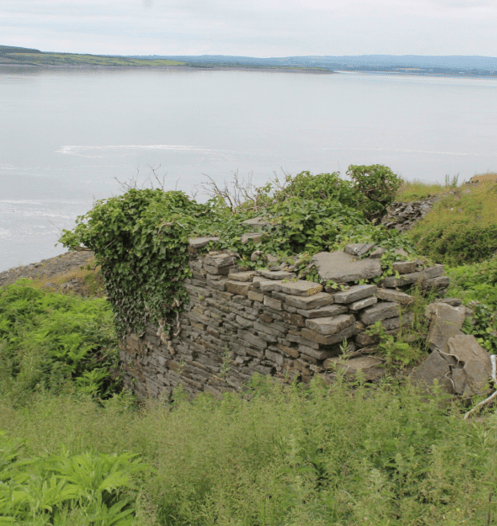
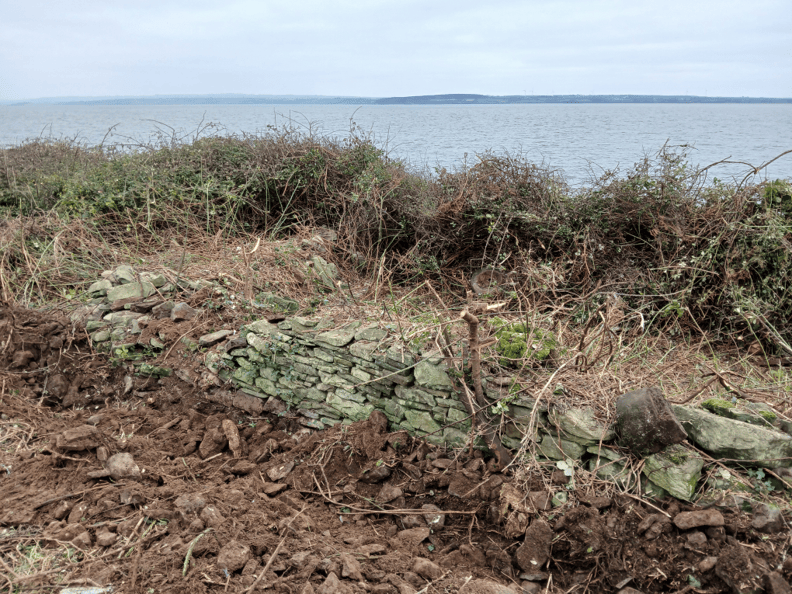
Peter came from humble beginnings. His people had originally come across from
Valencia, Co. Kerry, where they worked in the flagstone and slate quarries. They moved to Killimer and worked in the Moneypoint
quarries. The photo above shows the “lane houses” of the Moneypoint families including
the O’Connell family home.
He was educated in the Burrane hedge school and would have continued his studies with Eoghan Mór Ó Comhraí, Doonaha, who’s homestead was regarded as a mini university. Peter was among a number of scholars who were regular visitors to the O’Curry homestead, with notable scholars, John Lloyd, John Hoare, John Hartney, Jeremiah Mulqueen and several other poets and scholars of Clare and other parts of Munster. Two of Eoghan Mór sons, Eugene and Malachy would in time become lifelong friends of Peter. Were it not for Eugene O’Curry, we may not have heard much, if anything of the detailed life of Peter O’Connell and his dictionary.
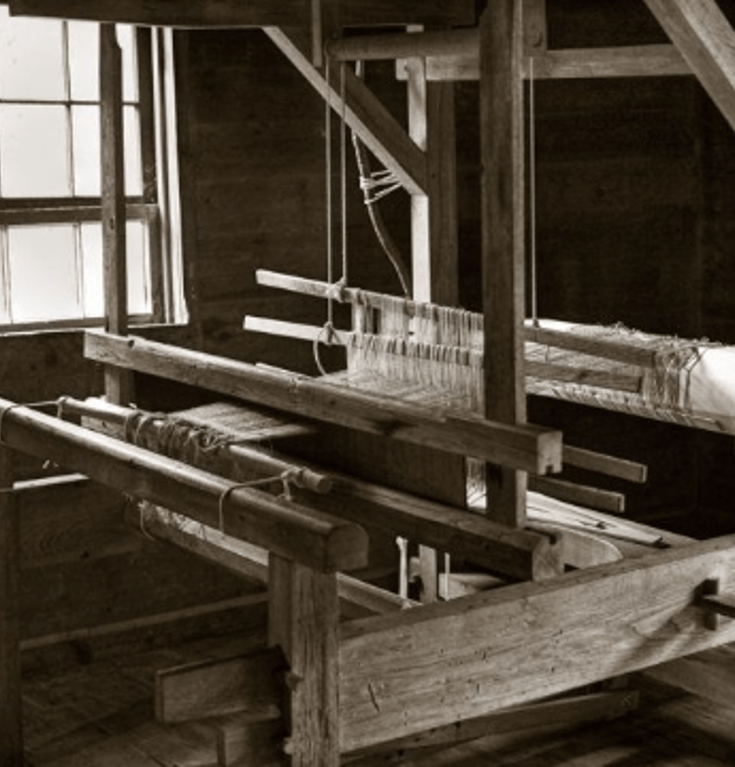
Peter was highly intelligent, able to speak in numerous languages, teach math and was also a master weaver. He perfected this skill in Tullabrack between 1785 and 1787 and while working up there is said to have opened his first school in Gower.
After finishing there, he travelled to Dublin, where he met fellow Clare man, Theophilius Flannagan (1762-1814) from Tulla, for whom he transcribed ancient Irish manuscripts in the Royal Irish Academy (R.I.A.). The R.I.A. was just founded in 1785 and its purposed was to promote scholarships, the study of science, literature and antiquities. It encouraged research, publishing scholarly papers and building a library and museum, but it did not grant degrees.
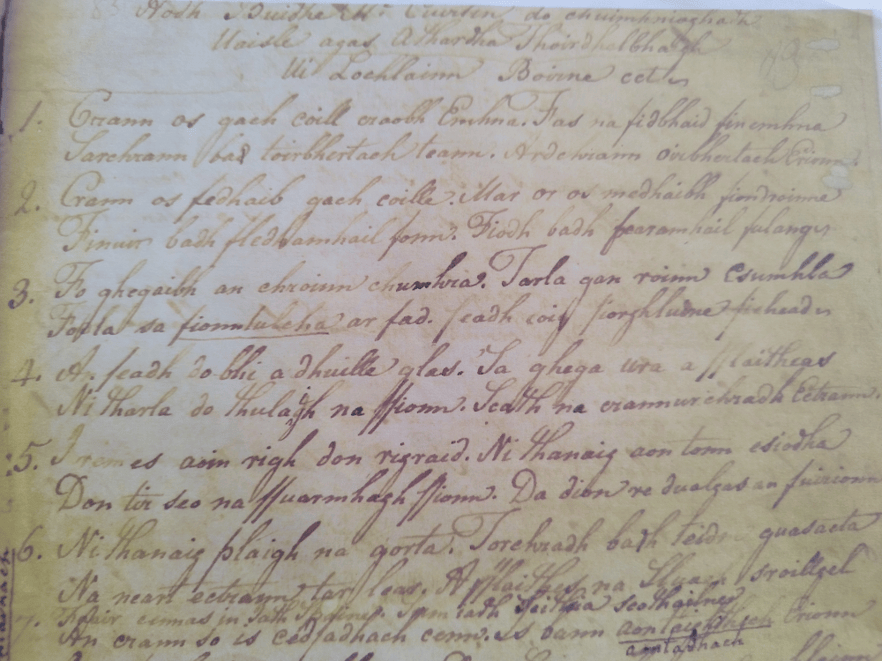
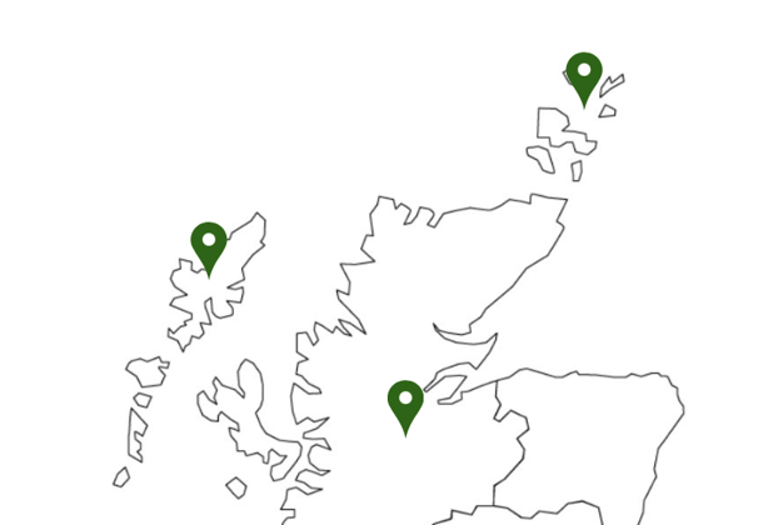
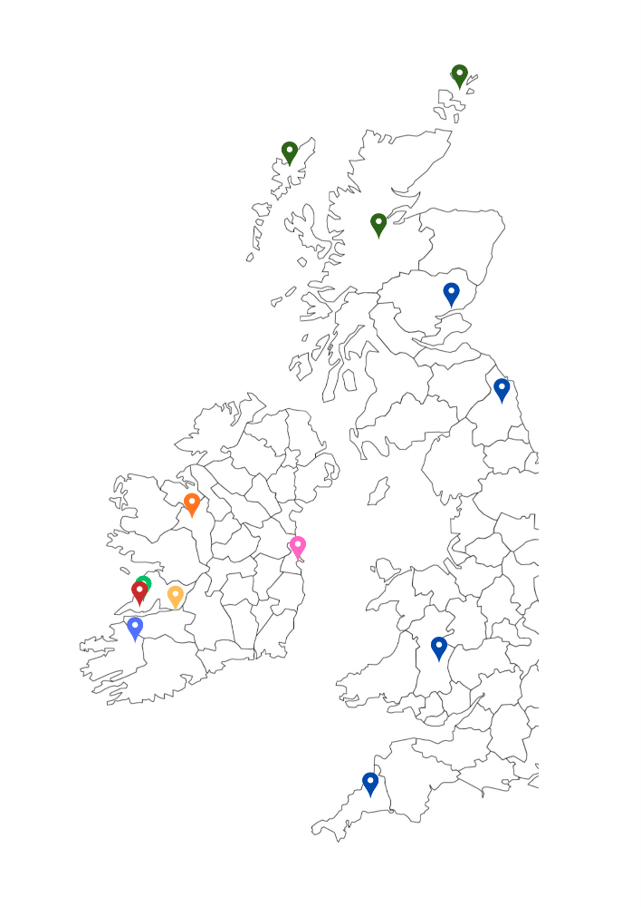
At the same time he travelled through out Ireland in search of old Irish manuscripts and texts, which was his passion, from which he would gain important and essential knowledge for his future Irish/English dictionary. In 1787, he decided that he would have to travel to places that still held the old forms of the Celtic language, which was still in everyday use, in search of words that had become lost in Gaeilge. He travelled to Scotland to the Hebrides, Orkney and the Highlands. Some of the old Celtic words had already disappeared from the Irish language, but Peter knew that the Scottish Gaelic, Welsh, Cornish and Manx would have kept most of the words in their language.
For this trip he had the McDonnell family, from Kilkee, backing him financially, as they were known to be patrons of the Irish scholars and were also friends of the O’ Curry family in Doonaha. The MacDonnell family were of Hebridean origin, which would have accounted for Peter visiting there first.
After returning from his first visit to Scotland, he lived for a short time in County Kerry. In 1785, he established a mathematical school in a church in Brosna, where he taught the local children.
Returning to Dublin in 1790, he spent much time in the R.I.A., discussing the Brehon Laws, but was unable to secure a position in the academy. He then studied in Trinity College, Dublin in 1791, and transcribed “Quatrains” in Irish, on Irish families, a tract on Irish orthography, (this manuscript is now held in Cambridge University). Even though he was able to study and work in T.C.D. as Catholics were admitted since 1793, he was unable to attain a degree due to The Penal Laws.
On his return visit to Scotland, he visited Culross, in Scotland. His visit to Culross was significant as the Chapel of St Mungo ((1503) (Patron Saint of Glasgow), was well known as a place where ancient manuscripts and books were transcribed and translated by the monks. In 2025, the Killimer Local History Group were happy to have visited Culross, and had been given a great historical tour by local historians, Ronnie Collins and David Guild.
Peter then travelled south to Newcastle, Wales, Cornwall and more than likely to the Isle of Man, exploring and flittering through manuscripts and books, which would add to his dictionary. We know for a fact that Peter could speak, Irish, English, Latin, Greek and Hebrew fluently and was also a teacher of Maths. Some of the books that he kept would suggest that he had a great knowledge of or could even speak Welsh, Cornish and Manx.
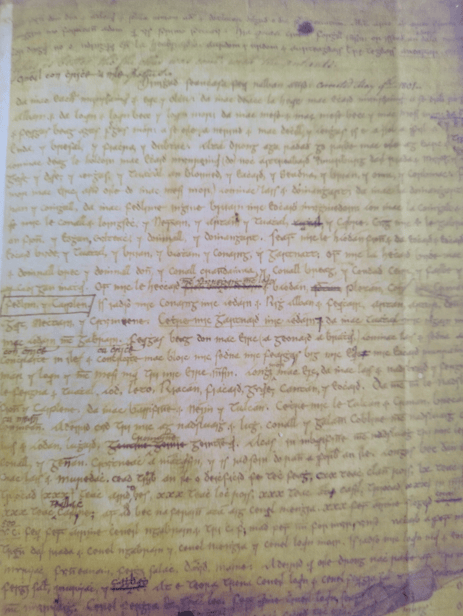
During this time he also would have worked translating and transcribing for Charles O’ Connor of Ballinagare, Co. Roscommon, who had a collection of ancient Irish manuscripts. He had some of the rarest manuscripts and books of Irish history at the time.
Dr Simon O’ Riordan, was president of the Limerick society. This society was established to promote the revival of ancient Irish literature. The treasurer of this society was Mr William Howley, who in August 1813, invited subscriptions of one guinea for the publication of a dictionary on the Irish language by Peter O’Connell. Eugene O’Curry stated that he would have also contributed a good many local words and phrases to Peters dicitonary and that almost all the Irish words and passages written in Irish characters were written by his brother Malachy O’Curry, the pupil and friend of Peter O’Connell. But for Dr Simon O’ Reardon, the chances are that Peter would never have realised his lifes ambition as he provided food and shelter to Peter in his home from 1812 to 1819.In 1819, when the dictionary was ready for printing, Peter had a disagreement with Dr Simon and left Limerick. The main reason for this fall out was that Dr Simon O’Reardon wanted his name printed with Peter O’Connell as co-author of the dictionary.
Peter took his manuscripts with him and returned to his native parish, spending the last seven years of his life with his stepbrother Patrick. He opened a school in Moyne, near his native Carradotia and he taught here for the last seven years of his life. (left)
In 1819, he offered his grave, so that the Colleen Bán could be buried, after she was brutally murdered by Stephen Sullivan and John Scanlon, on the river Shannon. In 1826 he died himself and was buried beside her.
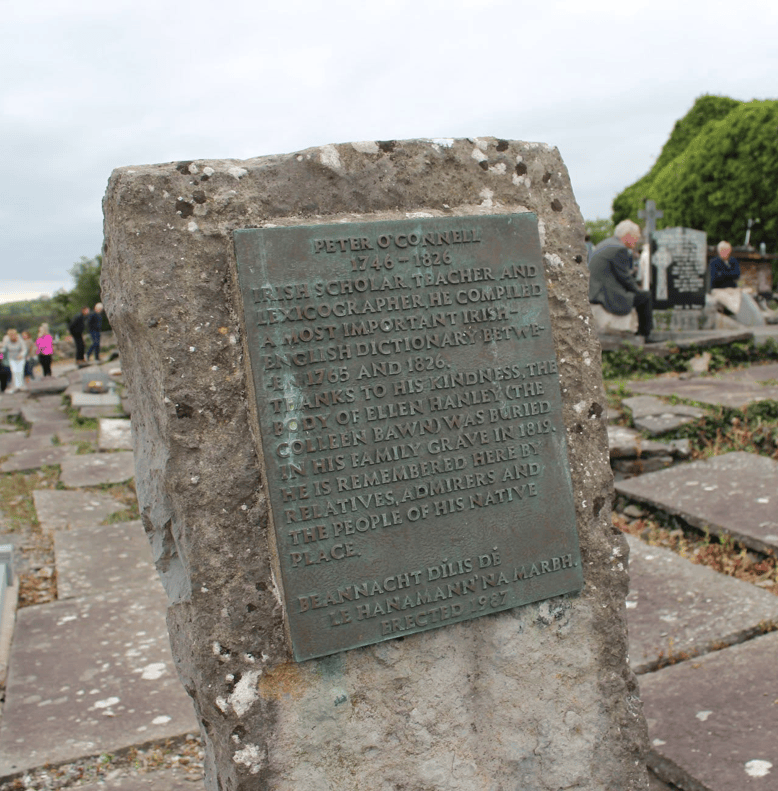
This is an exact copy of the original inscription on Peters tombstone.
‘ This tombstone was erected by Anthony O’Connell in memory Of his uncle Peter O’Connell who was a professor of Languages and teacher of philosophy. He lived respected and died regretted by his numerous, family and friends on the 24th of February 1826 aged 71 years.
May his soul Rest in Peace. Amen.’
Apart from the dictionary, Peter copied and compiled a number of ancient Irish manuscripts, including a transcript of Cormacs glossary, a history of the Wars of Thomons, compiled by John McGrath in 1459 and two works jointly with Clare men, Theopilitius Flanagan, the first secretary of the Gaelic Society. Both works are of great interest and are called Egerton 113 and 125, which can be found in The British Library. In the Maynooth Library, two manuscripts by Peter are known as C99 and C111. In Trinity College Library, there are at least two manuscripts, four in the Royal Irish Academy and five in the British Museum.
While we have no picture of Peter, we have some idea of his physical appearance thanks to Eugene O`Curry. “He was about 6ft 2inches in height, strait, venerable and dignified in his old age”. Teigh MacMahon tells us that he was “a great tall, swarthy man, large limbed, black hair, dark eyed and strongly built”.
What happened to the dictionary is answered by Eugene O’Curry in his memorandum;
“When Peter O’ Connell died in 1826, leaving his completed dictionary unpublished despite various efforts, his nephew Anthony O’Connell took the manuscripts (C330 folio) to Tralee to show it to Daniel O’Connell in the hope that he would use his influence to have it published. O’Connell, although himself an Irish speaker, had nothing but distain for the work, and dismissed his namesake, telling him that his uncle was an old fool to have spent so much of his life on so useless a work. Whereupon Anthony pledged the manuscript for 10 shillings. I was then living in Limerick, and when I heard of the fate of the manuscript, I went down to Carne and procured from Anthony O’ Connell the ticket; sent it down to Tralee by the guard of Limerick mail coach and had the manuscript brought up to me forthwith. I wrote to Anthony O’Connell, proposing to help him dispose of the manuscript to an Irish Institution, but with me for the purchase of the manuscript, and I gave it up to them on the understanding that it was not to pass out of Ireland. Notwithstanding that, the dictionary was among a collection of manuscripts which Hardiman shortly afterwards sold to the British Museum”.
Anthony O’Connell had sold some more of Peter O’Connell’s books, that were in his private collection, for seven pounds to O’Gorman Mahon. Anthony eventually set off for America with the proceeds from the books.
We have spoken of Eugene O’Curry and Teague McMahon and John O’Donovan about the great insight they gave us into Peter O`Connell’s life. Dermot F Gleeson, writer and historian, born in Nenagh in 1896 was another source of ours to ensure what we have written is accurate and within the correct timeline. We must also give great thanks to Brother Sean McNamara who devoted so much time and effort to reviving Peter O’Connell’s life to our generation. Brother Sean hounded Universities and Museums, both in Ireland and England to get copies of Peter’s manuscripts and works. R.I.P. Brother Sean McNamara and thanks from the Killimer Local History Group. (Died 17th June 2023)
Below is a video of our celebrations on the day
Above is a link to the photos from the day.

