Rusheen Point
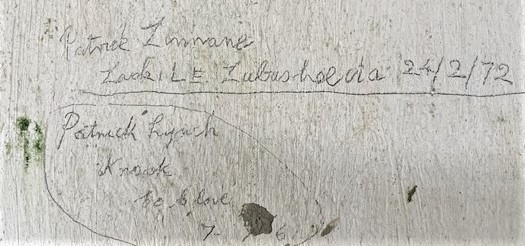
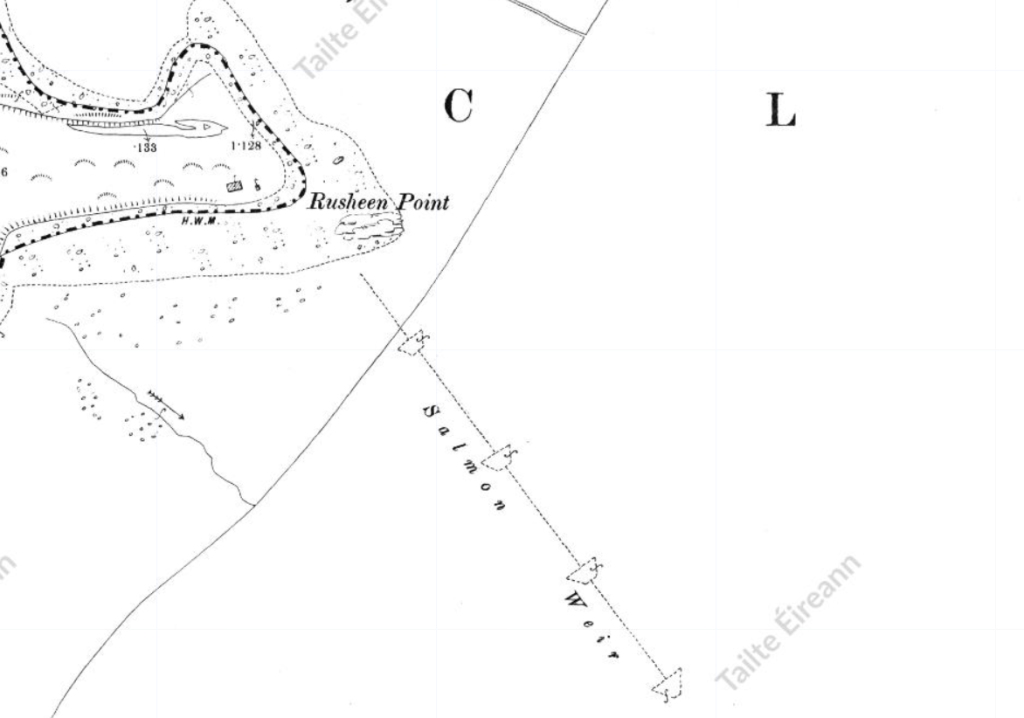
You are now at the furthest eastern point of the parish by the shoreline. Looking out to the shore you can see the remains of an old fishing house. This is Rusheen Point and this was the original point of the Rusheen Weir.
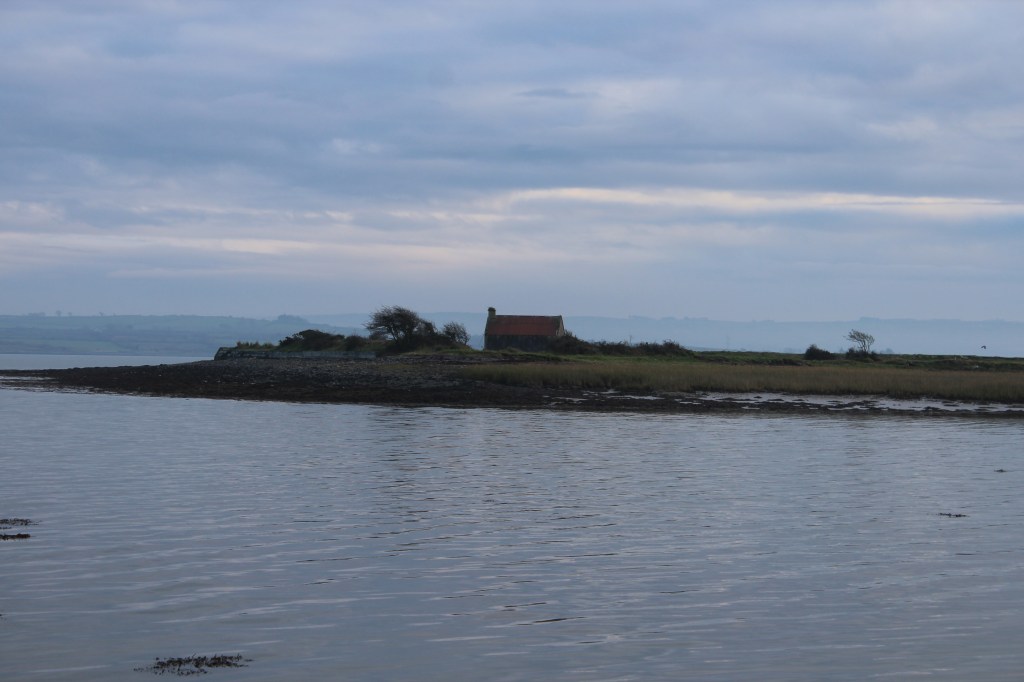
This is on private property please do not try to go out to this point. Enjoy our drone footage below.
Landlords, who employed a manager to oversee the fishing operations, owned those weirs. If a private individual could afford £10 he could rent a weir from him. The McAuliffe family, Knock purchased many of the weirs on the north bank of the Shannon from the landlord’s estate. Local people were then employed to fish the weirs and do all the work in maintaining the weir in good condition. It was also vitally important that the salmon captured were kept in perfect condition as those fish ended up in fish markets in Dublin and England. One of the local managers was a Mr McKibban. He is reputed to have been one of the better managers who got on very well with the local people.
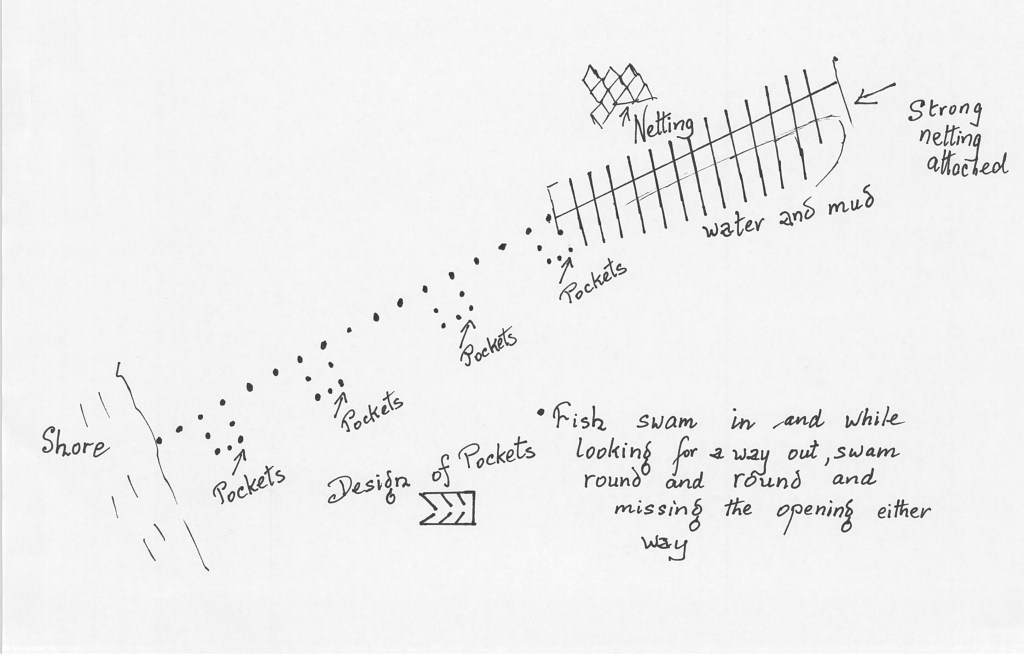
When the E.S.B. took control of the river in the 1930s only two weirs were operational. These were Rusheen and Loch na Beithíg. Rusheen Weir is over 100 years old and was closed in 1976 due to modern trawlers equipped with monofilament nets that stretched for miles at the mouth of the River Shannon and caught most of the salmon.
Many local men fished the weir such as Paddy Rochford, Jim Kelly, Joe Kelly and Oliver Lynch. Paddy O’Sullivan (grandfather of Patrick O’Sullivan) used to take the fish into the railway station for the 7.30 train from Kilrush. There were other drivers also who transported the fish. The two last fishermen to fish the weir were James Moran and Pakie Lynch. They fished the weir at different times, depending on the tides.
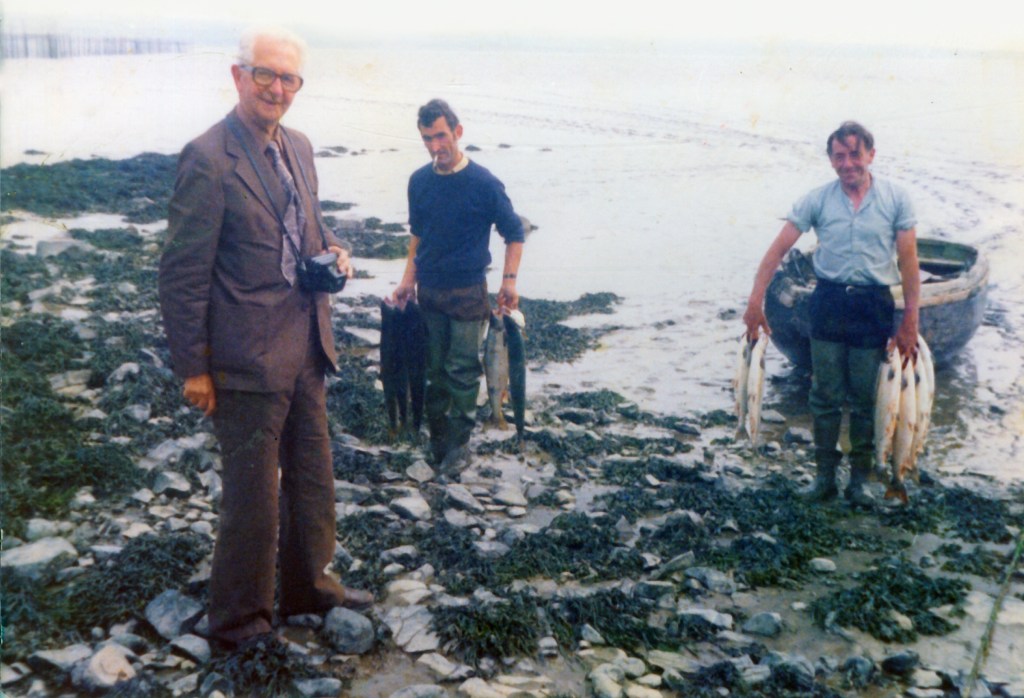
In earlier days, the fish were taken to Kilrush train station and transported to Dublin and English fish markets. The boats they used to fish the weir were flat bottomed and called cots. Oars were used to propel the boat. If you visit Rusheen Point today you can see the little house where the fishermen stayed overnight when awaiting the tides to fish; also visible are some of the poles in the river which were used for holding the nets. The remains of a concrete-like pot which was used for putting tar on the nets is still visible. At Rusheen a white flag was raised at the weir to alert the launch (motor boat) in Ballylongford that fish were caught and ready for collection.