Moneypoint Quarries
This is on private property so please do not try to find it.
To the south of where you stand, slightly to the left of Moneypoint ESB station is where the Moneypoint quarries lie.
Mary O’Grady was the proprietor of Moneypoint Quarry. She resided in Moore Street, Kilrush. She was renting Moneypoint Quarry from the Vandeleur Estate and she paid £100 per year for the privilege. There was work for about 40 families who lived in the surrounding townlands. Some of the workers lived in little stone-built huts near Moneypoint. The huts were known as the “Lane Houses”.
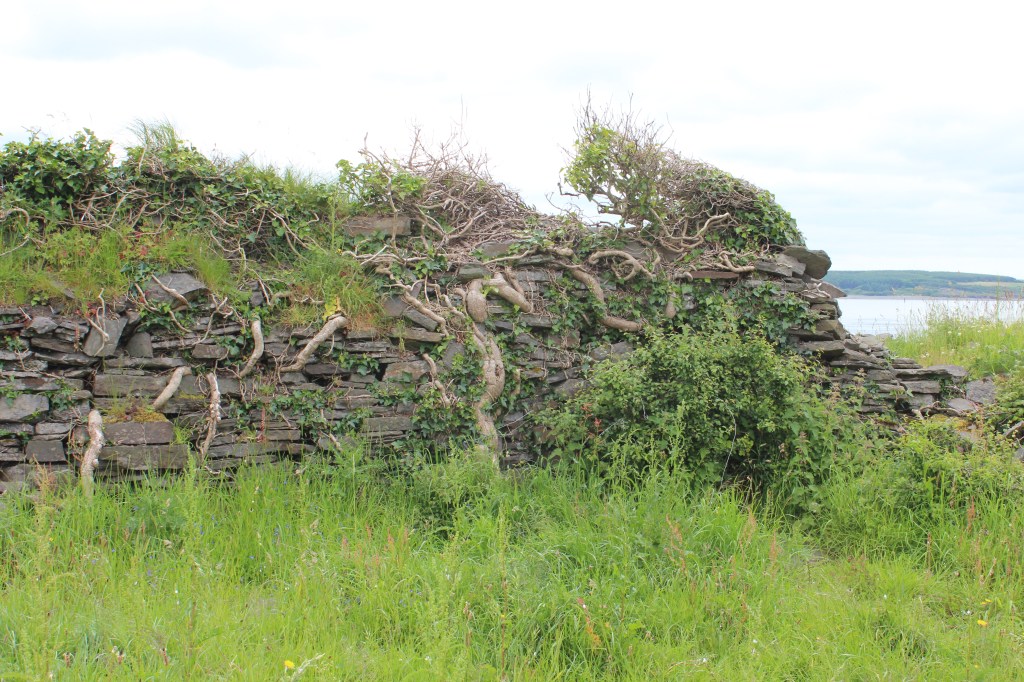
According to the 1901 census 63 peopled were living in Carrowdotia South: *10 O’Connell; 7 Chambers ; 1 Driscoll; 6 Rochford; 1 Carmody; 8 Lahiffe; 4 Cleary; 2 Frawley; 2 McAuliffe; 4 Dillon; 1 O’Brien; 1 Shaw; 1 Sheehan; 1 McElligotte; 8 Corry; 1 O’Brien; 1 Cleary; 7 O’Shea.
The O’Connell family, mentioned above, came from Valentia Island to work in the quarries. They consisted of six brothers and each of them married local girls. Their descendants are numerous in the West Clare area to the present day. The lexicographer Peter O’Connell was also descended from them and is buried in Burrane.
The workers had a hard life working a twelve-hour day, six days a week, in all kinds of weather. The pay was then 10/- (ten shillings) a week and no holidays except for a few days at Christmas. The work was strenuous and consisted of raising and dressing flags for footpaths in towns and cities. In the past it was often spoken of, how a flag was extracted and raised from the quarry in Moneypoint. The flag was lifted by a hand-operated derrick/winch with a basket attached. The quarry was excavated approximately 50 ft wide by 150 yd long. To move the flag a railway-like track was laid in its entire length and hand-pushed buggies brought the stone to the lifting point at the hand-operated winches. It was then brought to the edge of the river and loaded onto the boat that brought it to the U.K.
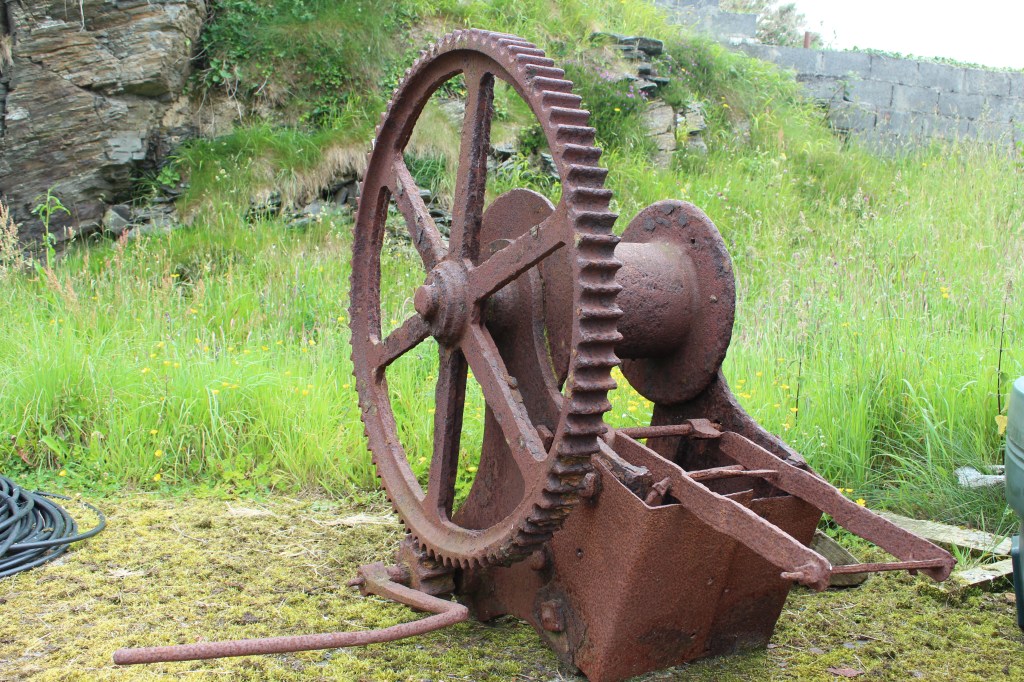
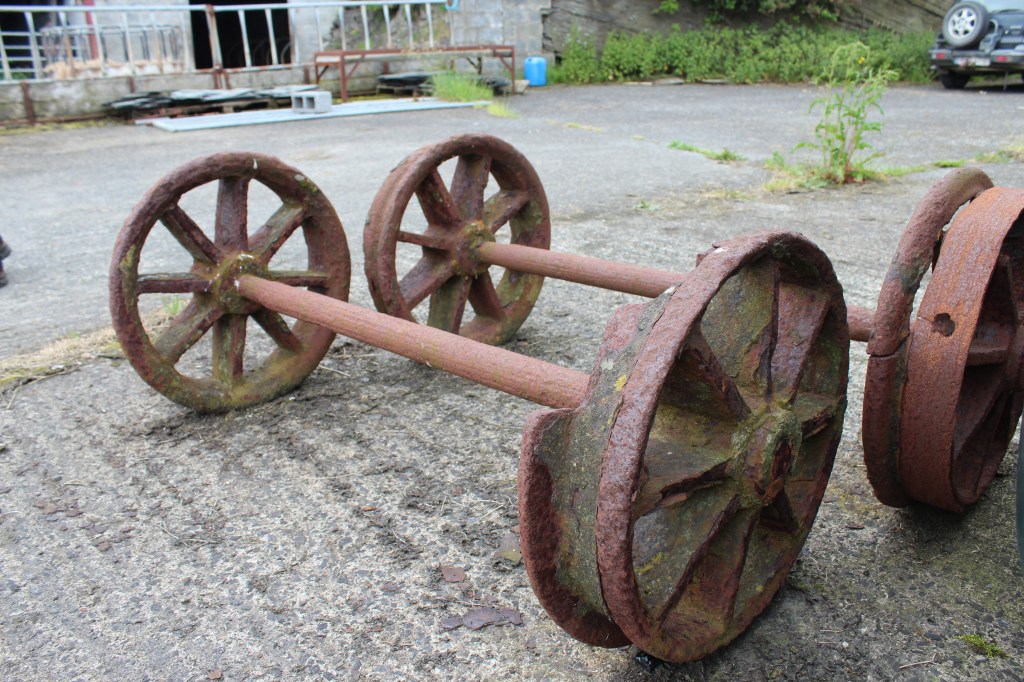
Many of the main streets of Limerick, Cork, Belfast and several nearby towns are paved with Moneypoint flags. According to the Clare Journal, Thursday, October 10th 1889, Belfast Corporation ordered 10,000 tons of flags from Moneypoint Quarry. Some flags were exported and it is said that the Moneypoint flags were used for paving footpaths in Liverpool. They were extensively used as headstones and gravestones in Burrane graveyard and surrounding burial grounds.
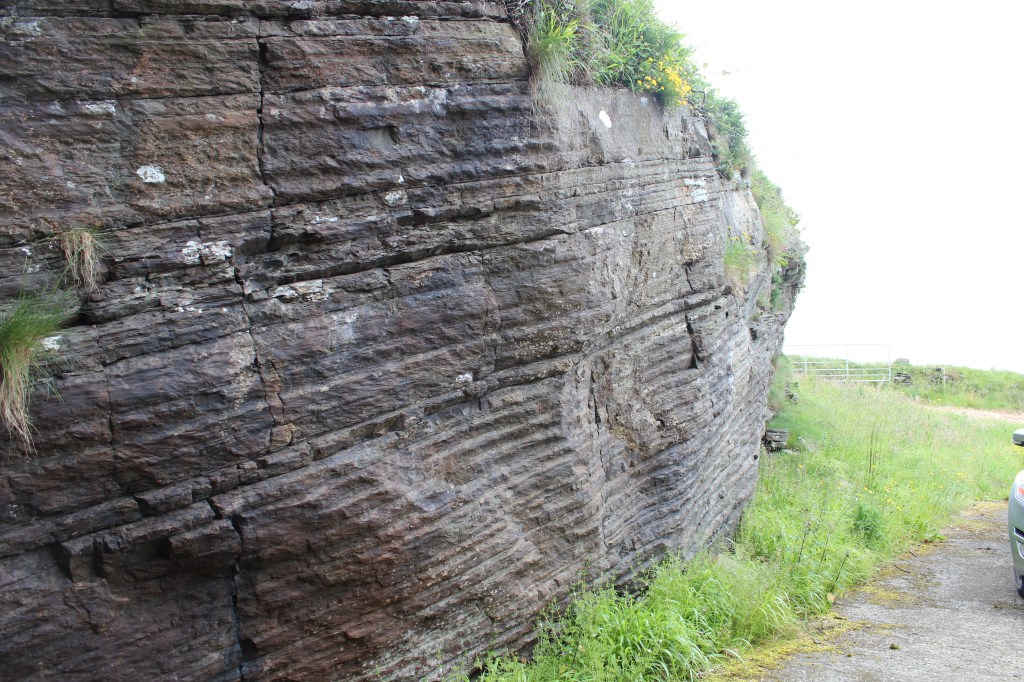
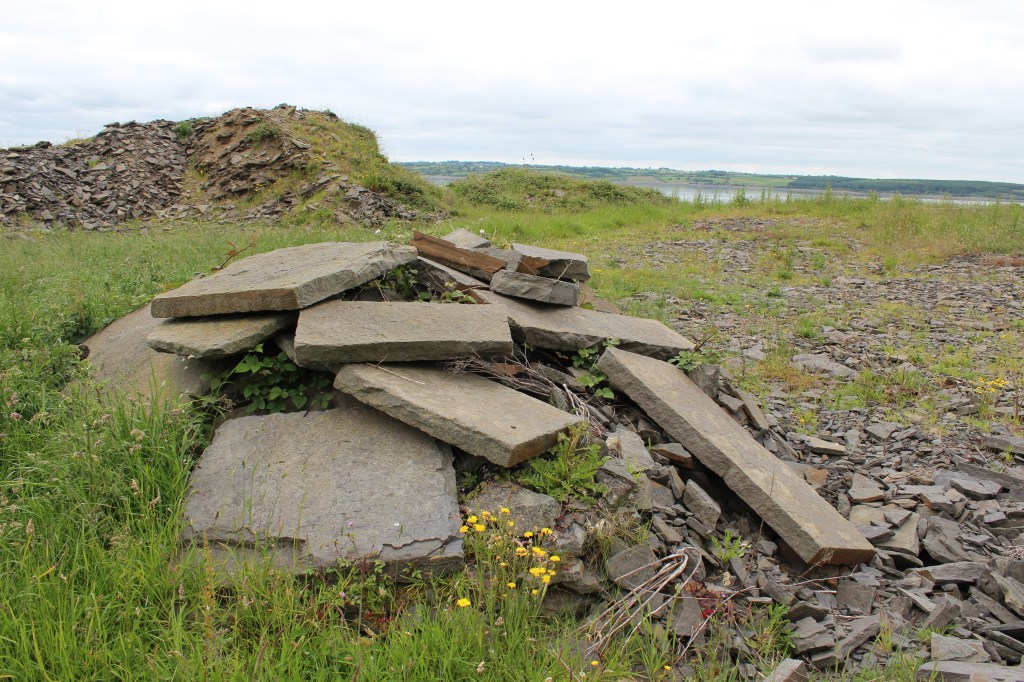
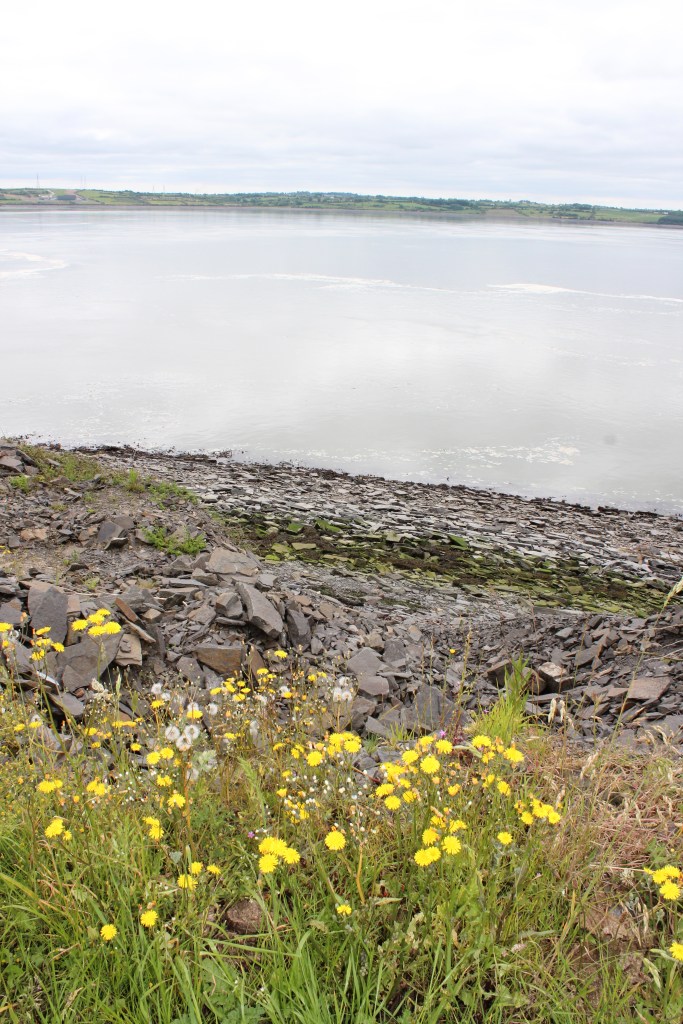
What seems to have brought the quarry to the end of its working life is when they went under sea level. Then seawater seeped through the rock and flooded the place as hand pumps couldn’t pump out the water fast enough. Miss O’Grady was also unable to pay the £100 for rent demanded and the quarry finally closed in the late 1800s. The families left Moneypoint one by one as they sought employment elsewhere.
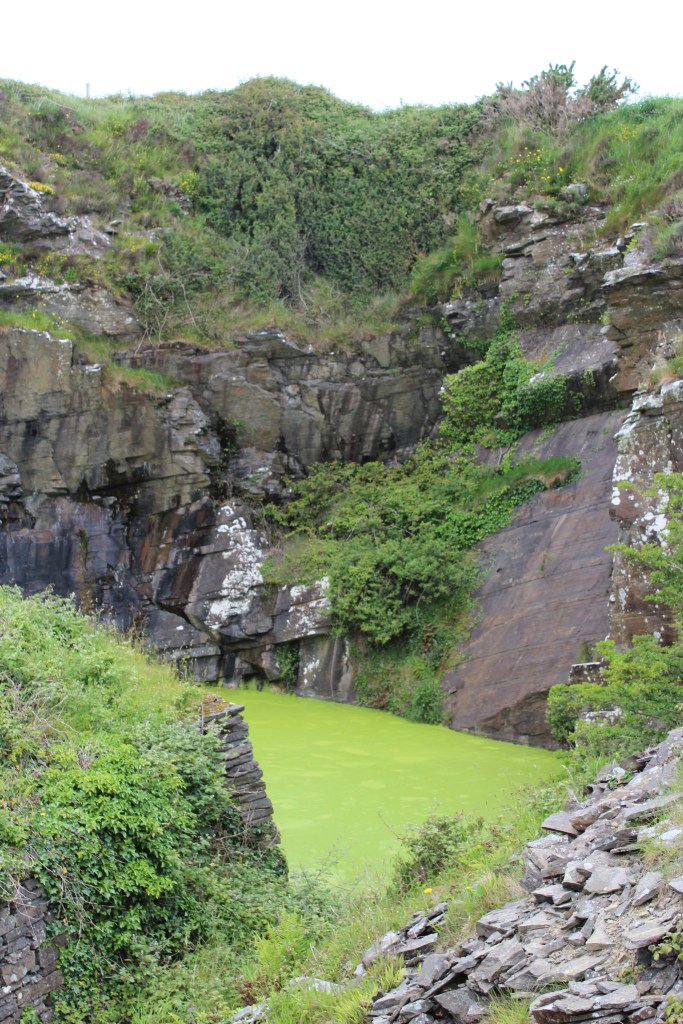
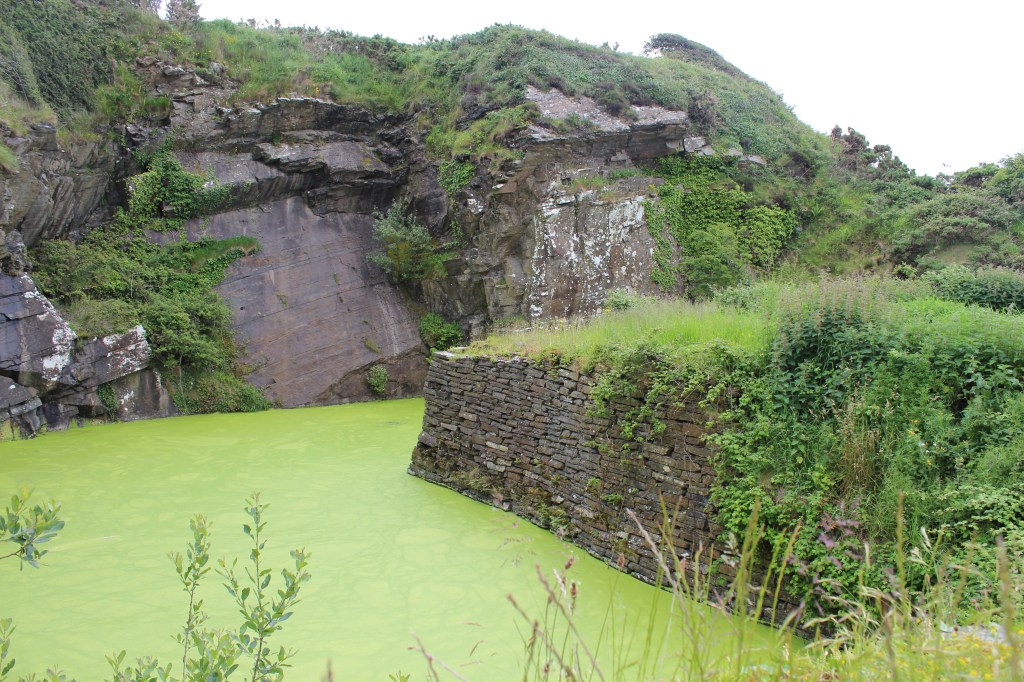
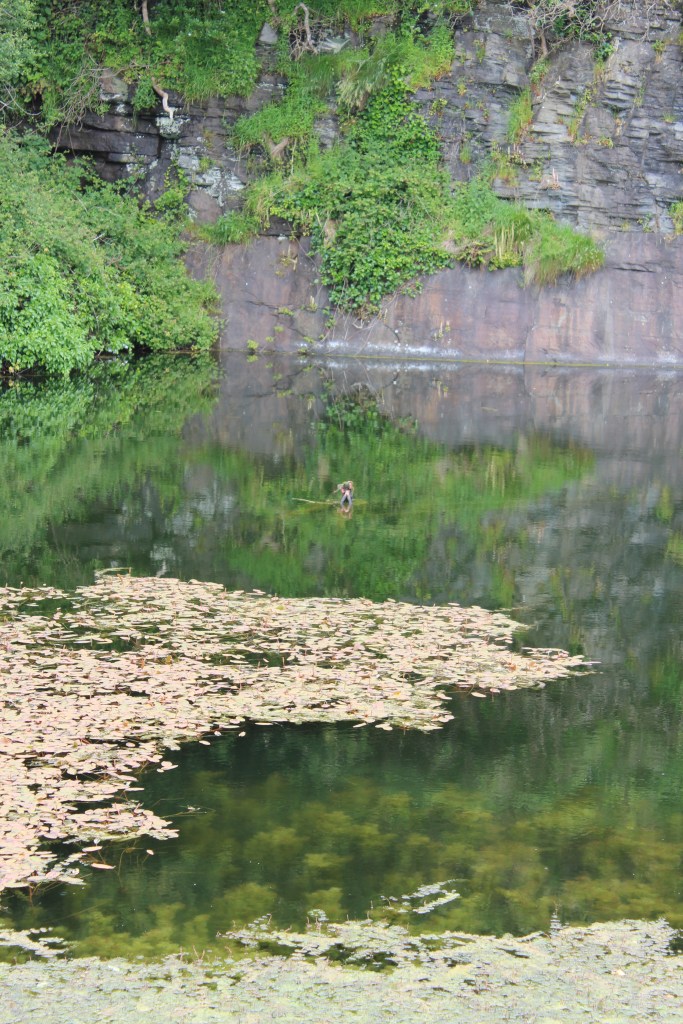
Many of the “Lane Houses” have been knocked down. The ruins of “Patch” Connell’s hut are still in a fine state of preservation. The rough ‘slip’ down which the heavy flags were slid to the waiting boat, a derrick at the bottom of one of the water-filled quarries and some crumbling rusted machinery are all that now remain of what was once a thriving industry.
In the 1990s the late Paddy Chambers, the then owner of the quarry, drained it completely. Tom Nugent recalls visiting it with Jimmy Callaghan and seeing it empty. Paddy had run a pump with a nine-inch pipe for approximately two weeks night and day to achieve this. Once the quarry was drained it was evident how the operation worked.

