The Creamery
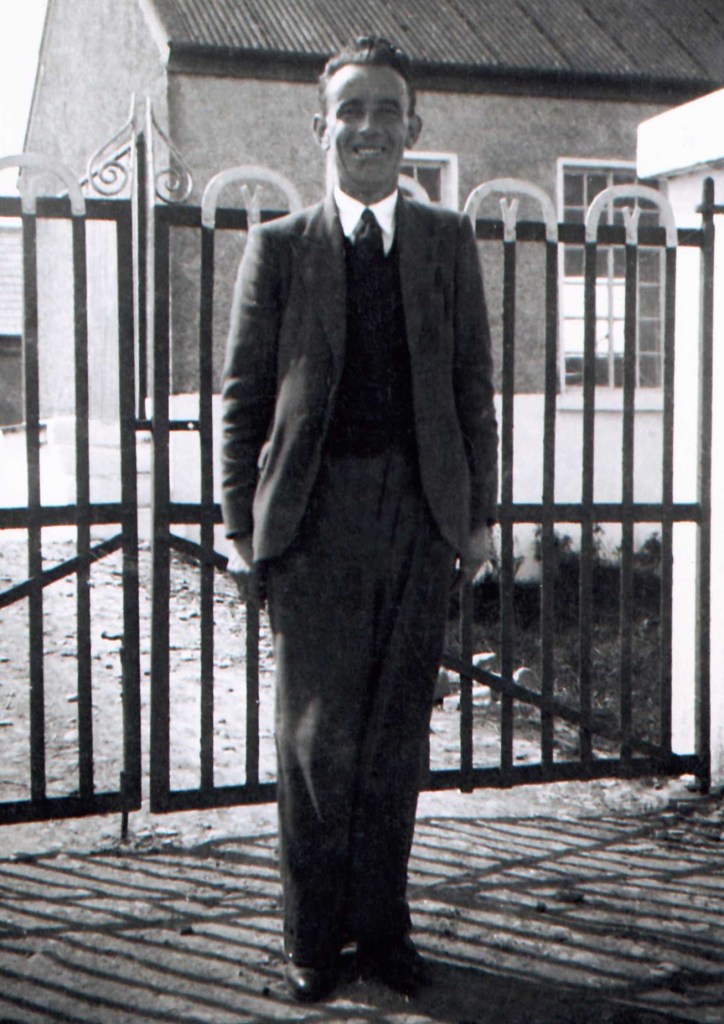
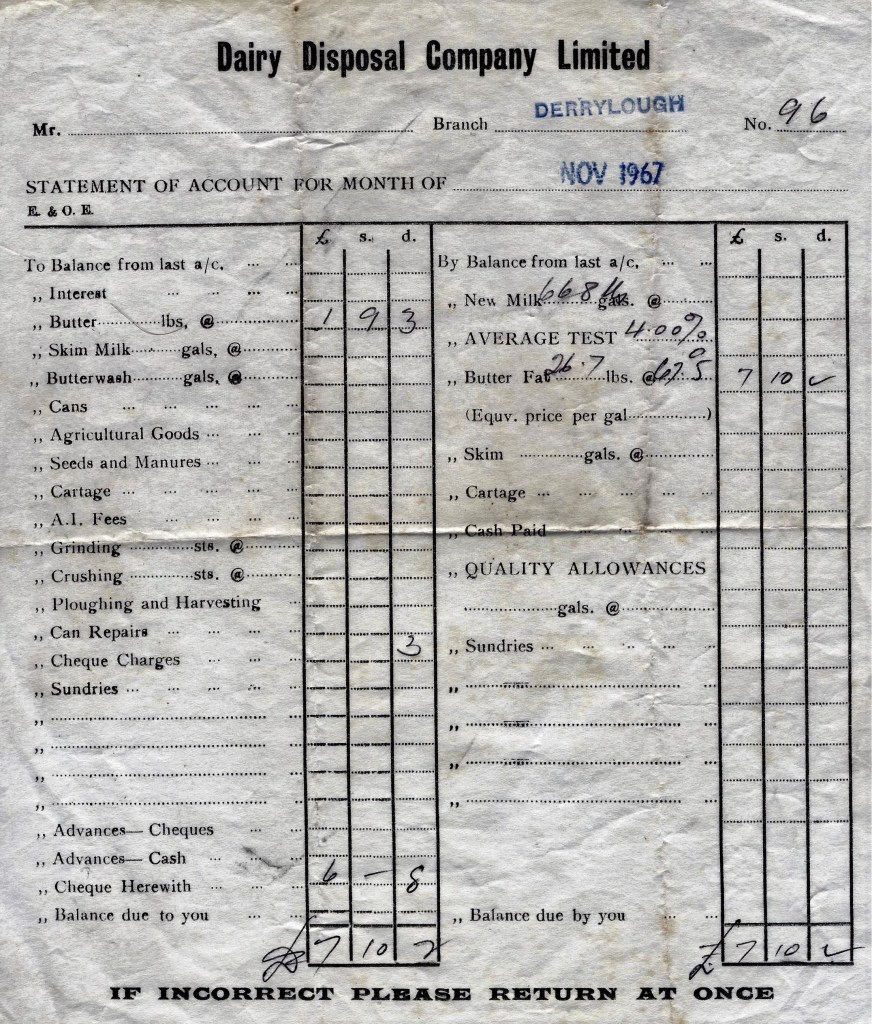
As you travel back down the road you pass where Derrylough Creamery was, unfortunately no part of it is left. Derrylough Creamery was built on a site on the Browne farm and opened in May 1932, having been constructed over the course of nine months by Bartholomew (Batt) Crowley of Tullagower. The first manager was John Shine, a Kerry man, succeeded in June 1936 by Tom Egan. Harry Upton, (left) Ballylanders, took over on September 3rd 1939 and he continued to manage the creamery until he retired in 1976, nearly 40 years later. Michael Brown, Molougha, was No.1 on the creamery supplier list. Golden-Vale Co-Op took over the creamery in 1974. Further changes took place in 2001 when Kerry Co-Op took over from Golden Vale.
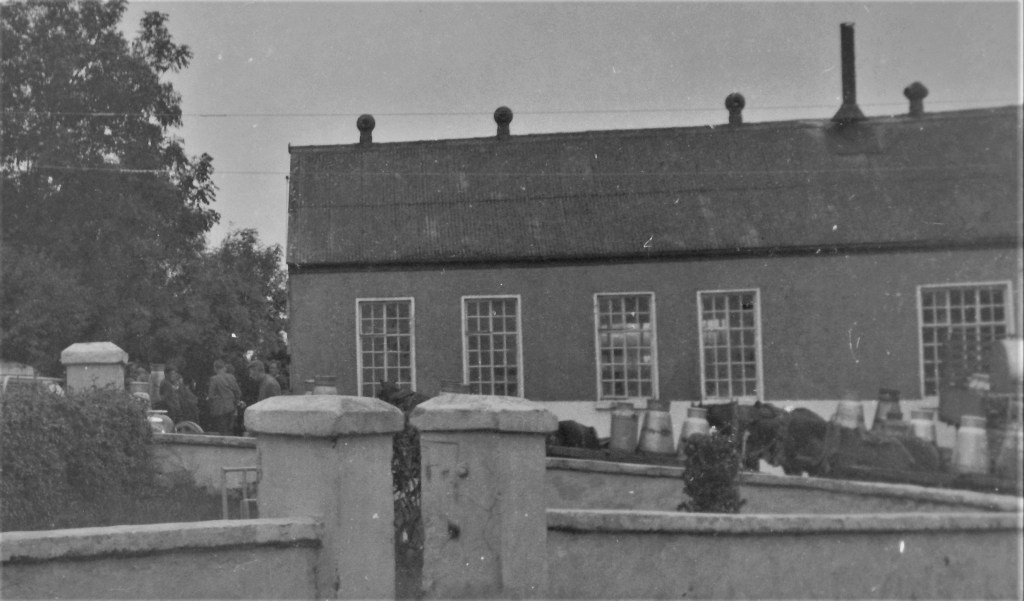
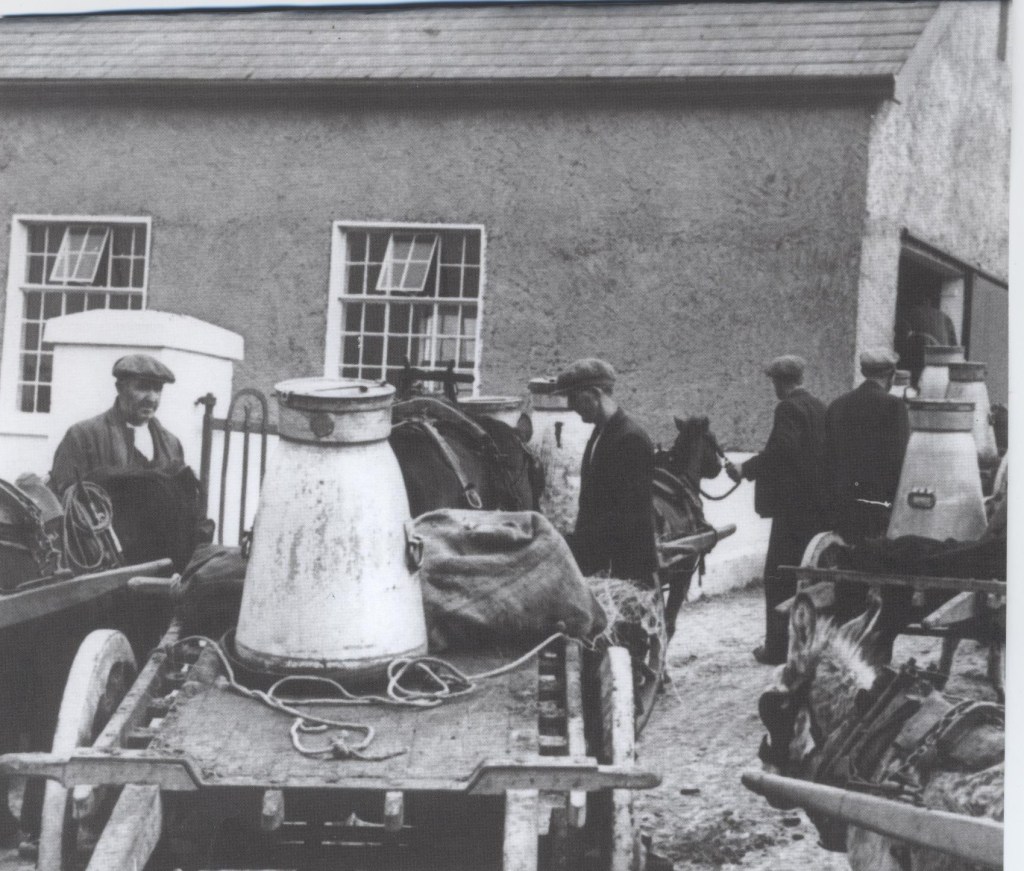
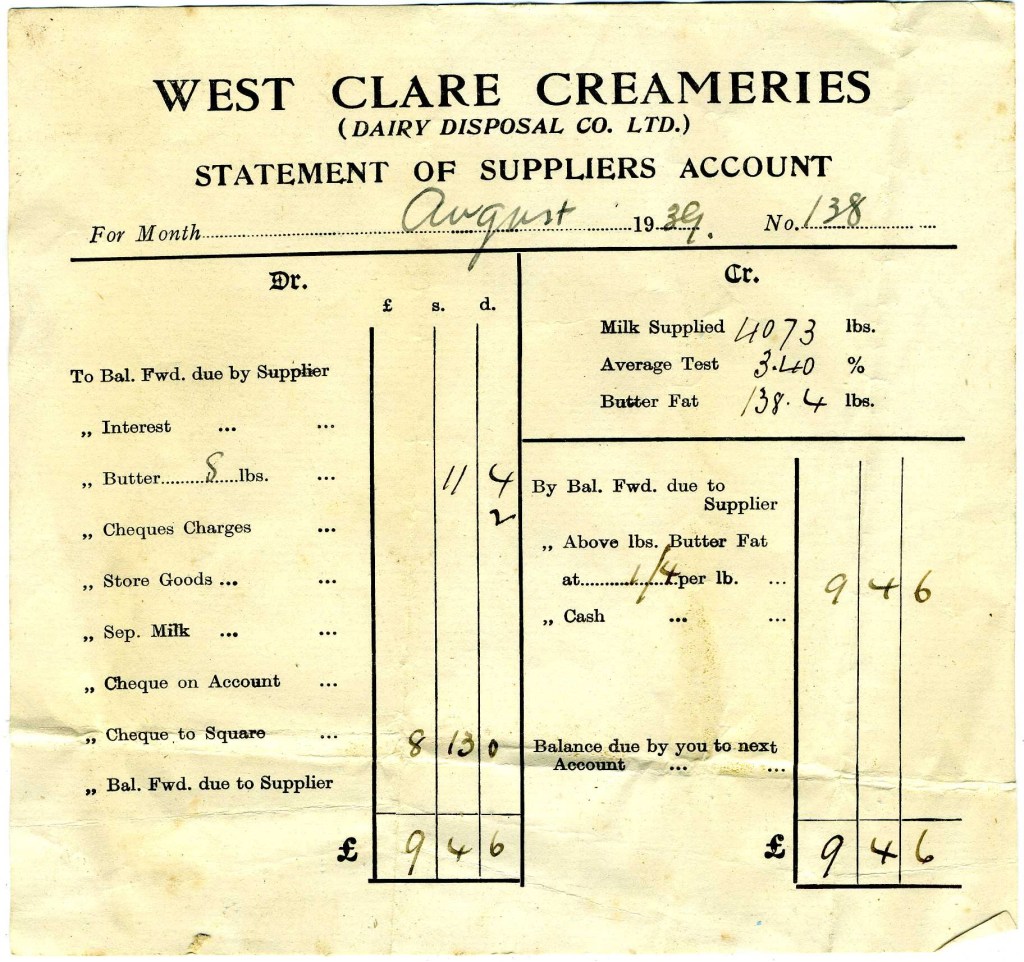
Approximately 3,500 gallons of milk was supplied daily to the creamery by over 150 farmers during the months from May to September each year. A monthly cheque was paid to each farmer based on the amount of milk supplied. Suppliers could purchase butter, which was deducted from their end of month accounts; this was a great help to the farmers as you could purchase butter during the winter months, when there was no milk, the cost of which would be deducted from the spring and summer cheques. Also, fishermen from Kilrush sold herring and mackerel at the creamery entrance when in season, their familiar sales pitch was “fresh fish for sale, eyes still open, 1/6 today sir”.
When World War II broke out in 1939 the creamery company began buying eggs, rabbits and poultry in order to supplement the scarcity of food in England. This revenue received by the farmers resulted in improvements being carried out to homes and farms.
A milk intake, under the supervision of lorry driver Michael Ryan and relief driver Chris Dixon, continued until September 1980. This marked the closure and demolition of the creamery.
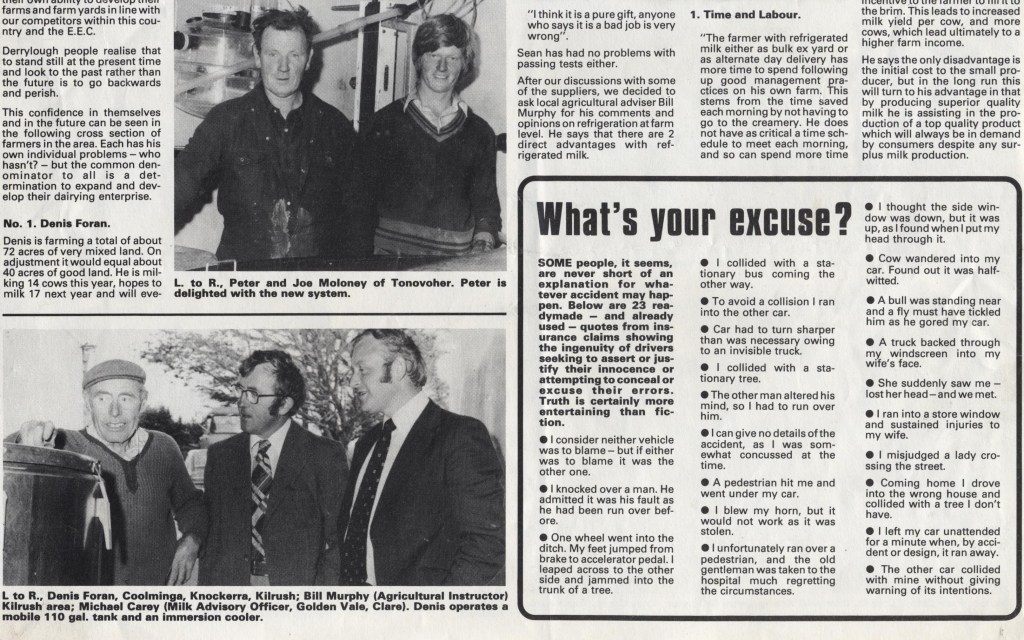
A Typical June Day at Derrylough Creamery 1952
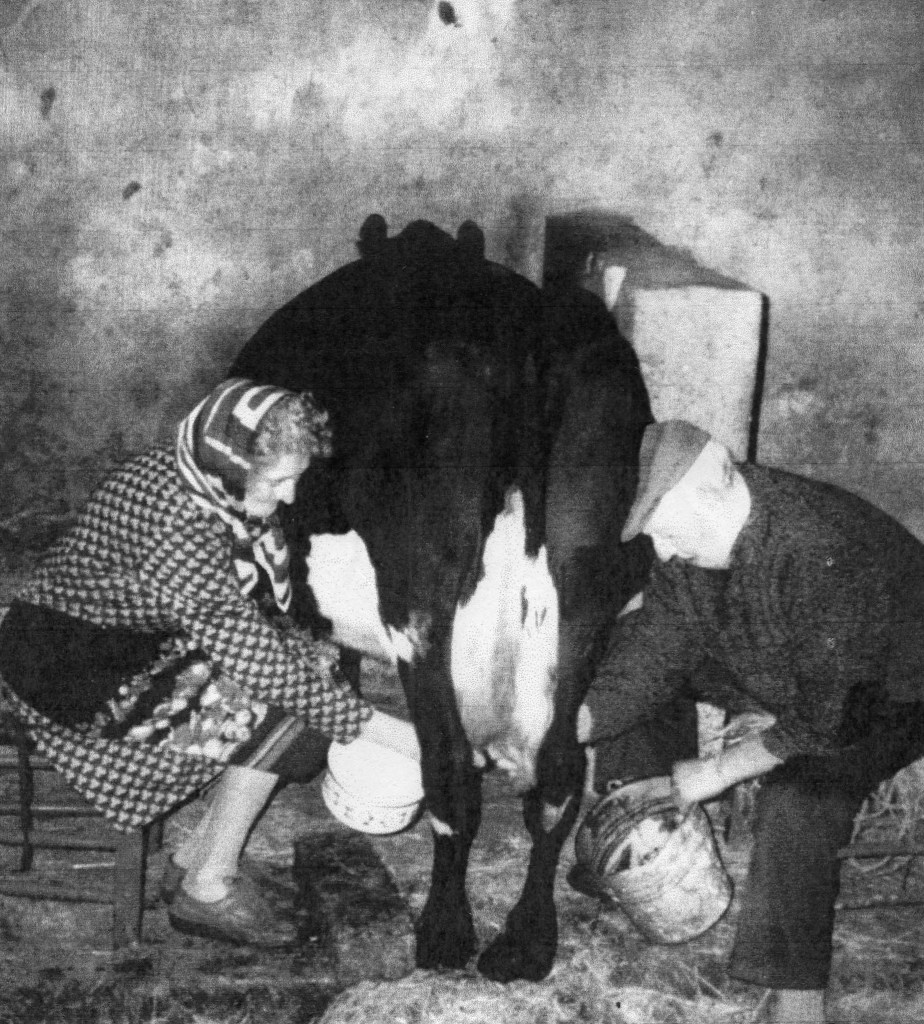
The first job after 7 o’clock breakfast was the gathering of the cows. Some farmers had a dog for the job which cut down on the walking in the dew wet grass. At that time the average herd was 8 to 14 cows. There were 159 suppliers to Derrylough Creamery which meant that about 1600 cows had to be hand milked in time for the creamery. This resulted in the use of every man, woman and child to ease the burden. What was amazing was that each cow walked straight into the same stall every time to be milked. Most cows were quiet and were no bother but the odd one would kick for no reason and land yourself and the bucket in the channel. Some of the men were great to whistle and it was wonderful to hear the beautiful sounds on a calm morning. The milk was strained through a muslin cloth to stop any foreign bodies entering the tank. The tank or churns as they were called were 10 or 20 gallons and weighed approximately 200lb when full.
Next job was to catch the donkey or horse to transport the tanks to the creamery. They used to say that they could tell if it was near rain by the sound of the iron wheels on the road. The same people always arrived at approximately the same time each day. First thing you did on arrival was to check out who was just in front of you. You needed to be sharp as three roads converged at the creamery. Very rarely was there an argument over one’s place in the queue. Once at the stand the tanks had to be hoisted on to the platform. You helped the man in front and you hoped he was a small supplier as hoisting three or four 20 gallon tanks was no easy job.
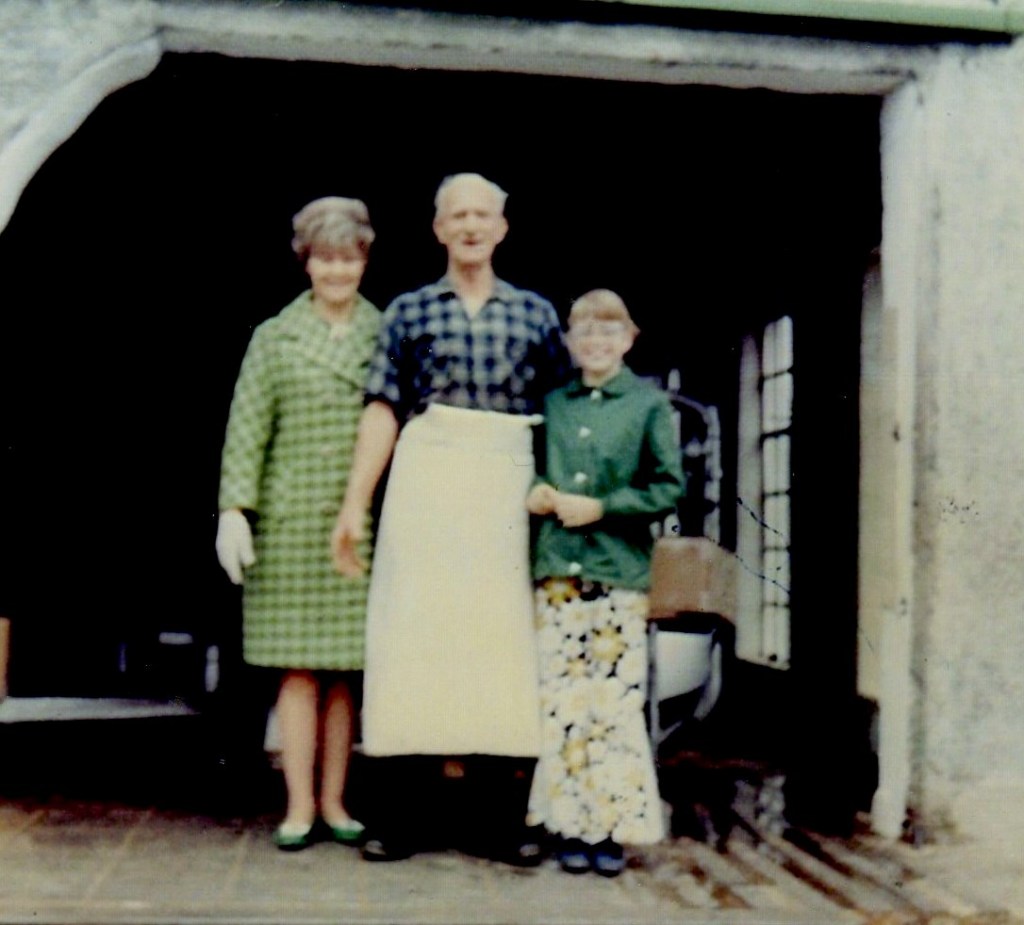
Harry Upton the Manager controlled the show; he weighed the milk and took the sample for butterfat which was put in your bottle each day for the month so the butterfat could be measured, which dictated the milk price that you would receive. Harry also had a great nose for detecting sour milk; he would smell it from 50ft. You knew you were in trouble when he tasted it and made a noise like a cat sneezing. The next man you met was Jimmy who had started the furnace at cockcrow. Jimmy’s job was to dispense the skim milk which was the wash left over after the cream was separated.
Of course there was a lot more to the creamery than milk at that time. On any given day 30 dozen eggs could be delivered. People bought their butter, meal, manure and in the springtime baby chicks. Most of the creamery business was conducted between 8 o’clock and 10 o’clock. Of course you always had the stragglers who were the bane of the manager’s life! Every sort of news and topics were discussed while waiting your turn which all took place at a leisurely pace and people might even stop for a chat on the way home. On this June day in 1952, 159 farmers hand milked 1600 cows, delivered 1900 gallons of milk, with average butterfat of 3.28 with a value of £1097, 150 dozen eggs, and bought 18 dozen chickens.
Pipers Hill
A mile up the road to your left, if you are coming from Knockerra is Pipers Hill. In 1906, Professor Denis O’Leary, St Peter’s College, Wexford, picked up a set of uileann pipes of peculiar design in Co Clare. They were made by the Moloney brothers, Andrew a blacksmith by trade and Martin a joiner by trade; both were good tradesman in their respective trades. Their homestead was in the townland of Tonovoher and until recently a section of the forge was still visible and some artefacts of the forge remain. The hill on Tonovoher Road is still known as Pipers Hill, a tribute to the men who created a work of art unsurpassed to this day. The Moloney brothers made most of the pipes in Clare.
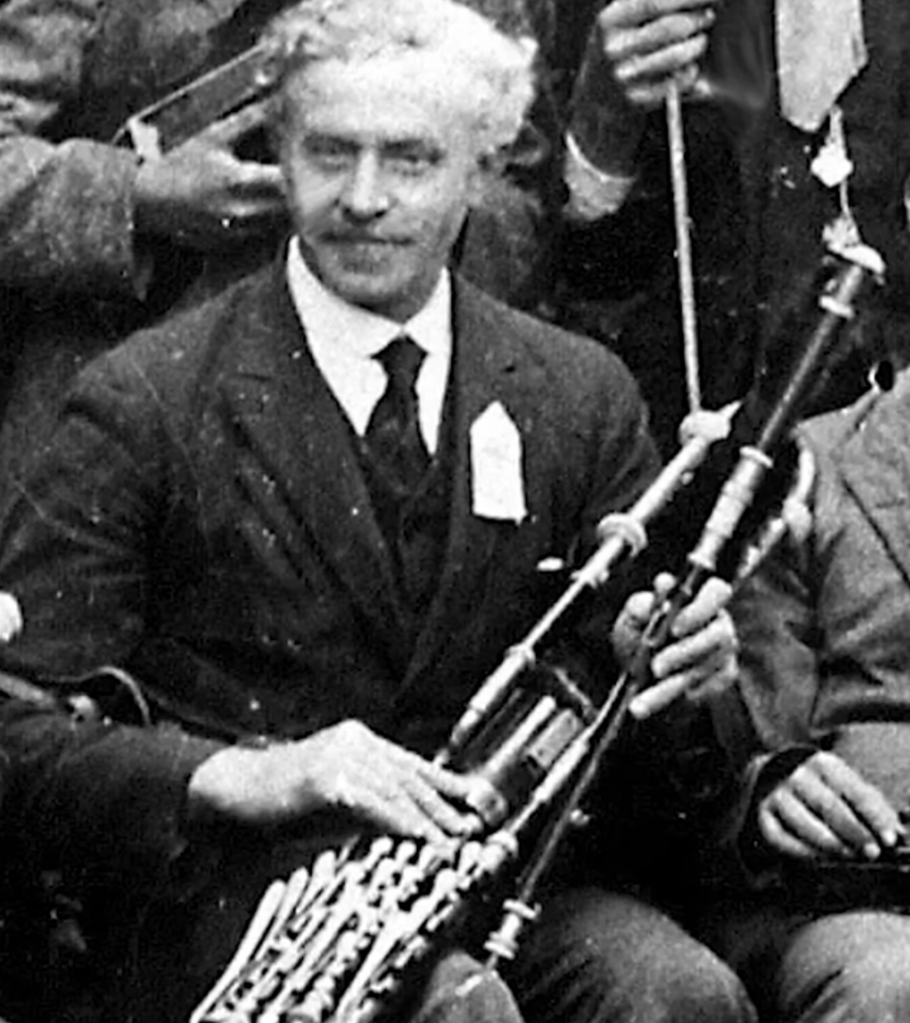
Professor O’Leary was a Gaelic League organiser and he became acquainted with a Mr Nolan of Knockerra, a good amateur piper and pipes enthusiast. It is documented that the same Mr Nolan cycled to Co Wexford on his boneshaker bicycle to receive tuition from a renowned piper. Earlier in his life Mr Nolan knew the Moloney brothers very well. According to Mr Nolan the brothers did make a number of sets of pipes and were always most obliging to the other pipers in repairing their instruments. It is said that their reputation grew for the repairing of musical instruments. It was from experience gained in such repairs that their skills eventually led them to the making of pipes.
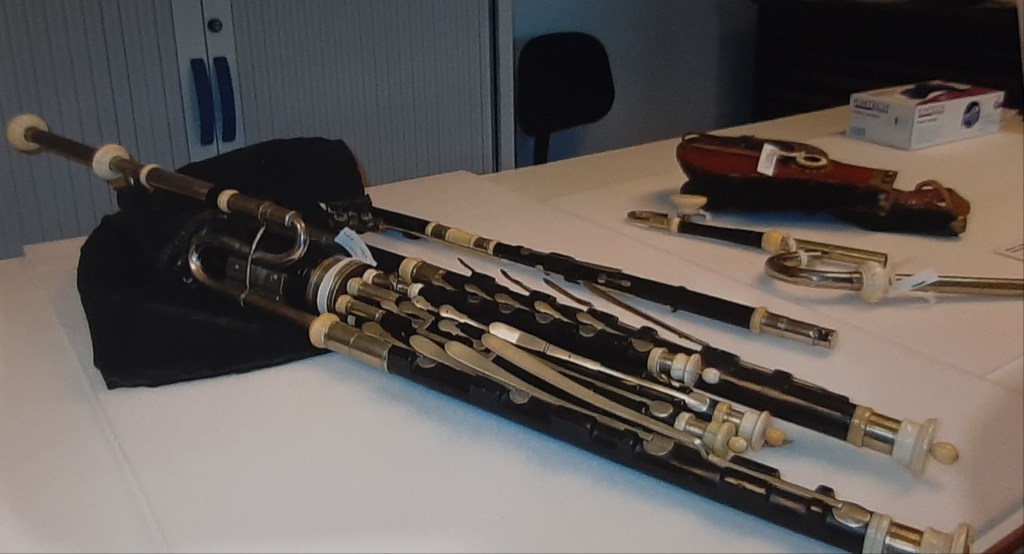
It was on the order of Crofton Moore Vandeleur that they made the most elaborate set of pipes in existence for his son whom he hoped would become a piper, very possibly for the war effort. The famous Moloney pipes are a massive ebony instrument with a trombone side which is a conspicuous feature. The chanter is 18in long (the norm would be 12in) and as a result produced a much sweeter and fuller sound. Five regulators with 24 keys were included. The tones of both basses are said to resemble those of an organ. The instrument also includes two splendid drones. The tubing and keys are of pure silver and artistically turned out. The various pipes are tipped with ebony; it is said that all the regulator and chanter keys were made from crowns and half-crowns. Experts estimate the original cost to have been about 100 pounds. They were made c.1834 when the brothers’ circumstances were good.
Owing to a gun accident which resulted in the young Vandeleur damaging his fingers the pipes were never collected or paid for. Because of the high quality and cost of the pipes they were unsaleable; having invested all their resources in them and as a result of the subsequent Famine years, the brothers were financially ruined and they had to part with the pipes for a fraction of their worth.
Martin O’Carroll of Freagh, Miltown Malbay, a farmer of independent means, bought the pipes for his brother John who was an excellent piper. People came from all over to examine the pipes and hear him play on them. He died in 1890 and, as none of his family played, the pipes remained unused until Professor O’Leary, Ballyvourney, Co Cork, obtained them in 1906. When the professor got possession of the pipes they had been lying idle for many years but they were completely overhauled by Mr William Rowsome and he restored their ‘voice’ which is described as a “hive of honeyed sounds”, a monument to the genius of the makers.
The pipes are currently in Collins Barracks Museum, Dublin, having been donated by Professor O’Leary in the 1920s. On our recent visit to Collins Barracks to view the pipes on September 14th 2015, Professor Jennifer Goff informed us that Mr Talty of Miltown Malbay, a pipe-maker and a descendant of Mr O’Connell, has got permission to make two replicas of the original Moloney pipes.

