Nolan’s Cross
We would like to stress that this site is on private property and it would be necessary to get permission to visit the specific site from the owner.
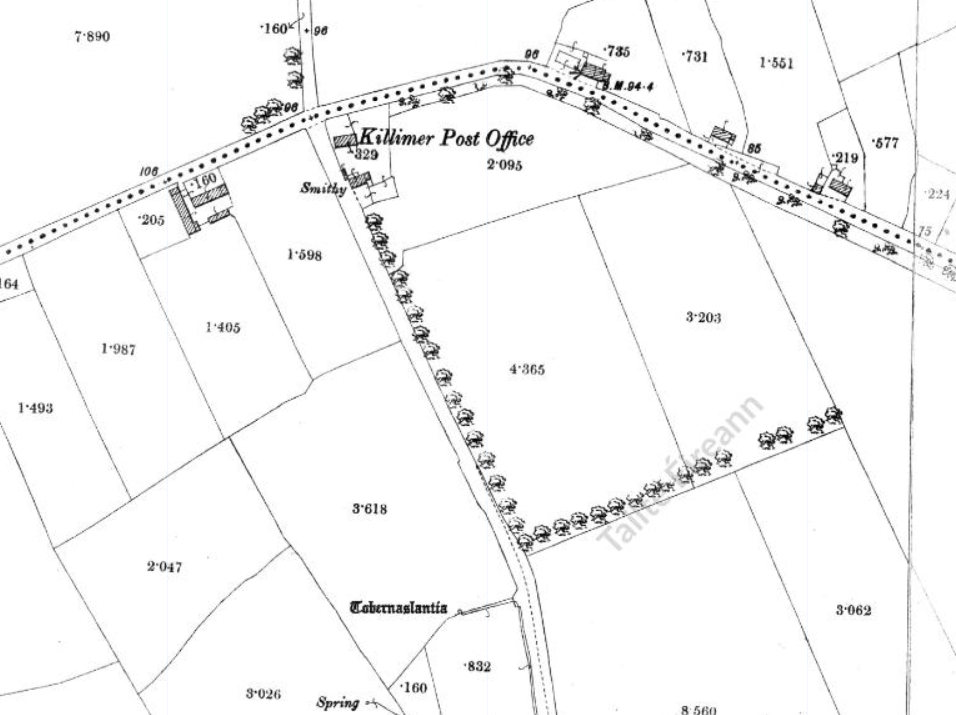
You begin this trail at another famous crossroads in the parish. What is now known as Nolan’s cross was once a very busy place, between the traffic to the post office and animals to the nearby forge and an all round local gathering haunt. All business’s were operated by the Nolan family for the convenience of the nearby landlord Mr R. C. Reeves who lived in Besborough.
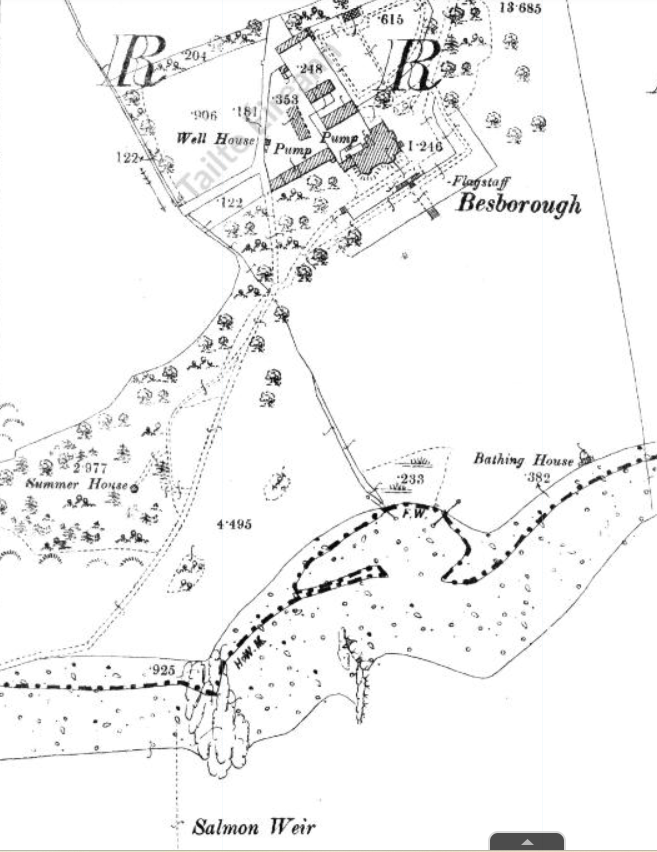
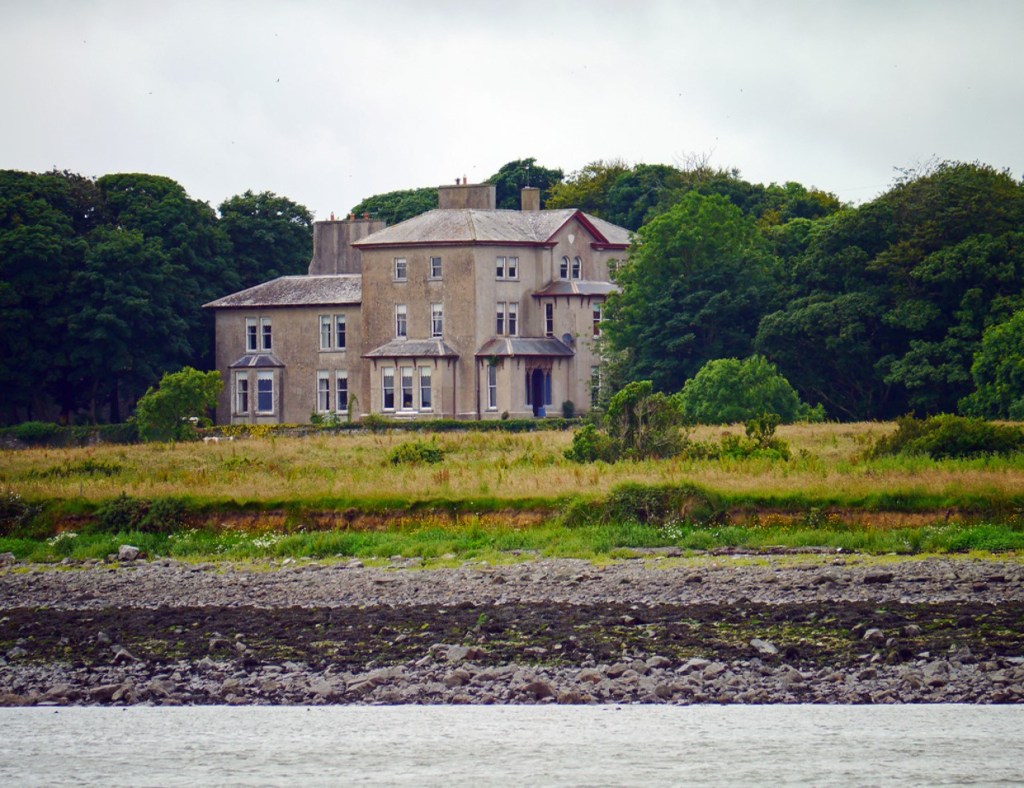
Besborough literally means Elizabeth’s House. In the past the house has been associated with several families, these include Langfords, Butlers, Reeves, Hassetts and Sextons. It is situated in the townland of Poulnadaree.
It is best described as a large irregular three-storey house. It is late 18th century in style but has been extensively Victorianised. The house overlooks the Shannon and further to Kerry and affords magnificent views of both. It is possible that it was built on the site of an earlier residence.
Martin Nolan was a master blacksmith; no doubt he was kept busy by the Reeves who were patrons of the hunt where a stopover for refreshments took place in Besborough. One particular horse of the master – his favourite, a white horse named Outcast – was buried in the front of the big house, reputedly in a standing position.
The High Sheriff of Clare was a title in existence from at least the late 16th century. Mr Reeves was elected in 1885 as High Sheriff and was responsible for the maintenance of law and order and various other roles. He was chairman of the Board of Guardians (Kilrush Workhouse) from 1886-1888.
R.W.C. Reeves was one of the advocates of the West Clare Railway and his wife Dorothea turned the first sod at Kilkee on October 9th 1890. The sites for Burrane and Killimer schools were granted by him as well as Burrane Graveyard. It is recalled that they were responsible for erecting a small stone cross over the burial plot of the Cailín Bán to mark her burial place.
Many locals were employed in the house or land; a sister of coach driver Pat Hassett and a Miss Lynch of Knock were housekeepers for him. It must have been a sight to behold, the horse-drawn coach and four travelling on the Lower Burrane Road with the Burrane native Pat Hassett at the reins.
It is thought that the Reeves Family were forced to sell Besborough as no money was coming for rent and they were not prepared to live in poverty. Robert W.C. Reeves died in Dublin on the July 1st 1901 and is buried in Mount Jerome Cemetery, Dublin.
When researching the Reeves family tenure in Besborough, we were informed that they were “well liked and very friendly”. Mai Crowe stated that, “One thing is to be said of Reeves, he did not evict anyone unlike his father- in- law, Mr Vandeleur.” Her family, the O’Connells, was the last house in the Vandeleur Estate to be evicted. They then crossed the ditch and occupied a cabin in the Reeves Estate, knowing that at least they were safe there.
Mary Agnes Donnellan recalled the story of her grandfather being collected by R.W.C. Reeves for a Sunday drive; in fact he gifted them with a painting which still hangs in her home.
The Reeves abandoned Besborough for good in 1904-5. The Estate was taken over by the Land Commission who in turn divided the greater portion of the lands amongst the local people. Thomas O’Loughlin, a very capable caretaker, saved the house from vandalism as it was not occupied for about nine years. Pat Hassett, Upper Burrane, purchased Besborough House and farm in 1914; he and his sisters Bride, Mary and Nellie went to live in Besborough. In turn the Sextons came to live here and to this day maintain this beautiful house.
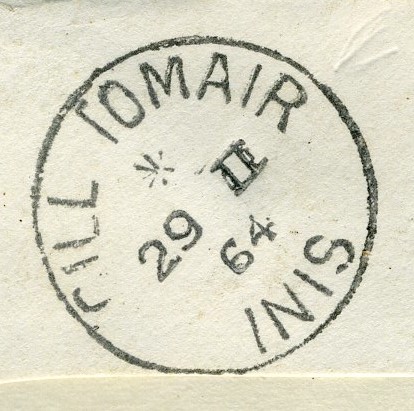
Ellen Nolan nee Keane, her son John and daughter Baby, ran the post office which was a thatched old-style house until it closed in the early 1970s. The postman collected post for delivery from the post office which then had to be sorted into postal addresses. Tommy Neville of Poulnadaree spent many years as postman attached to Nolan’s Post Office. His duties were covering the south-west of the parish. Many who knew him recalled his wit and charm. John Hickey, Donogrogue, replaced him and dutifully delivered the post.
The forge would have been built in behind the post office. Robert Carey Reeves required the services of a farrier/blacksmith for his hunting horses. Martin Nolan was the first master blacksmith in residence there. He handed on his trade to his three sons, Martin, John and Francis Jr, who continued the trade. People brought their horses there to be shod and it was a great meeting place for the locals as often mentioned in the Casey Diaries.
The small road you see brings you down to Poulnadaree Bay which was once a crossing point for local boats and it was along this patch of coastline that the body of the Colleen Bawn was found. It also would have led you to the Salmon weirs that would have been operated by the McAuliffs which you can see on the map of Besborough above.
About 500m down this road on your right you also come across the famous Tobar na Slainte. Tobar na Sláinte (Tobar is Gaelic for a well, sláinte is Gaelic for health.) We can ascertain from the translation alone that the well was renowned for its health bearing properties. In the past the residents of Besborough House valued Tobar na Sláinte as a source of water which they brought to their home using gravity flow.
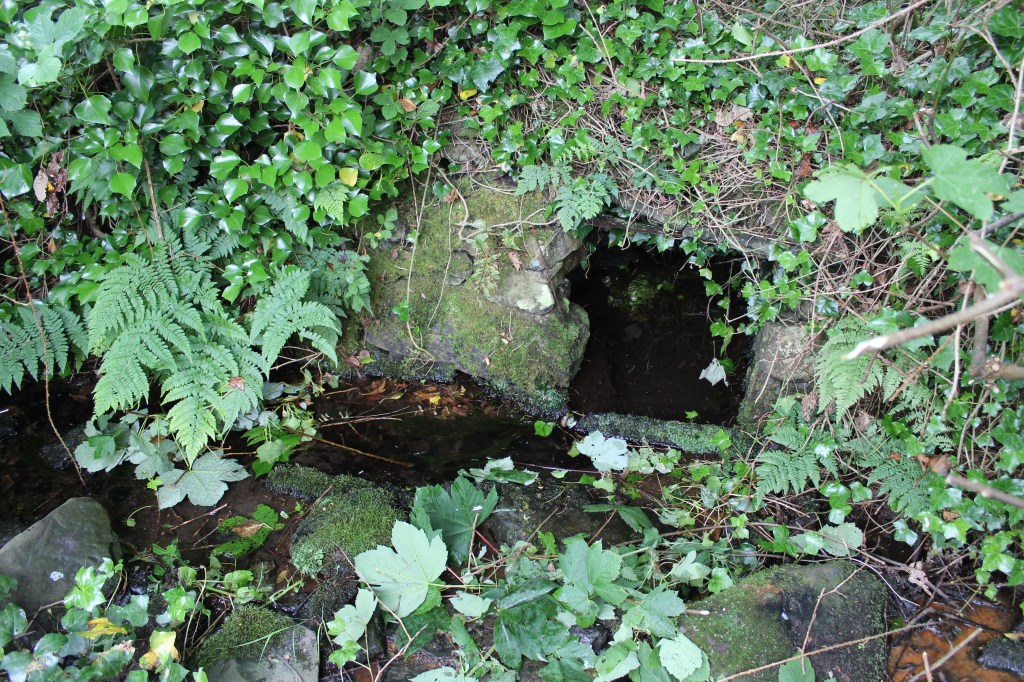
This was achieved by digging a drain to a level so that the water flowed into an underground tank, even though its distance is almost a half mile from the well. This water was hand pumped daily to the roof tank which supplied the house for daily domestic use. Locals would have also used the well and even to this day people can be seen with their containers collecting water from there.