The Ice Lane
You have now travelled almost on a full loop and are passing the Ice Lane. As mentioned in Knock there were once Ice houses in a number of places in our parish. In the early part of the 20th century ice houses were fairly common in any area where fishing was part of the livelihood of the people. As the name suggests ice was stored in them for use over the summer period when fishing was at its peak.
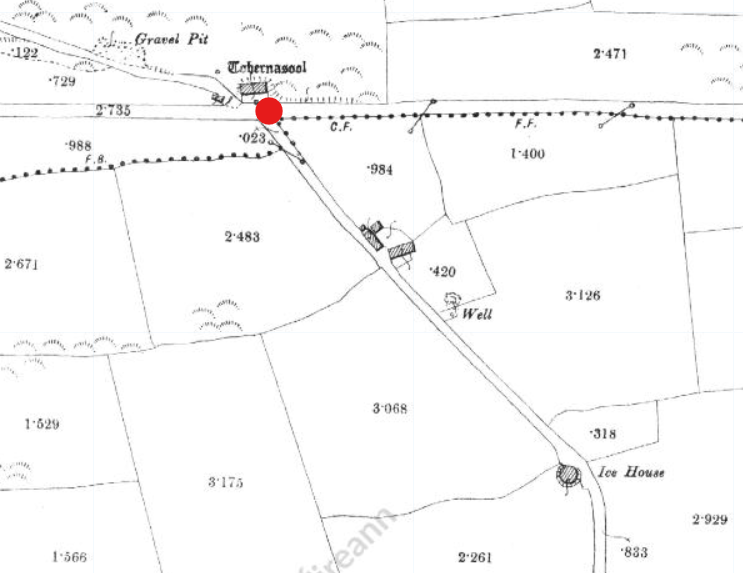
As already mentioned in 1852 an ice house was built at Knock by Patrick McAuliffe but there was also an ice house in Burrane on the farm of Tommy Madigan, which is now owned by Maurice O’Connell. A second ice house was built near the shore in Tommy Browne’s farm, which is now owned by the Fitzpatrick family and mentioned in the white gate stop.
The ice houses were really the deep freezes of olden days. They stored the ice in them until it was needed. The ice houses were built approximately ten feet underground and ladders or stairs were used to climb down in to them. The walls were of stone and these in turn were lined with timber boards, leaving a cavity of about six inches for insulation. The insulation used was sawdust. The entrance door was about six inches in thickness. The roof was covered with scraws and rushes.
When the fish were caught they were taken to the ice houses, packed in boxes and put under ice. They were left there until they were transported. When there was a full load of fish ready, a driver would be sent for and he would then take the fish to the railway station in Kilrush. Since the ice houses were built underground the temperature was low, even in the summer, so the fish were kept fresh.
So where did the ice come from?
There were three ponds in Burrane near one another which provided the ice. There was a pond on Tommy Madigan’s farm (now Maurice O’Connell’s). There was a second pond on the farm owned by the Lynch family (now Sean Cunningham’s); this pond was in the field across the way from Burrane School and is now no more, due to drainage. The third pond was on Micko Madigan’s farm, now owned by Noleen and Brian Keniry. According to Mary Agnes Donnellan, the road between Hogan’s house and the White Gate, which you are now passing, was called Icehouse Lane due to this.
During winter, when these ponds froze over, the ice was collected from them, taken to the ice houses and left there. The ice was drawn by pony and cart from the ponds and ten pence was paid per load. The local fishermen and weir owners bought the ice as they needed it during the summer months.
Sean Duggan recalled his father telling him that he dug out ice from Knockerra Lake, which he broke with a sledgehammer and took to one of the ice houses in Knock by horse and car. This provided a source of income in the winter.
Johnny Crehan, Tonovoher, told Joe Torpey that one year when ice was not available it had to be imported from Finland.
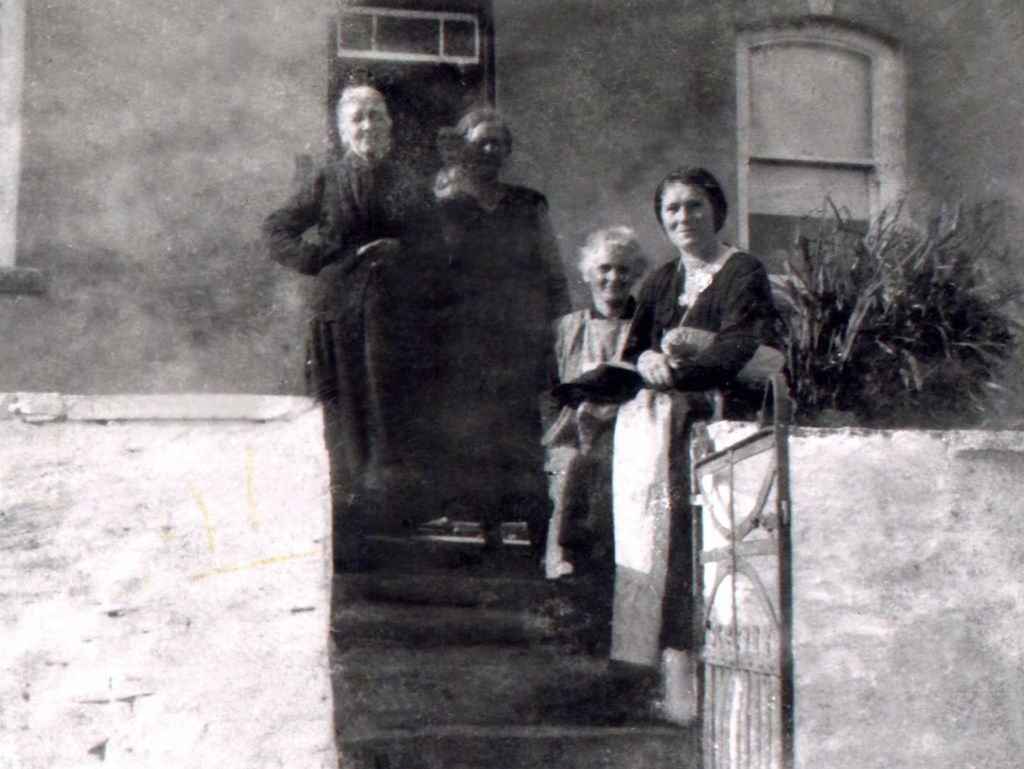
This cross roads also had its own shop for a while. On her return from America Ellen Culligan nee Cunningham opened a shop here. Her daughter, Mrs Hogan, would have continued this on from the family home. It became a thriving business selling general groceries, paraffin oil, American bacon, flour and meal, snuff, tobacco and cigarettes. Animal feed stuffs were collected by horse and cart from Ryan’s and Glynn’s. Like other shops they ran a monthly account. They traded until the 1950s.