Music and Dance
Music has undoubtedly existed from earliest times, the human voice being the earliest form of music making, known as ‘pus music’ in this area. When musicians were not available they reverted to ‘pus music’, this was lilting, or diddling, as it was called. In c.1910 at Mickey Connors’ home in Knockerra, a house dance would take place on Sunday night and the only music available was ‘pus music’, performed by Mick and Jimmy Browne.
The next progression from ‘pus music’ was the jew’s harp, played in the mouth and strummed with the finger. Instruments were often simply designed such as the bodhrán. The poor unfortunate goat, whose skin was required to make a bodhrán, had little hope of survival if a group was without this instrument. A wide variety of instruments: such as the tin whistle, the mouth organ, pipes, concertina and fiddle were later additions. Many of these instruments were made by local craftsmen. Tunes were passed on from one generation to the next, or composed by those with a keen ear or musical talent. Tunes such as: ‘Pigeon on the Gate’, ‘Drowsy Maggie’, ‘The Sally Gardens’, ‘The Miss McCleoud’s’ and ‘The Boys of Blue Hill’ were all enjoyed by the locals. Tunes were taught also by talented local artists, for a small fee, which no doubt has helped kept music alive to this day. With the introduction of the gramophone, new tunes from other areas were picked up and played by these musicians, who added them to their repertoire.
Musicians whose names can be recalled to this day
Mack the Fiddler, whose real name was Jack McNamara, lived in Donogrogue (later Mangan’s and now owned by the McCarthy’s), played locally and also gave lessons. He had learned from a master musician and was very proud of the fact. He charged sixpence (6d.) per lesson and amongst his pupils were – Stephen Grogan Snr. (Carhuefree), Paddy Browne (Knockerra), Rose Griffin (Knockerra) and Jimmy Mahony (Coolminga).
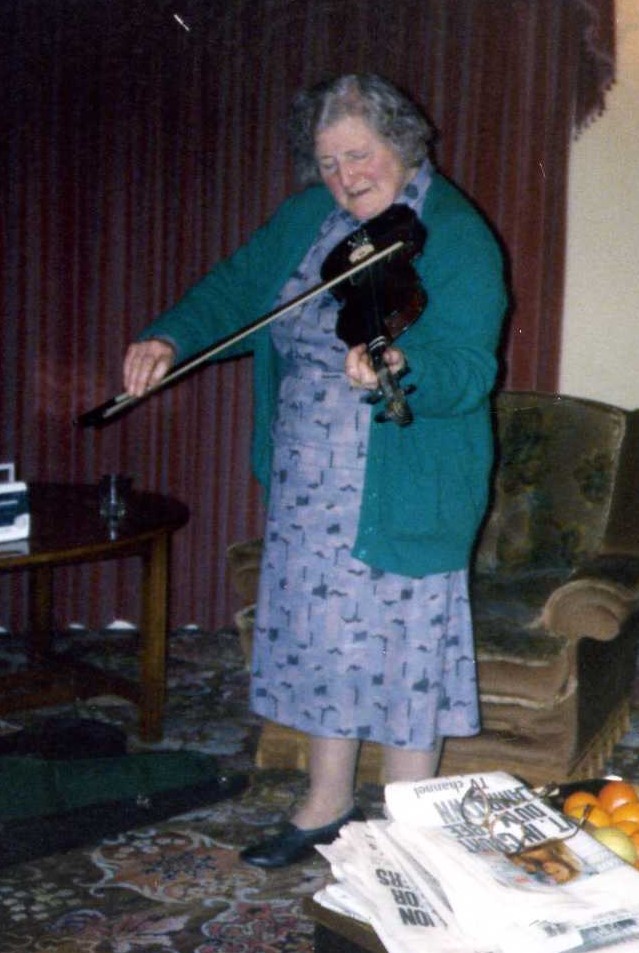
Mrs Minogue, nee Rose Griffin, continued to play the fiddle all her life. Her family has inherited her musical ability. They play various instruments and have often played as a family group at functions. Her home in Dublin has always been a house of music with a ‘céad mile fáilte’ for friends and neighbours, especially those from Knockerra. Her niece Josie Miniter (Trellig) played on that same fiddle and Josie’s grandson, Eamon Reeves, is now the proud owner of, and player of, the fiddle.
Due to a keen interest in music locally, many instruments were taught by local musicians. Among those musicians are the following:
Vera Culligan and her sisters Aggie and Nora (Tonovoher) all played the accordion. (No doubt Nora Culligan, who was a teacher in Burrane N.S., passed on her skills to her pupils). John Hickey (Donogrogue) played accordion and melodeon; and Josephine Lorigan (Donogrogue), played the melodeon. Later musicians were Tom Pyne and his son John (Knockerra), who played the piano accordion. John was a member of the St. Anne’s Band. Larry Dixon played concertina. Other concertina players were: Mickie Moloney (Tonovoher) and his brother Frank, Sonny Culligan (Tonovoher), Tommy Neville (Poulnadaree), Paddy Frawley (Derrylough) and Agnes Lucas (Kilcarroll). Percy Cooper (Donail) and Jack Dixon played the tambourine/ bodhrán; Joe Nugent (Donail), tin whistle; his sister Annie Cooper played the concertina/melodeon; Joe Meehan (Tonovoher), tambourine .They all played in separate groups. Mrs Keane (Ballymacrinnan) and her sister-in-law Kathy McInerney (Donail), Frances Galvin (Tarmon), James Meehan (Burrane), Nellie Keating (Kilcarroll), Siney Moloney (Tonovoher), Bill Murray (Donail) and Mary Jane Coughlan (Carhuefree) all played the violin. Larry Mulqueen (Molougha), on accordion, together with Mary Jane Coughlan, Nell Moloney (Knockerra), Joe Bonfield (Coolminga), Josie Miniter (Knockerra), Kitty Mulqueen(Molougha), all played the fiddle and regularly played together at house dances. These latter musicians all learned from ‘Jack O’ Dan’. James Neville (Poulnadaree) played a mouth organ.
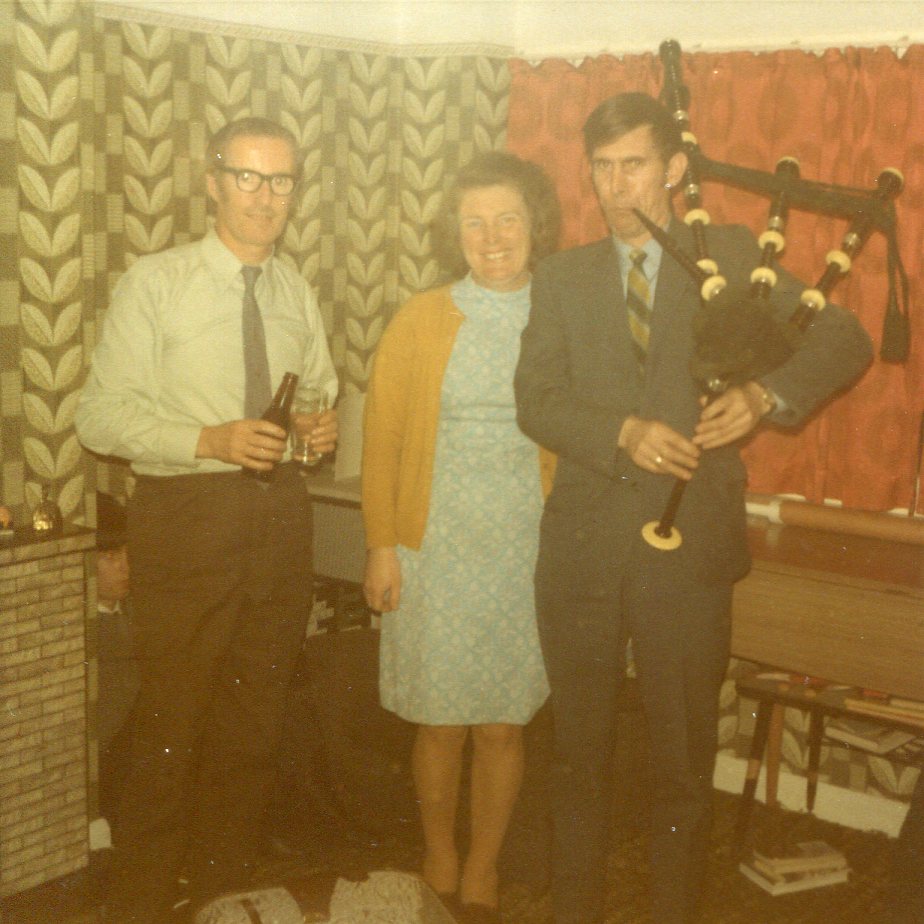
Brownes of Browne’s Cross (Greene’s Cross) was a popular meeting point. Mrs Greene played, on the concertina, a ‘buck’ set (all men) on the floor, which sounds lively. Charles Clancy (Carhuefree) and his brother Tony played the accordion, a member of the St. Anne’s band, while their brothers Sean played the uilleann pipes and mouth organ, and Carroll played the uilleann pipes and the concertina. Joe Nugent (Donail) along with his daughters and son Peadar all played music. Mary and Nora played the accordion and the others played the tin whistle.
All of these either played individually, or came together in different groups for house dances, American wakes or sessions. Of course there were many other musicians not listed here, who played privately and enjoyed making music.
Johnny Doran-The Travelling Piper
Johnny Doran was a Wicklow native and a famous travelling piper. He came from a long line of pipers and reputedly was able to play the full set by the age of seven. He was a regular visitor to West Clare, including Killimer parish, which was renowned for pipe-making, and was made welcome due to the quality of his music, piping being his life – nothing else mattered.
House Dances
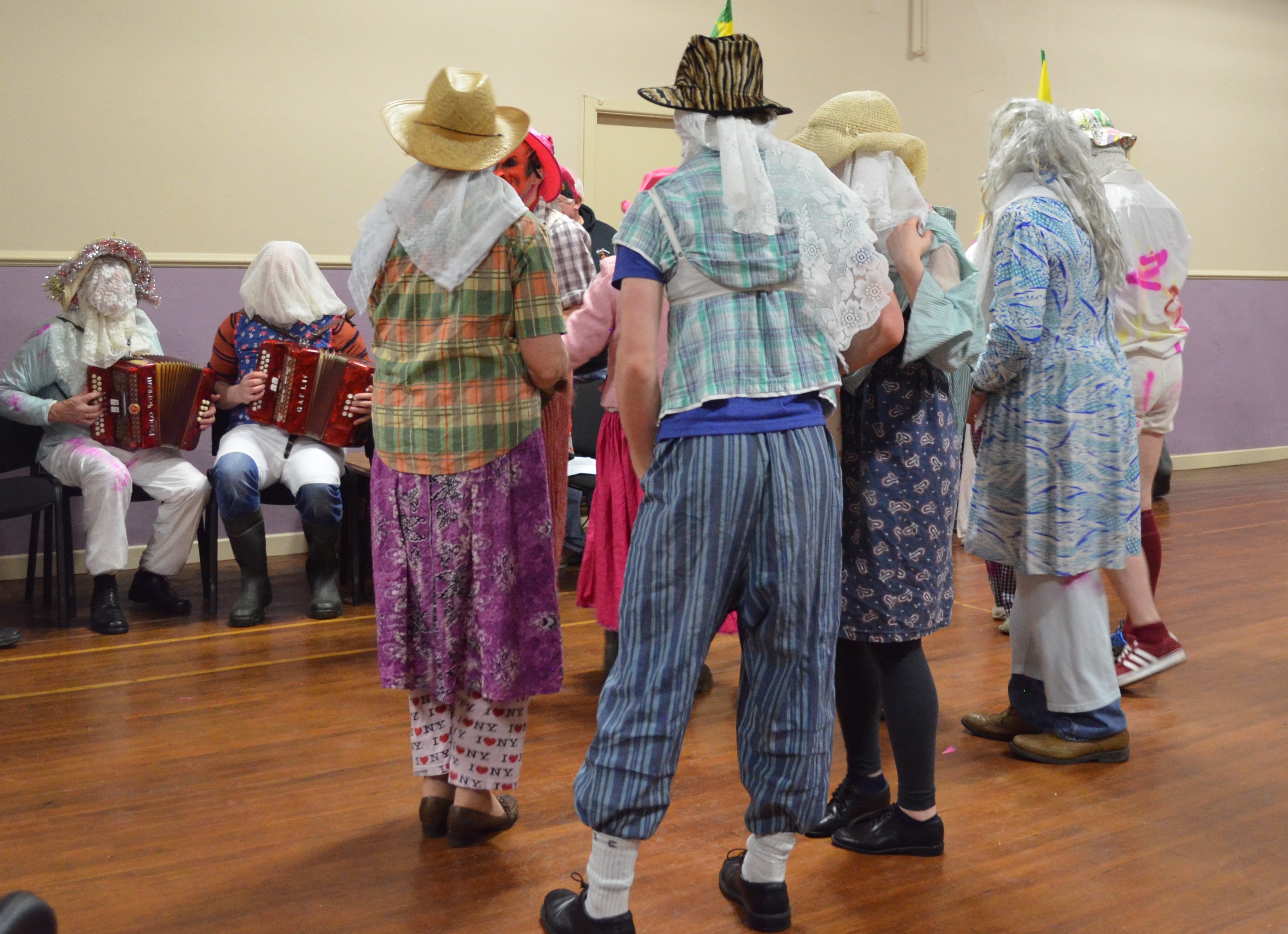
‘Up to the 1940s when there was no other form of entertainment on Sunday night all neighbours would gather at ‘Maggie Walsh’s’ Derrylough, (Patrick Browne is now the owner of the land), where they would dance set after set, sing songs and anyone with a verse of poetry would recite. A cup of tea and bit of cake, or a biscuit would be handed round for a break and more music, etc. would continue until 1am. The said lady would have a ‘puss up’ if locals did not turn up, or had attended other houses. All ‘wren dances’ were held there.’
Told by Bridie Madigan
Dances were often held at Martin Dowling’s on Knockerra Hill (where Benedict Ryan’s house now stands) with regular musicians such as, Mickey Moloney on the concertina, Joe Bonfield and Josie Griffin Miniter playing violin.
Notable house dances took place at Crowley’s, (Knocknahuane) on Sunday nights. In fact it was known as the ‘Hydro’ – music was generally from the gramophone and at times local musicians played there. Many of the local young people would sneak out at night, unknown to their parents, to attend a house dance there and to sample the much talked about nightlife of Knocknahuane and get home just in time to milk the cows in the morning.
Keating’s (Kilcarrol) was also renowned for house dances in earlier times.
Memories of Johnny and Bid* who lived on Ballycurrane Hill
The following poem written by Nonie Keating (Culligan), Tonovoher, gives us an insight into the good old days, when people relied on one another for home entertainment.
Ballycurrane Hill
There’s a spot in our memories we ne’er shall forget,
Though it be our sad lot to part from it yet,
As I think of it now, my heart it doth fill
Dear little grey house in Ballycurrane Hill.
This is the home of the dear ones we love,
May blessings shower on them from Heaven above,
How often they nursed me, when I was a kid
That darling kind couple dear Johnny and Bid.
Now all boys and girls who loved sport and fun,
Every night, dark and bright, sure to Johnny’s we’d come.
Over ditches and trenches devil hair would we care,
We’ll have singing, gambling or set dancing there.
Now so much for Johnny, for that is his hobby,
And now for his well beloved wife,
Her music on the concertina, were you dead and to hear it
God knows you’d come back to life
Her hearty jigs and fine reels, lively hornpipes too
Would put steps in your legs, though a step you never knew.
Now Dick is a brick, he asks her to play,
Gives her all sorts of praise, sure he knows what to say
‘Bravo Mam, bravo bravo again
That same reel will do, that same reel again’
Johnny sits in the corner, and tips with his legs
After each ‘figure of the set’ says ‘six eggs and six eggs’
He can diddle to fashion each old Irish reel,
And he laughs ‘till he cries to see Dick double wheel.
Half ten is our hour to be leaving for home,
In twos and in threes and some go alone,
Down in your knees the rosary we’ll say,
For poor Bid and Johnny we’ll say a short prayer,
That God may befriend them for now and all time,
All sorts of good luck sure upon them may shower.
Their motto is good ‘tis the genuine stuff’
To hell with misfortune and we’ll be dead long enough,
We’ll sing and recite and dance for sheer glee,
Where smiles hospitality hearty and free.
As years will roll on we will think of it still,
Saying God be with our good nights,
In Ballycurrane Hill.
*Johnny McMahon was married to Bid Brann.
Musicians in more recent times
In later years, musicians like Michael Keane (Ballymacrinnan), on accordion, played with a Kilrush based band, – The Shannonsiders- so too did Senan Murray (Donail), who was an enthusiastic drummer.
Michael O’Brien and family (Knockerra), the Cunningham family (Donail), Noel and John Paul Cooper (Donail), and the Dunne family (Donogrogue), would certainly lift your heart when they played.
Our present day church organists, Morgan Roughan and Pat Donovan, not only give us church music, but also liven up social occasions like weddings and local dances.
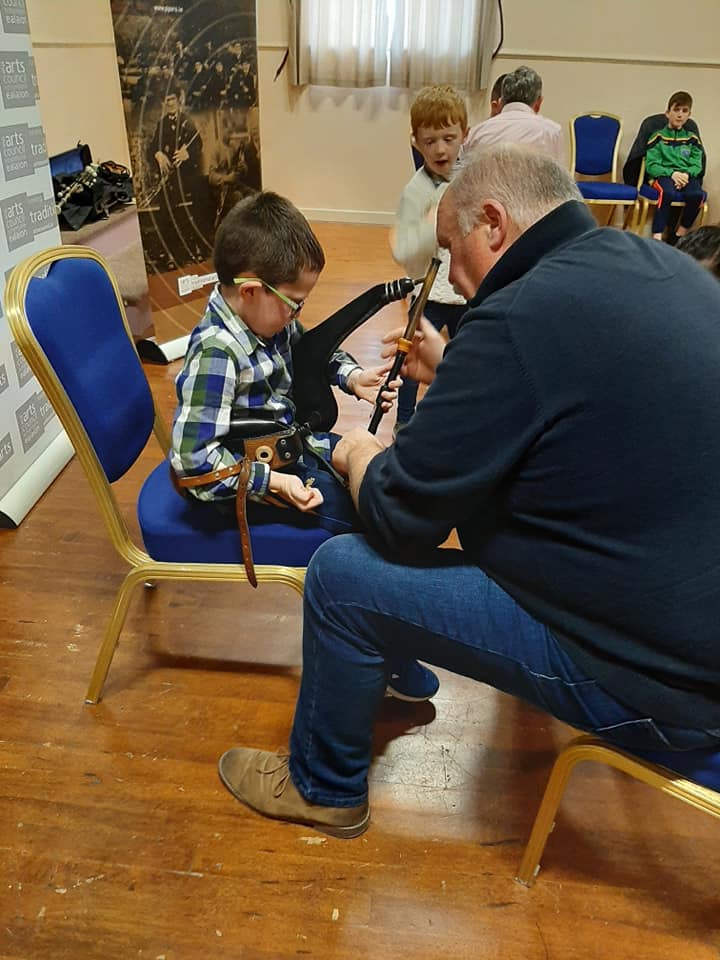
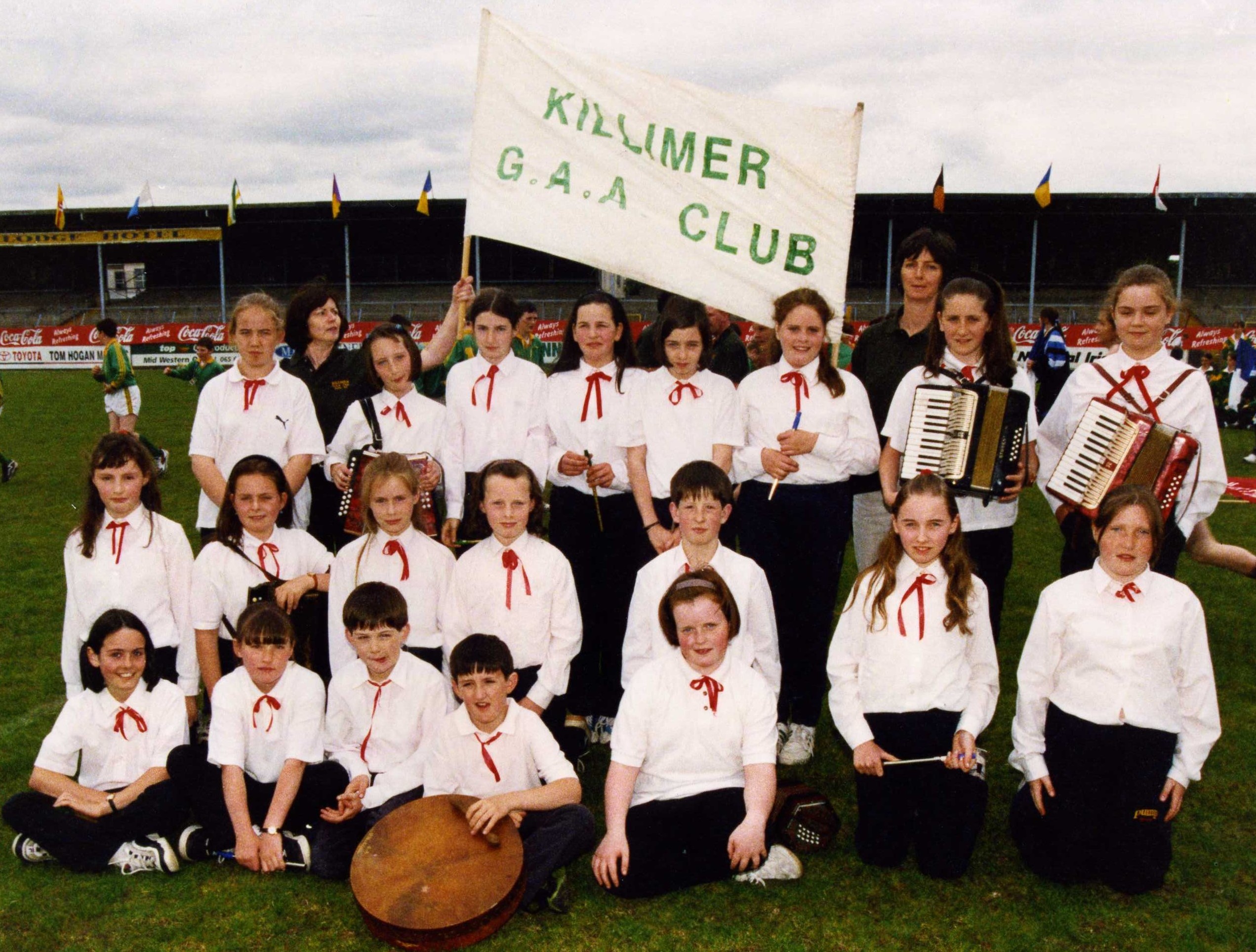
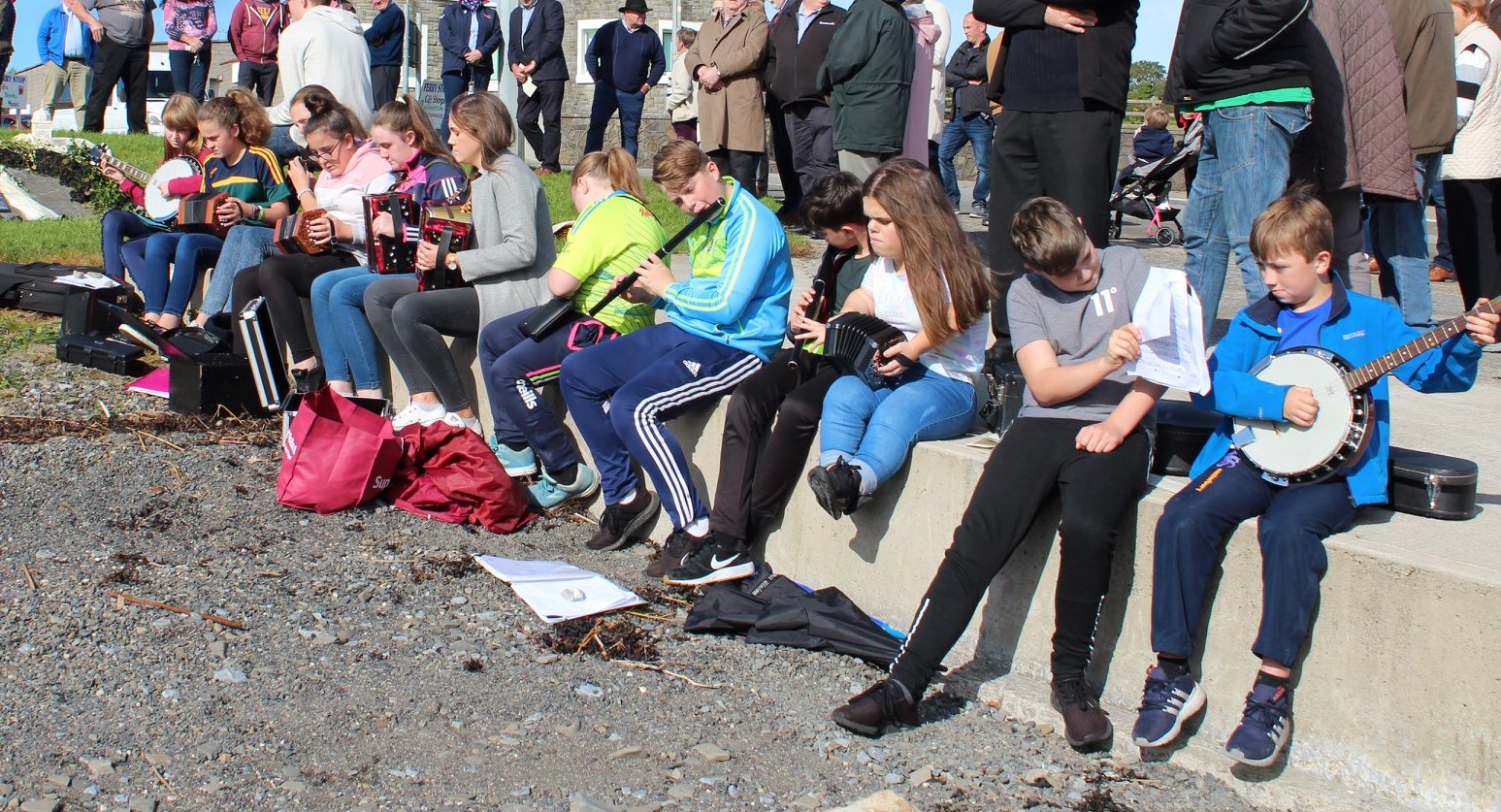
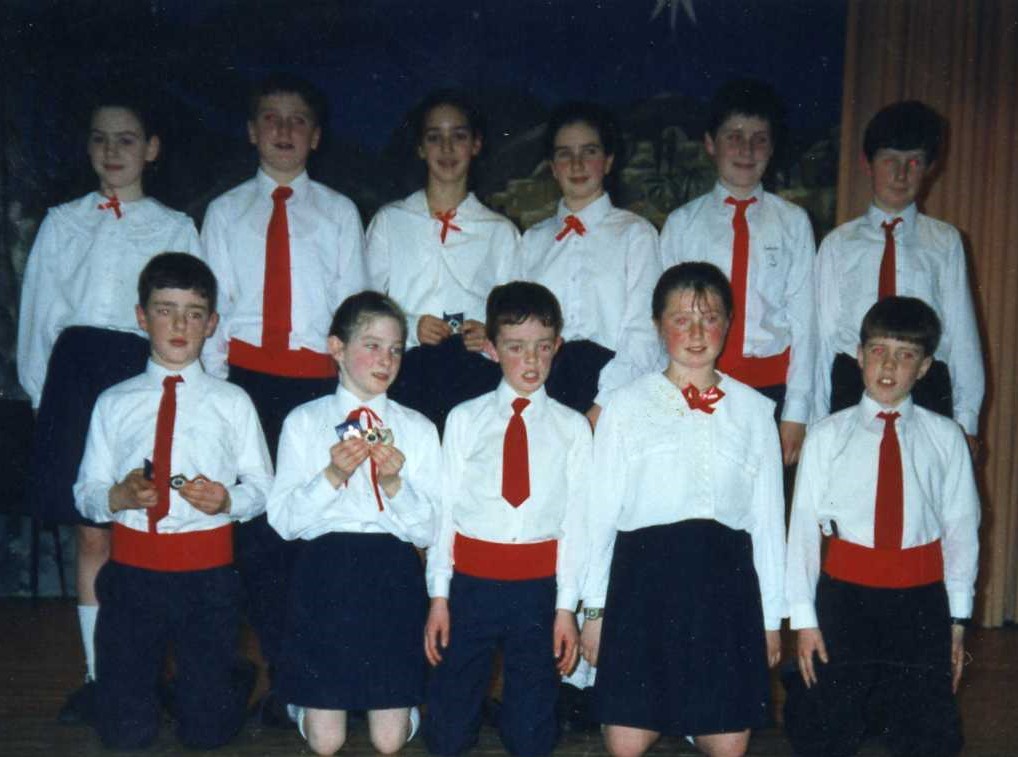
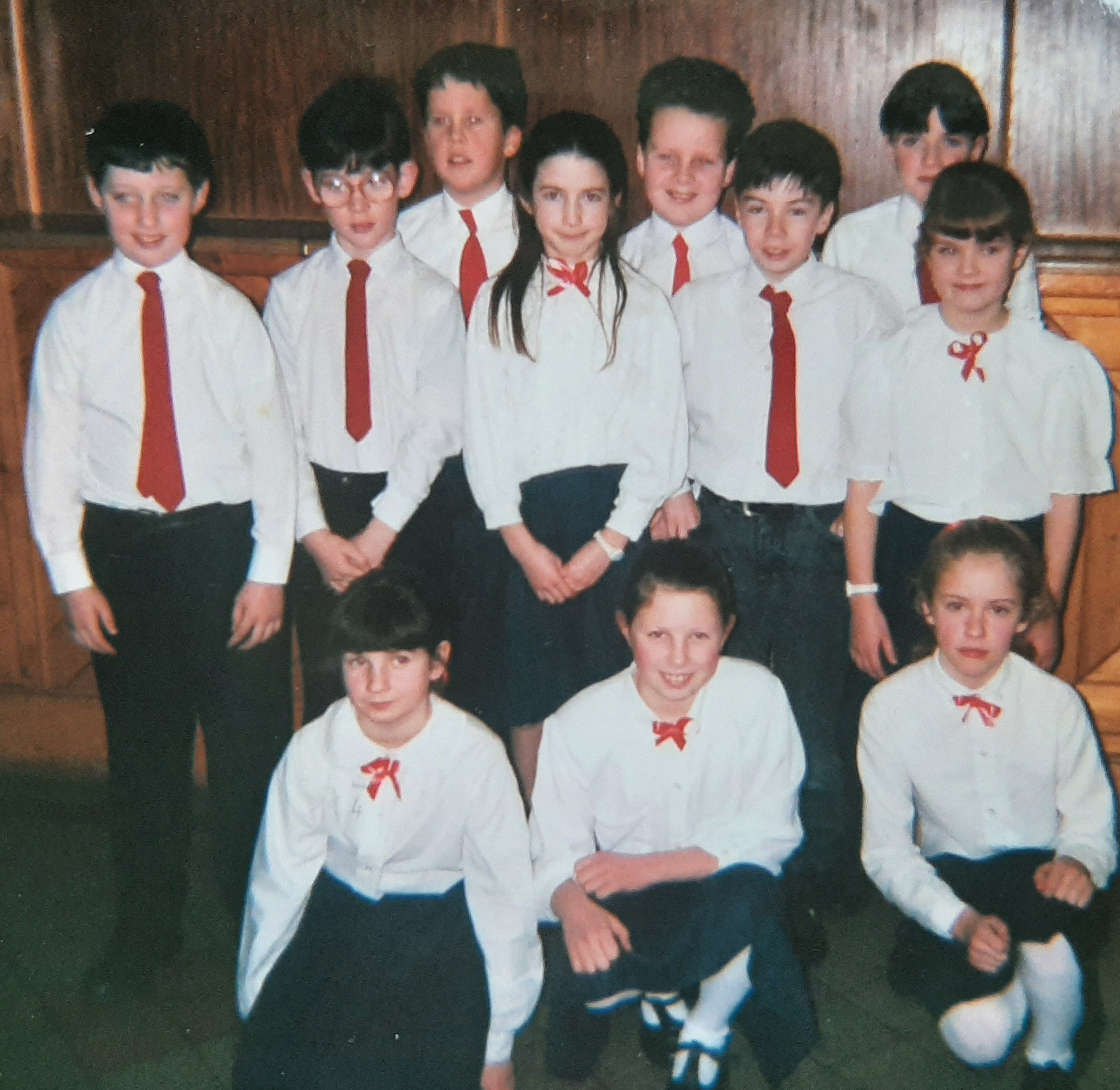
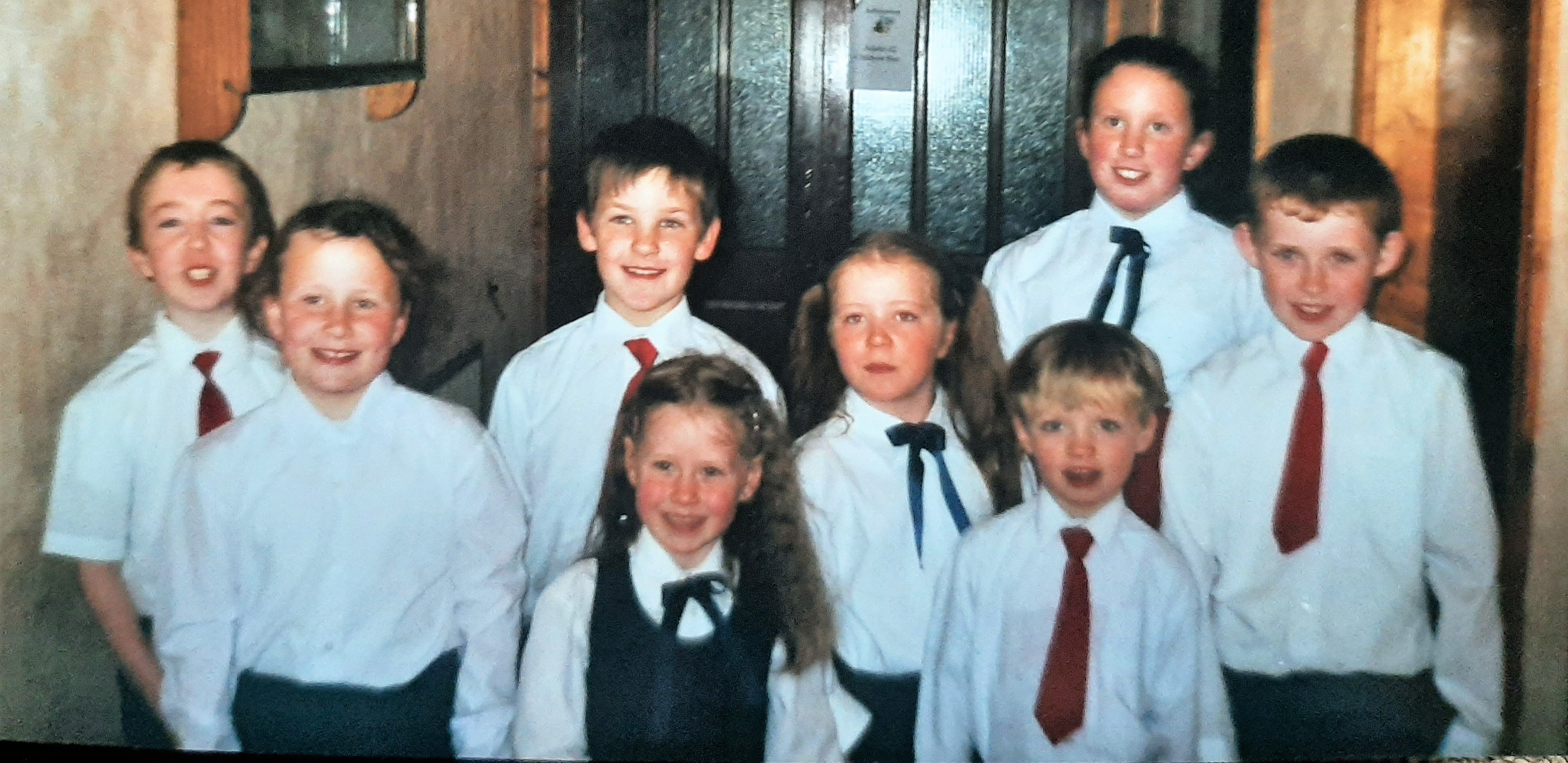
Traditional music is experiencing a revival and it is great to see so many of our young people enjoying playing, and perfecting their skills under the direction of their music teachers. The many young, local talented players and the Burrane and Knockerra School groups give hope to a parish, which holds music dear to its heart.
Michael recalls his musical days
(Michael O’Brien wrote this account in June 1982)
‘I started playing when I was about 15 years old. I first played the tin whistle but found it very difficult to find anybody to teach music in this area. There were no tape recorders or traditional music sheets at that time and very few musicians in our area. After about two years, I progressed to playing the chromatic accordion and have been playing that ever since. After some time I started to meet other players from different areas. Concertina players Tom Carey, Solus Lillis and Stack Ryan from Kilmihil, and Mrs Crotty from Kilrush. Flute players Michael Tubridy, (Kilrush) (later of the Chieftains), Micko Dick Murphy and Paddy Breen (Kilmihil) and accordion player Michael Sexton, (Mullagh) (later of the Bannermen). I learned something from all these fine players – all the various styles, etc. The first time I joined a group to play on stage was in 1960 when I played with a Ceili group from Kilmihil called the “Fáinne Óir Ceili Band”, which included some of the above players. The group disbanded in 1965. I gave up playing for a number of years until my son Paul began playing. I have been playing since and currently play with a group called Dalcassian. Members of the group –Murt Collins guitar and vocalist, Peadar Crotty concert flute, Paul on banjo. We played every weekend at various lounge bars. I enjoyed playing very much and hope to continue doing so. I think it is a wonderful pastime and would recommend it to all young people.’
The Pecker
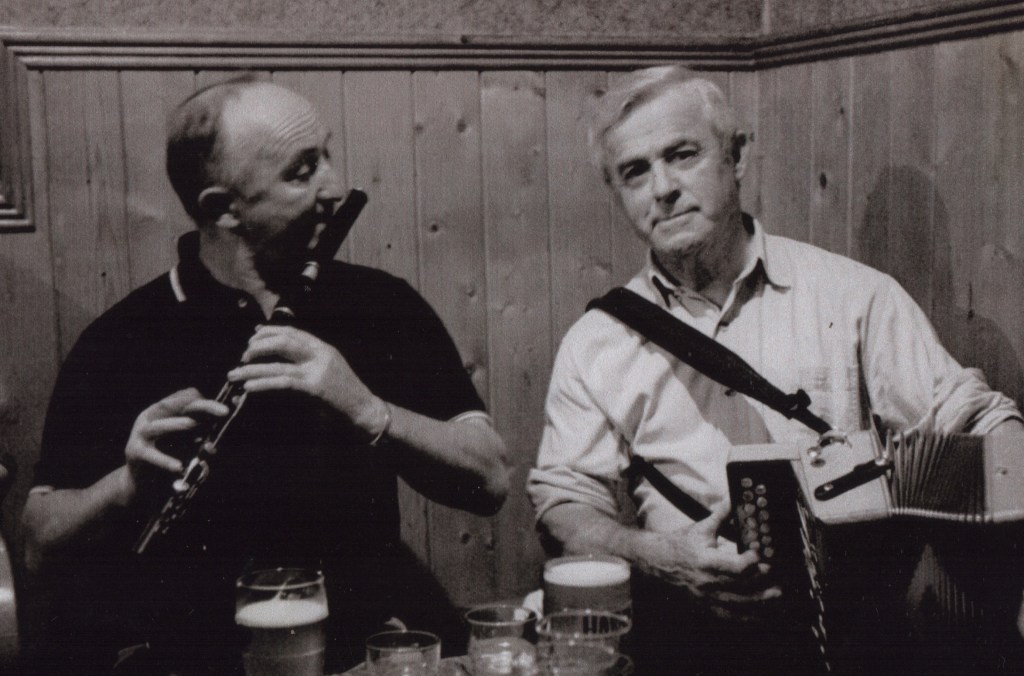
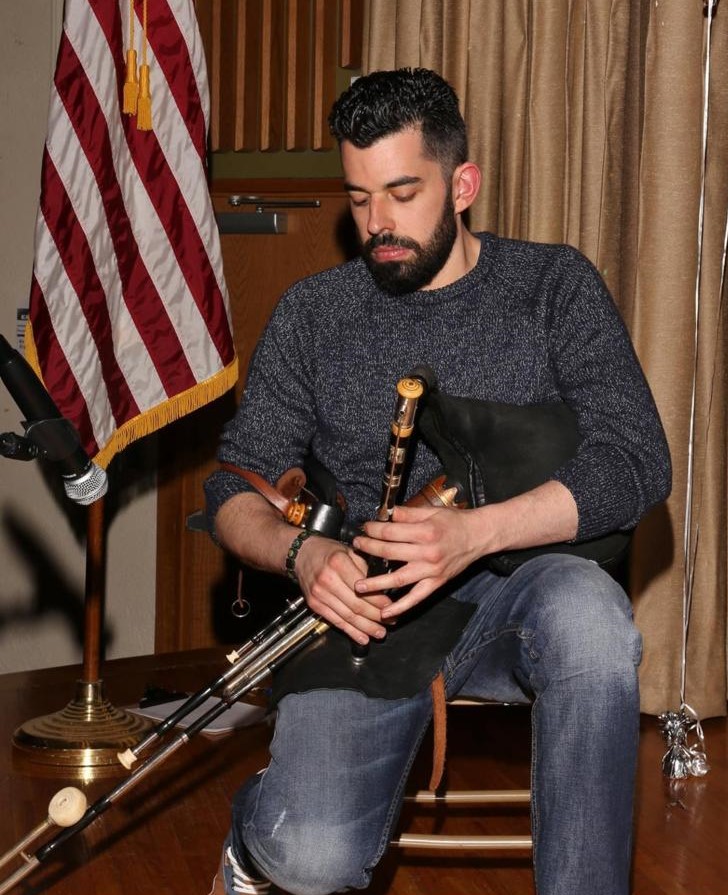
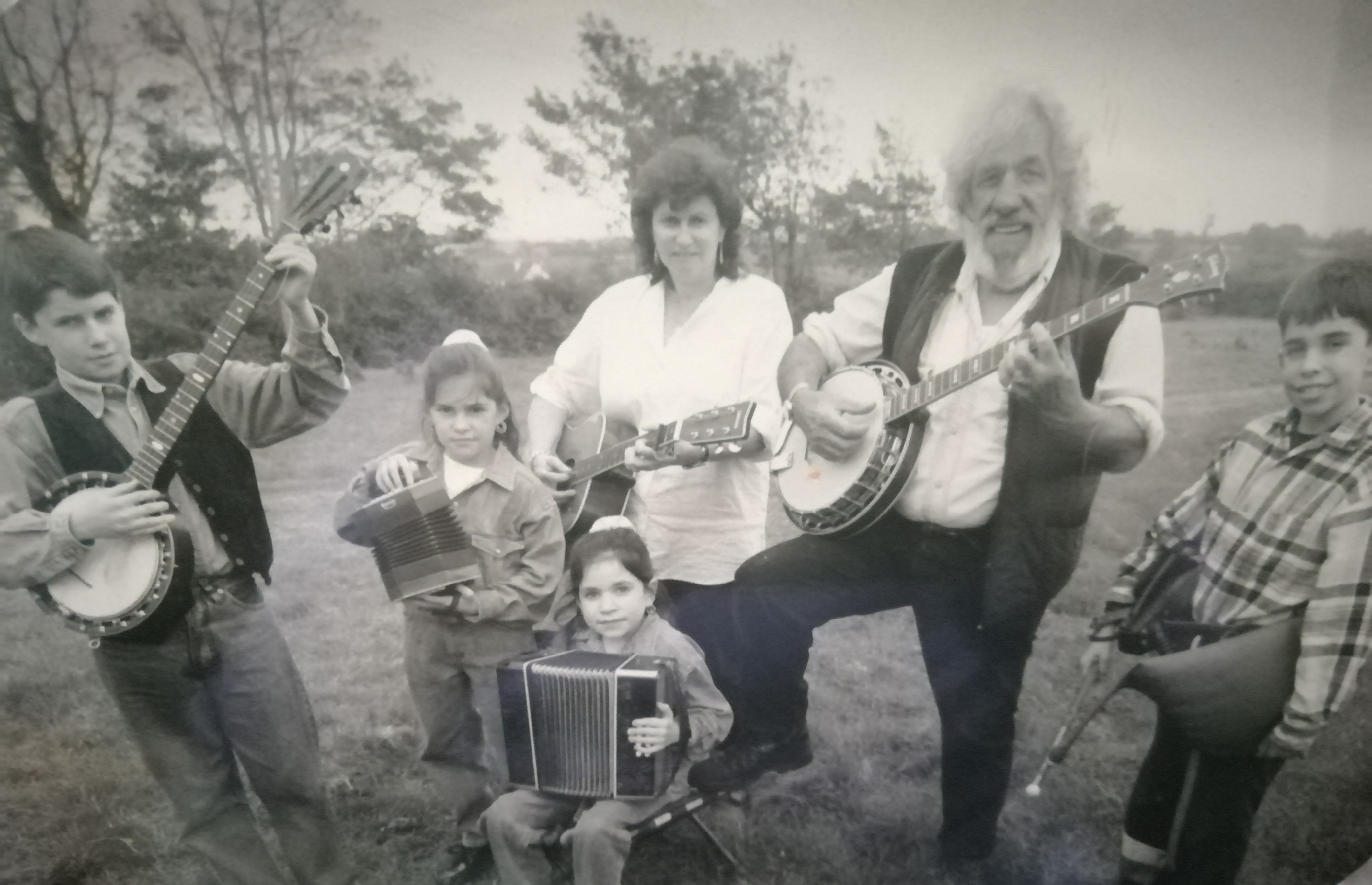
The famous banjo player Pecker Dunne busked throughout Ireland for over 60 years until he settled in our parish with his wife Madeline. They and their children set up home in Donogrogue in 1990. They, while rearing their family integrated into the local community. Pecker and his family were generous with their talents and performed at many local concerts and in the local churches. He wrote the famous song ‘Sullivan John’, which is believed to relate to a lad he knew in Moyasta, many years ago, called John Sullivan. He played a part in the iconic western film ‘The Good, the Bad and the Ugly’ and in the film ‘Trojan Eddie’. His musical heritage is being continued by Stephen – banjo, Tommy – uilleann pipes, Madeline – melodeon, and Sarah – concertina. As a testament to his grá for the parish, he made Burrane his final resting place on December 19th 2012. You can see his sons, Stephen and Tommy preform in our Good Friday video.

Moloney Brothers- Pipemakers
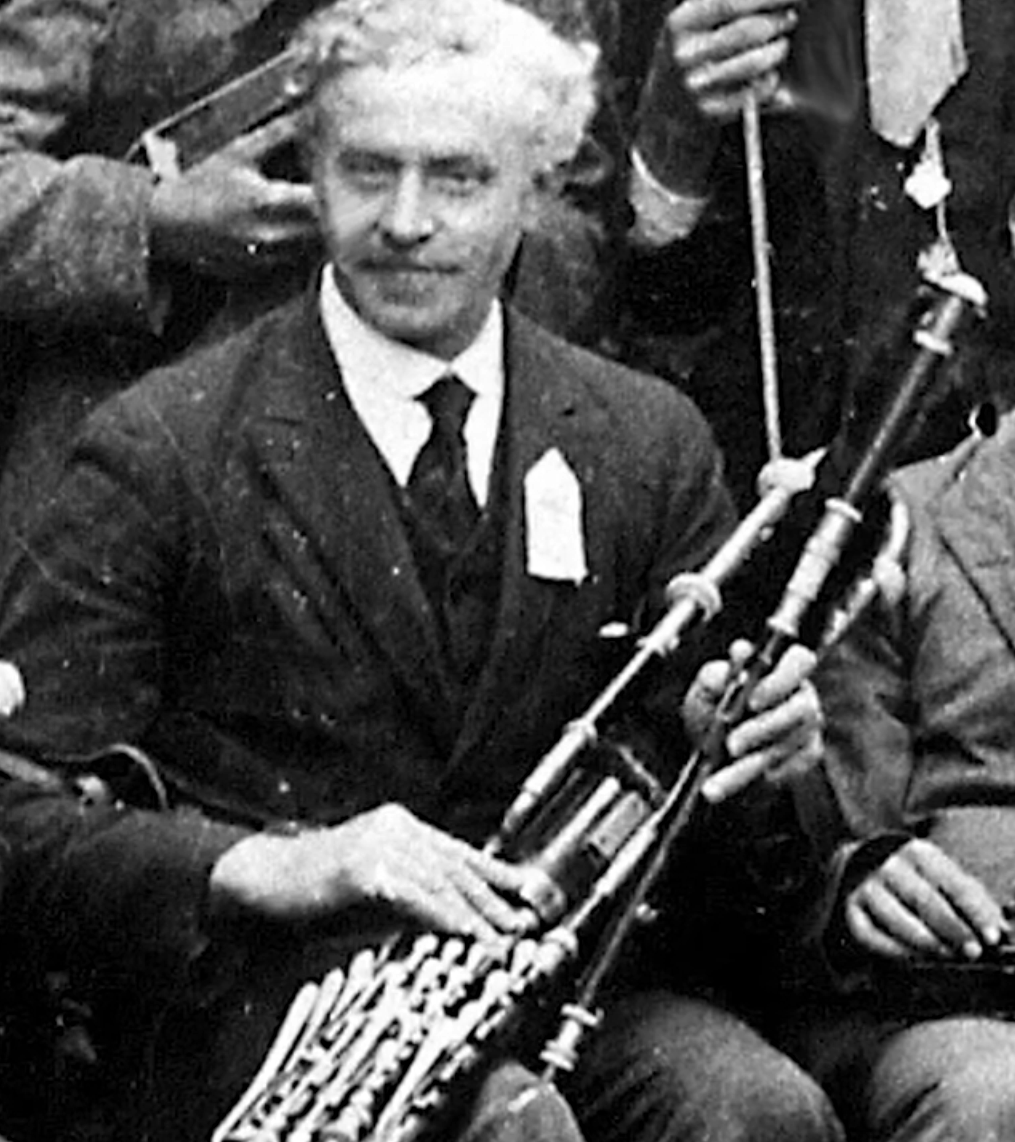
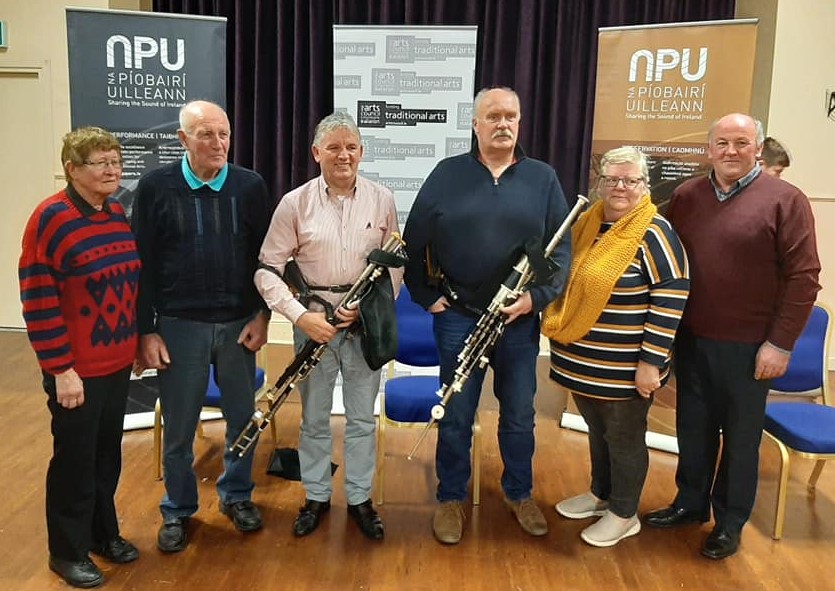
In 1906, Professor Donnchadh O’Leary picked up a set of uilleann pipes- of peculiar design- in Co Clare. They were made by the Moloney brothers, Andrew a blacksmith by trade and Martin a joiner by trade. Both were skilled in their respective trades. Their homestead was in the townland of Tonovoher, where their direct descendant M.J. Moloney and his wife Teresa now reside. Until recently a section of the forge was still visible and some artefacts of the forge remain. The hill on the Tonovoher road is still known as Piper’s Hill, a tribute to the men who created an outstanding work of art. Many locals believe that the Moloney brothers made most of the pipes in Clare. Tonovoher, and the parish in general, has a rich musical heritage.
Professor O’Leary, (native of Ballyvourney, Co.Cork) of St Peter’s College, Wexford was a Gaelic League organiser and he became acquainted with a Mr Nolan of Knockerra, who was a good amateur piper and pipes enthusiast. It is documented that the same Mr Nolan cycled to Co. Wexford on his boneshaker bicycle to receive tuition from a renowned piper. Earlier in his life Mr Nolan knew the Moloney brothers very well. He recalled that the brothers made a number of sets of pipes and were always most obliging to the other pipers. They willingly repaired instruments and it is said that their reputation grew as a result of this. It was from experience gained in such repairs that their skills eventually led them to the making of uilleann pipes, which were considered generally quite complex and very different to other styles of the period.
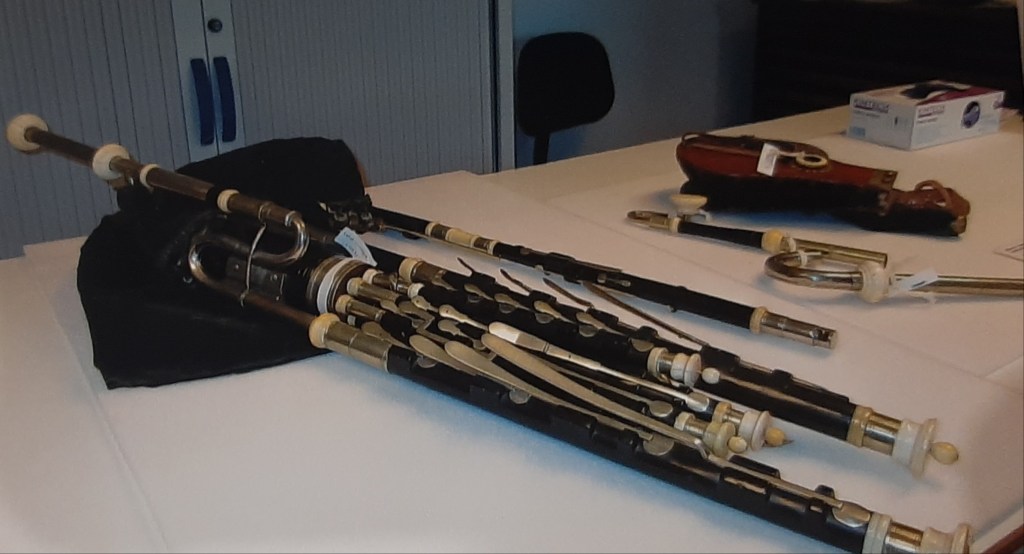
It was on the order of Crofton Moore Vandeleur that they made the most elaborate set of pipes in existence. The pipes were for his son, whom he hoped would become a piper, very possibly for the war effort. The famous Moloney pipes are a massive ebony instrument with a trombone side, which is a conspicuous feature. The chanter is 18in. long (the norm would be 12in.) and as a result produced a much sweeter and fuller sound. Five regulators with 24 keys were included. The tones of both basses are said to resemble those of an organ. The instrument also includes two splendid drones. The ferrules, tubes and keys are of solid silver and artistically turned out. The various pipes are tipped with ebony and ornated with ivory mounting; it is understood that all the regulator and chanter keys were made from crowns and half-crowns of the day. Experts estimate the original cost to have been about 100 pounds. They were made c.1835, when the brothers’ circumstances were good.
Owing to a gun accident, which resulted in the young Vandeleur damaging his fingers, and not realising his dream of playing the instrument, the pipes were never collected, or paid for. Because of the high quality of the materials used and the cost of the pipes they were unsaleable. The brothers having invested all their resources in them and as a result of the subsequent Famine years, were financially ruined and they had to part with the pipes for a trifling fraction of their worth. They subsequently emigrated to the U.S.A.
Martin Carroll of Freagh (Miltown Malbay), a farmer of independent means, bought the pipes for his brother John, who was considered an excellent piper. People came from all over to examine the pipes and hear him play on them. He died in 1890 and, as none of his family played, the pipes remained unused until Professor O’Leary, obtained them in 1906. When the professor got possession of the pipes they had been lying idle for many years. They were completely overhauled by Mr William Rowsome and he restored their ‘voice’ which is described as a ‘hive of honeyed sounds’, a tribute to the genius of the makers.
The pipes are currently stored in Collins Barracks Museum, Dublin, having been donated by Professor O’Leary in the 1920’s to the National Museum- a fitting memorial to two Tonovoher craftsmen. The Local History Group visited Collins Barracks, to view the pipes on September 14th 2015, under the supervision and assistance of Professor Jennifer Goff. She also informed them that Mr Talty of Miltown Malbay, a pipe-maker and a descendant of Mr O’Carroll, has got permission to make two replicas of the original Moloney pipes. The group could not but be moved by the beauty of the instrument, yet saddened that their masterpiece was neither appreciated nor they financially reimbursed.
For the record, Sam Rowsome, a native of Co. Wexford, a piper himself, ran a business of making and repairing of uilleann pipes, in Dublin. His son Leo, who founded and became President of the Uilleann Pipers Society, was recorded on Radio Eireann playing the Moloney pipes in 1936.2
‘One two three four five six seven, one two three, one two three’
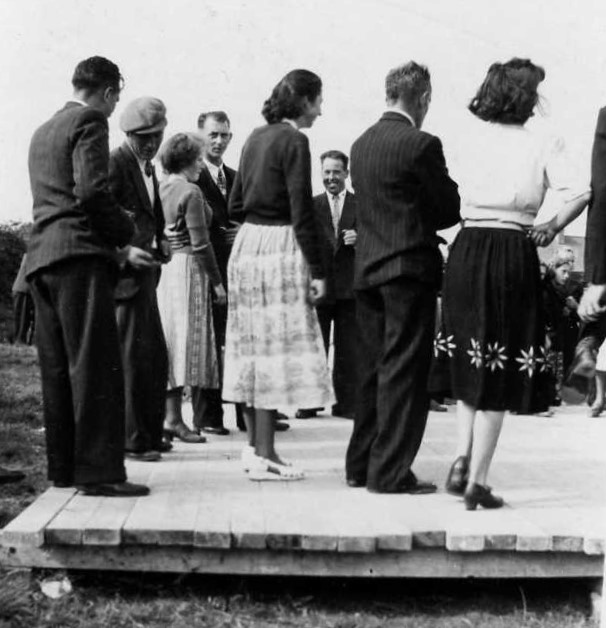
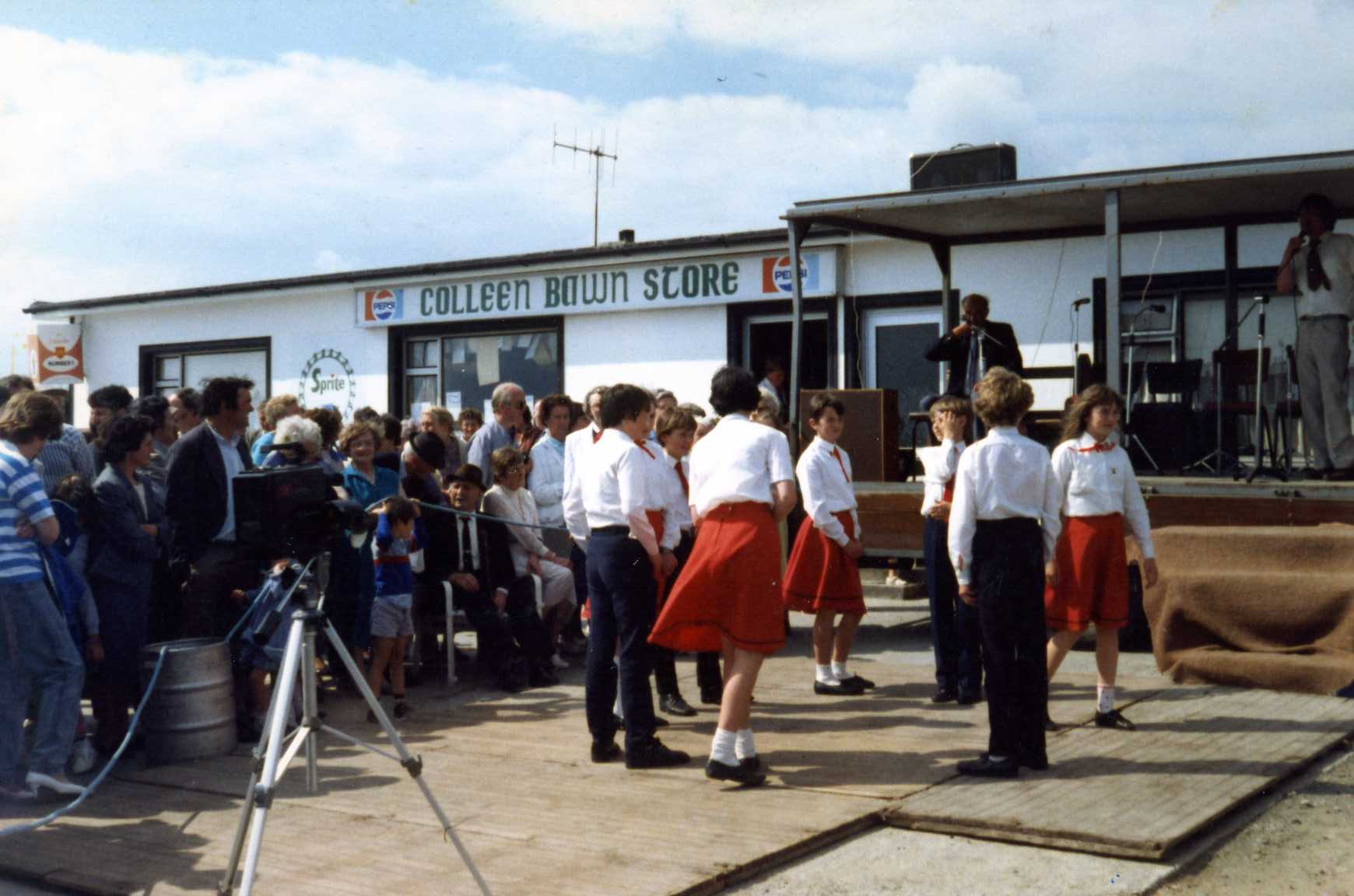
Irish music has such a rhythmic beat that the listeners automatically tap in time to the beat. This in turn led to structured dancing to the music of jigs, reels and hornpipes. Individual step dancing was popular in early days, Peter Carey, Joe Meehan and the Cusack brothers were remembered for their performances on the flag floors, at house dances. The next stage of dancing was set dancing, which comprised four couples dancing to a format. The set consisted of four reels, a jig and a hornpipe. The favourite sets in this area were the Caledonian and the plain set. Most occasions were celebrated through music and dance. All through good and bad times, music, song and dance have helped people brighten their lives. Many talented dancers have represented the parish, in the various set dancing and step dancing competitions, throughout the country. It was, locally, a popular pastime.
During the 1930’s Jack O’Donnell, (Tullycrine), taught the jig, reel and hornpipe steps as well as the dances, The Bridge of Athlone, The Waves of Tory and The Siege of Ennis, twice a week, after school, in Knockerra. In the 1940s Miss O’Keefe taught dancing, after school, in Killimer school, twice a week.
Dan Furey (Labasheeda), will always be remembered as an enthusiastic dancing teacher: jigs, reels, hornpipes, as well as the group dances including Siege of Ennis, Waves of Tory, Walls of Limerick, Shoe the Donkey and of course the set were all taught by Dan. He had no problem demonstrating steps, as he was a lovely dancer himself and he also accompanied the dancers on violin. A push from the bow ‘Go on will you’ was a reminder to the dancer to step it out. He taught dancing to the pupils in Burrane and Knockerra in the 1950’s, 1960’s and 1970’s. He also taught in the Hall and at Grogan’s (Carhuefree), when he had no other venue with a timber floor.
Other dancing teachers John Fennell (Ballykett), Mary Clancy (Mullagh) and of course our own John Carrig (Kilcarroll) , a very fine set dancer himself , played their part in keeping the traditional dances alive.
‘Local Ditty’- about a local house dance
Last night I held a Tournament,
which leaves me now in debt.
Though dancing be prohibited,
I ventured on a set.
The dressers were now shaking,
the doors were on the floor.
Out comes the missus stern and brave
unto the parlour door.
‘Take up my parlour teapot
And mind don’t on it walk.
Now Tom stop the music.
Let them now sit down and talk.’
Dance Hall Days
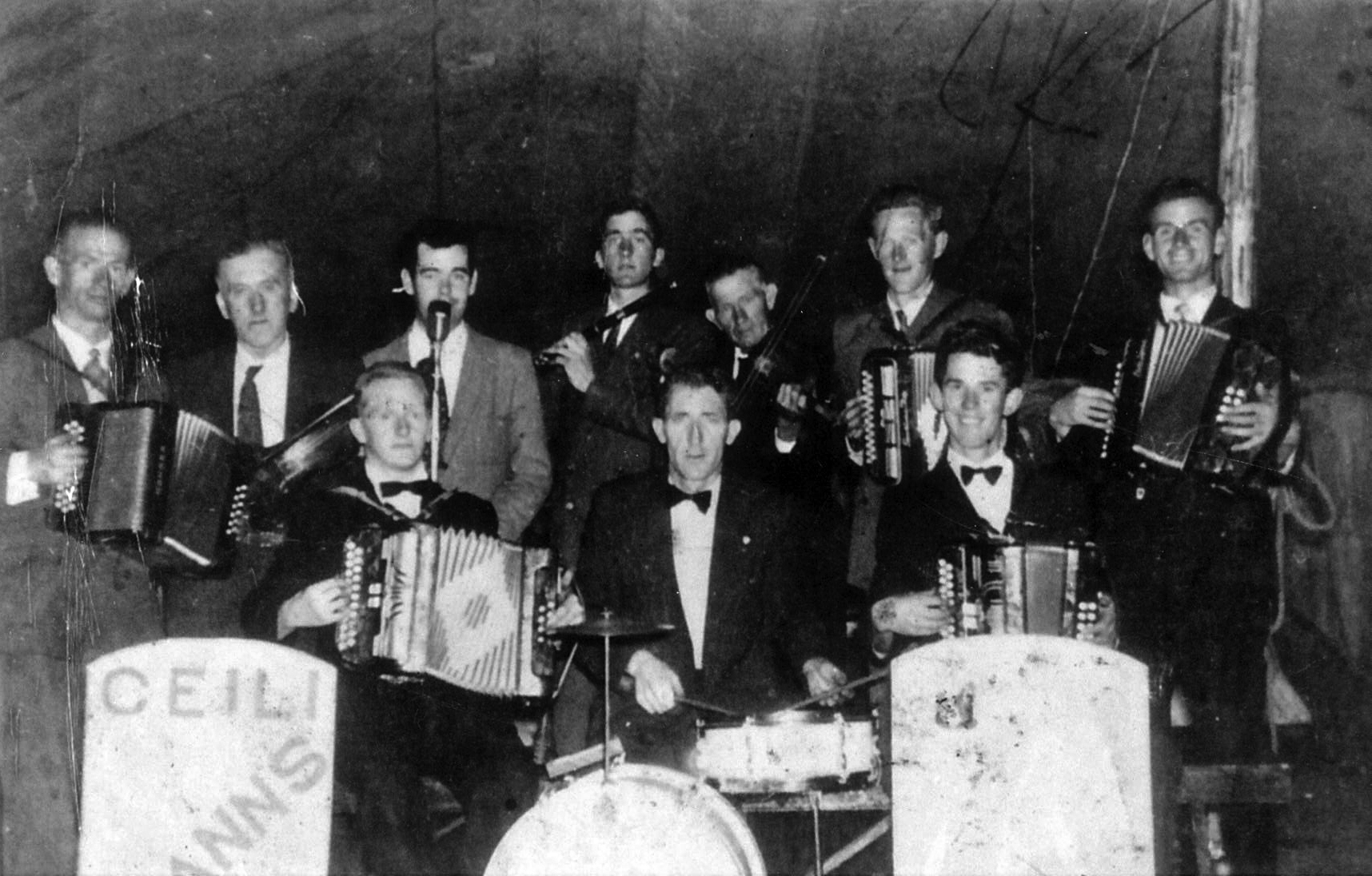
Stories are told of the dances ‘in the old school in Fr Austin’s time’ (1934 -1935). Admission was two shillings and sixpence (2s 6d) and music was provided by such musicians as Joe Moloney, Charlie Simmins and a group from Labasheeda. In the early days the musicians were unpaid, but during the dance a hat was passed around and money collected. Later in the 1940’s one schoolroom was used for ceilí and set dancing and the other room for ‘modern dances’, such as the foxtrot and quickstep.
Later supper dances became popular, which were served by the ladies in Power’s shed across the road. These dances continued until 3am. The St Patrick’s Night ceilí dance would be held following the races in Tullycrine, and food supplied by the ladies.
In the 1940’s Tom Power converted a shed, which became known as Power’s Hall, into a dancing venue. Its timber floor was ideal and welcomed by ladies in fine dresses and young men in suits and ties, who danced the night away. They also rented the premises for cookery classes, plays and variety shows and ‘wren dances’.
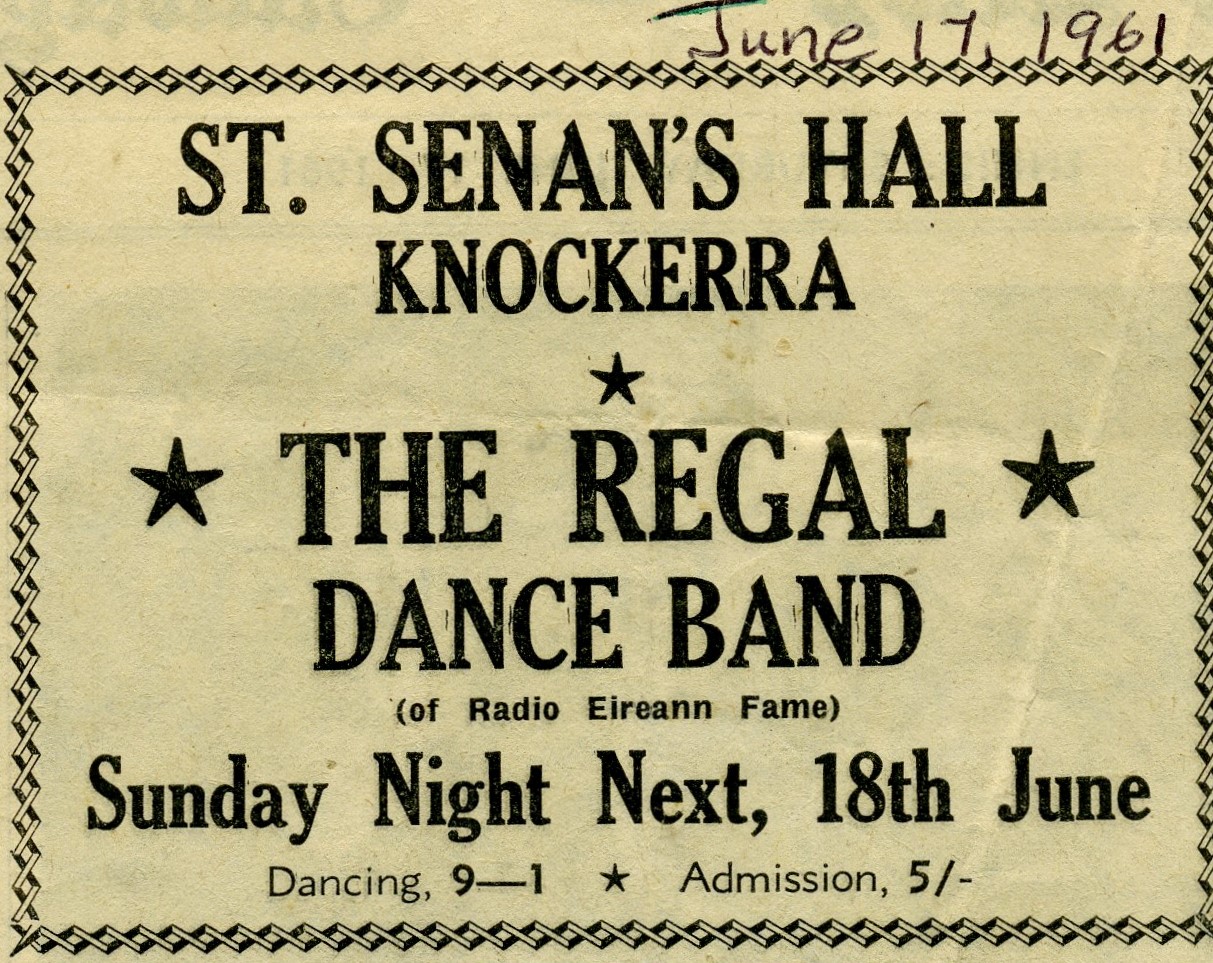
Due to the burning of the old school in December 1950, the building was redesigned as a dance hall and by 1955 its doors were reopened, dedicated tour local saint, St Senan’s Hall.
When dance halls were at the height of their popularity, people came from miles on bicycles and in hackney cars to dance waltzes, foxtrots and jives to the sound of the leading bands of the day: Donie Collins, Mick Delahunty, Maurice Mulcahy, Premier Aces, Tommy Cleary and The Vanguard Six. There were also plenty of great Irish nights with bands such as The Tulla, Kilfenora, Gallowglass, and Fáinne Oir ceilí bands. Others who performed were Dermot O’Brien, Johnny McEvoy, Danny Doyle and Brendan Shine.
Knockerra Hall, in the1950s and early 1960s, was hugely popular with dancers, who came from neighbouring parishes and many from further afield. Nostalgic memories were recounted by many and especially those who met their future wives/husbands in the ‘Ballroom of Romance’.
Tessie Power has great memories of those times. The shop was the meeting place, before and after the dances.
‘We stayed open ‘til after 2 o’clock and minerals and Mikado biscuits were the order of the day. The girls arrived on bicycles with their dresses pinned up so they wouldn’t get snagged in the chains or spoiled by the dirt from the roads. They would then retire to the living room of the house to readjust their finery and touch up their lipstick.’
The dances also provided Tommy’s father with a nice money spinner, outside of the income from the shop, with bicycles being parked in the yard at sixpence a go.


 Killimer Local History