Dogs and Horses
Greyhounds
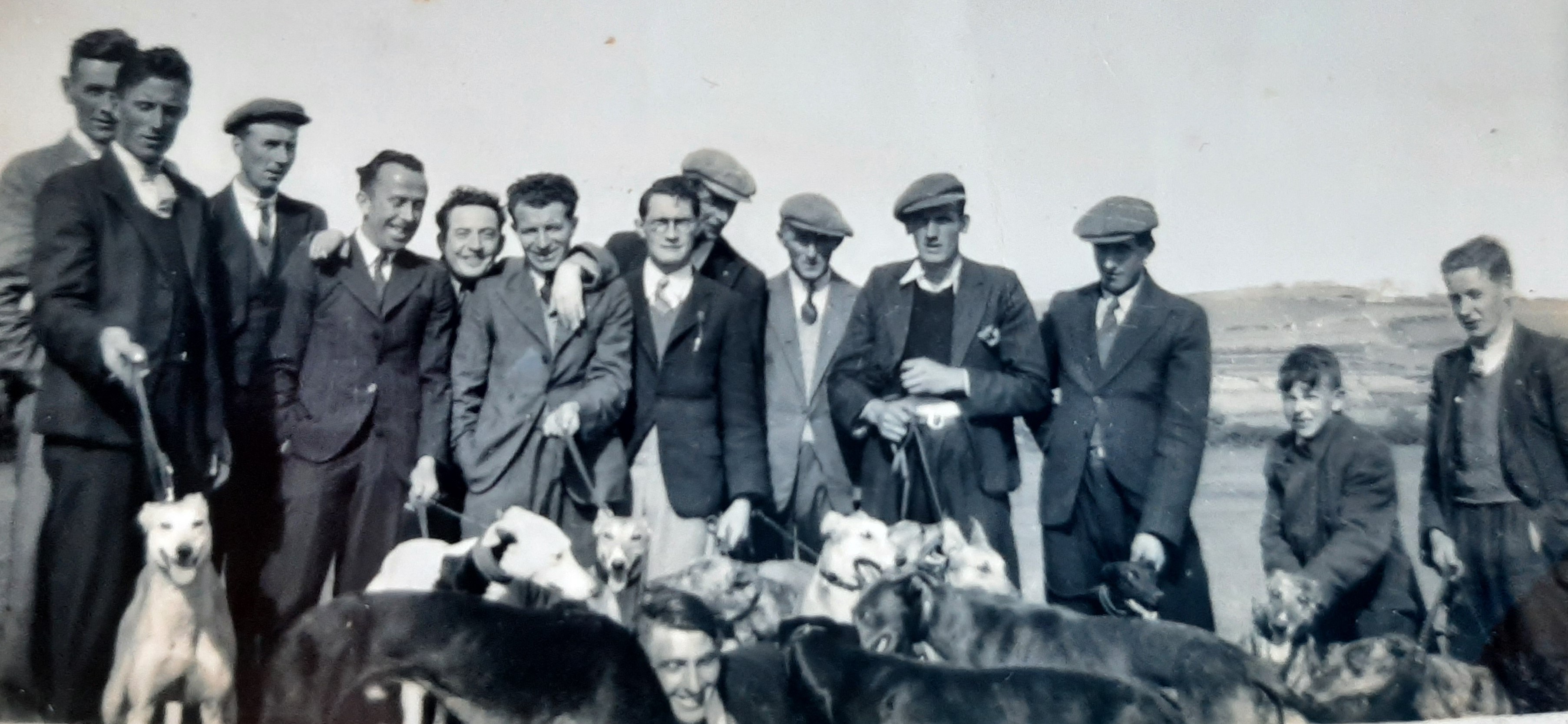
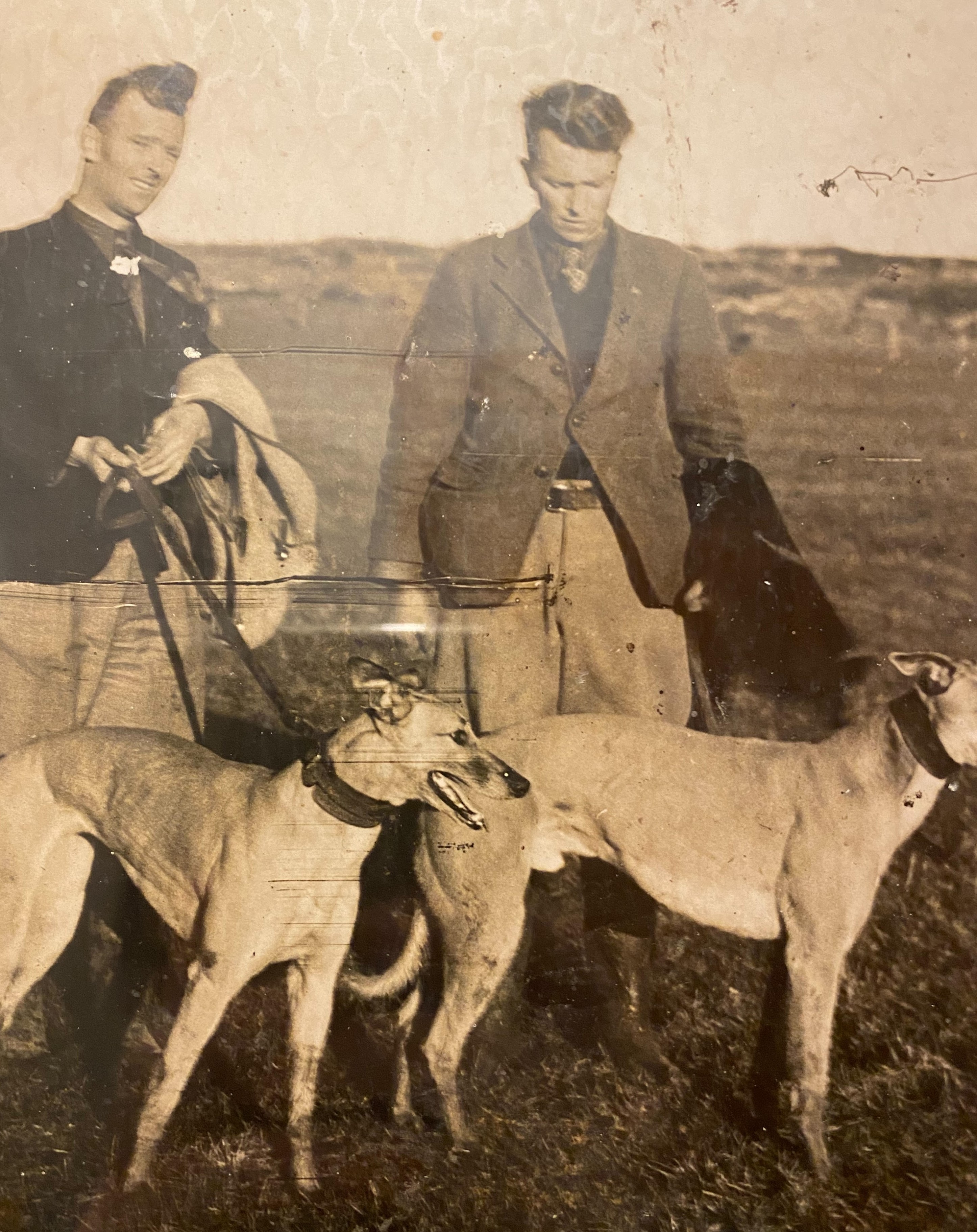
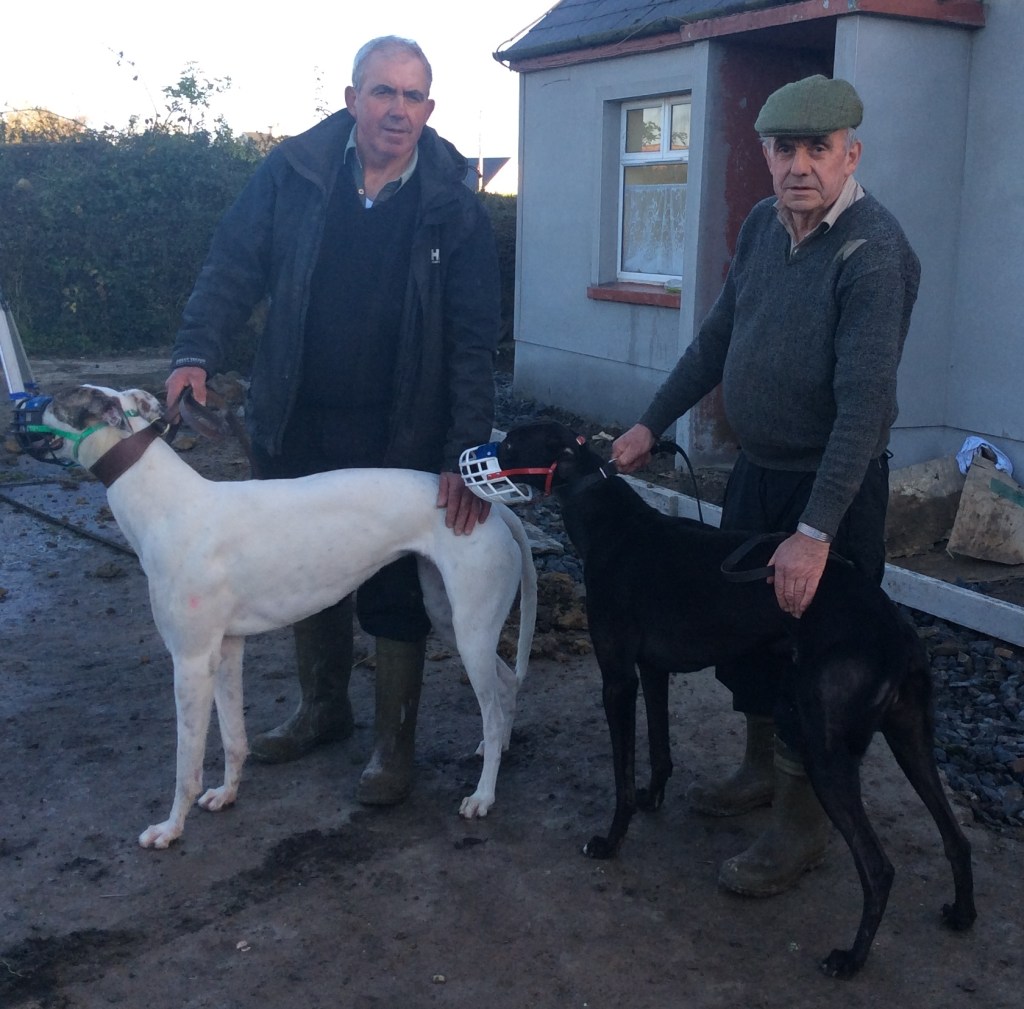
Greyhounds have always been a part of life in the Mulqueen household (Molougha). John Joe Mulqueen started his career in the breeding and training of greyhounds in the 1940s. He trained and bred both track and coursing dogs and had many noteworthy successes over the years. He had many winners throughout the country at various dog tracks including Limerick, Galway, Tralee, Clonmel, Newbridge, Belfast and Shelbourne Park, Dublin. Following these wins he was sure of a good price for his pups. His last winner at the old Kilrush Greyhound Track was a dog called ‘Galtee Rover’. In the early years he bred his own pups.
In the 1970s he purchased a greyhound bitch that he named ‘Queens Hotel’ and she won the prestigious Corrib Plate in Galway. She was bred by Con Hayes (who supplied all the Marquees nationwide for the dancing festivals in the 1960s and 70s) and she in turn produced the famous ‘Moneypoint Coal’. The Mulqueen family used the Moneypoint prefix with many other dogs including ‘Moneypoint Coe’, ‘Moneypoint Lucy’ and ‘Moneypoint Peg’ – these were all track dogs. ‘Moneypoint Coal’ was leased during his racing life and returned to stud when he was retired.
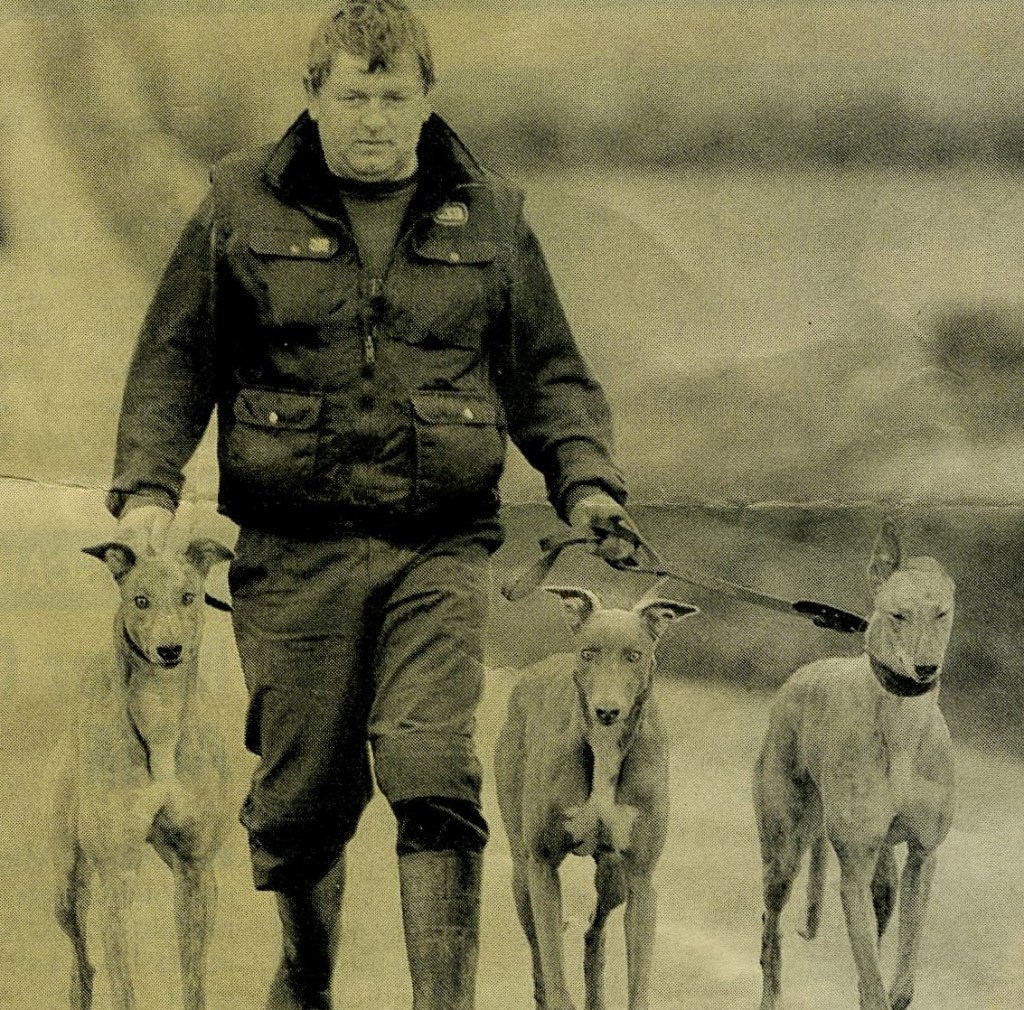
John Joe had approximately 20 dogs in his kennels at any one time. This entailed a lot of hard work, as the dogs had to be exercised/walked twice daily and fed- usually with mincemeat and brown bread.
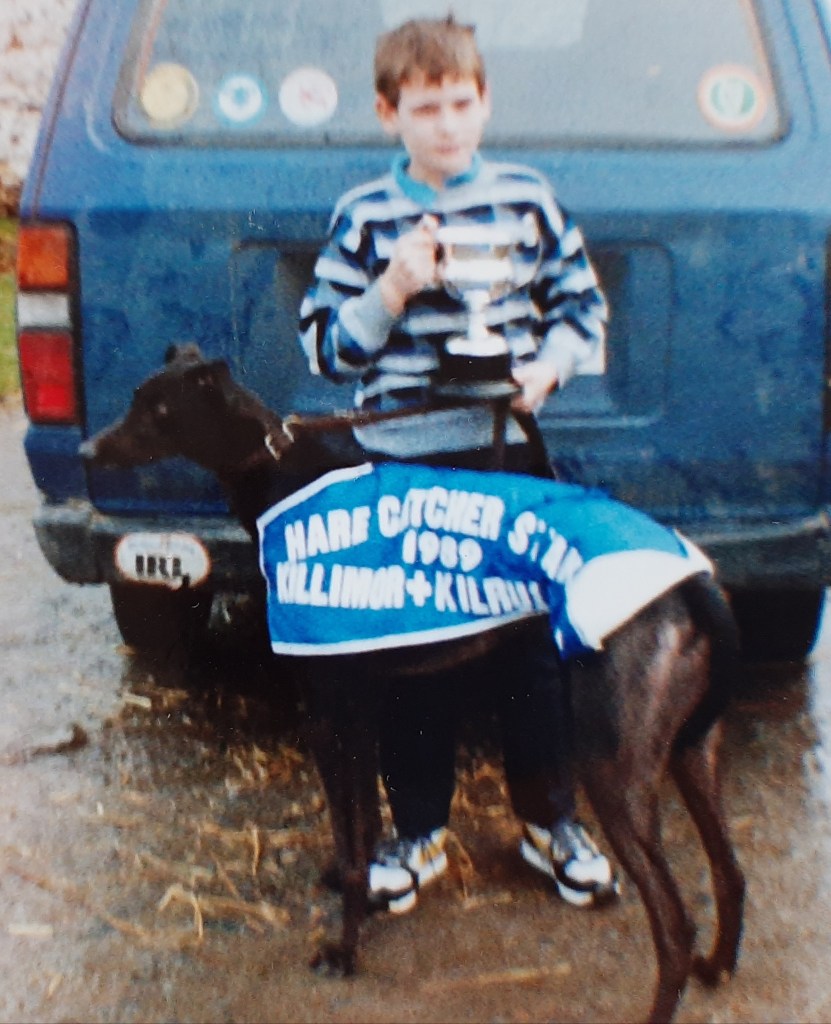
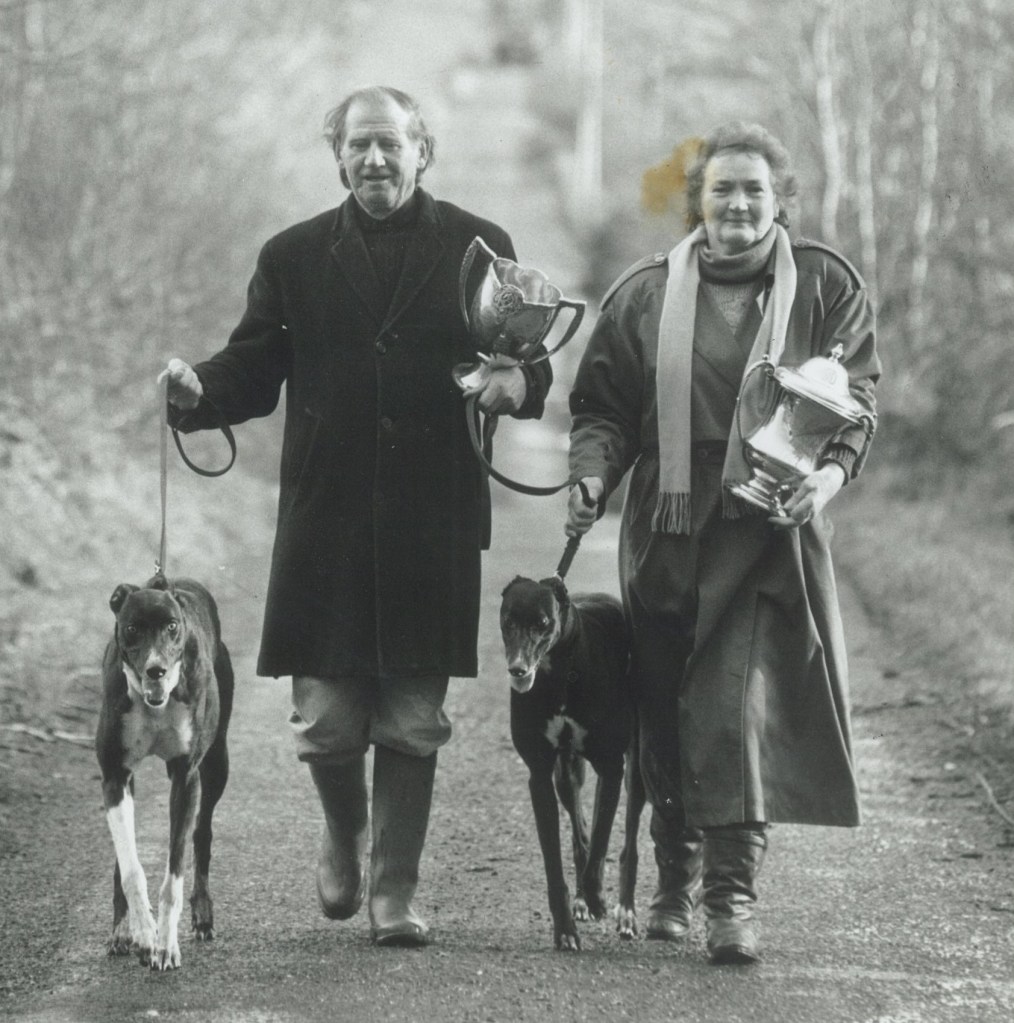
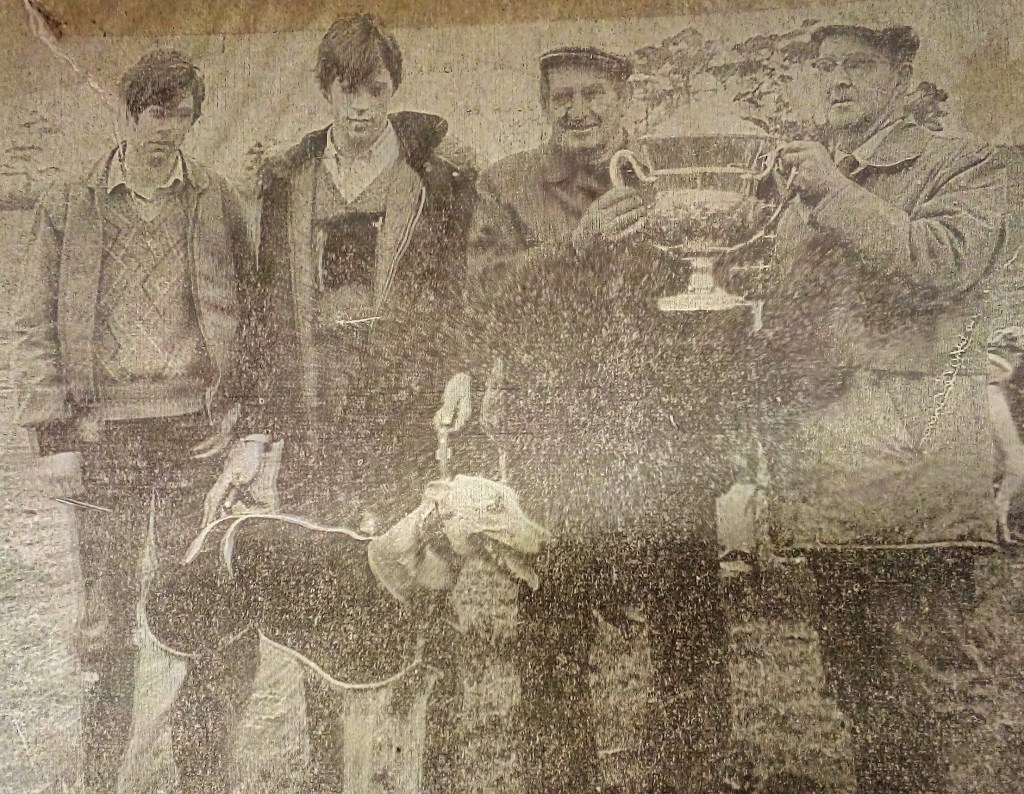
John Joe’s most famous coursing dog was ‘Madra Mór’ which won the North Kerry Cup in Ballyduff, Co Kerry in 1978. In 1989 ‘Moneypoint Sail’ won the Rose of Tralee Sweepstake.
The tradition is still carried on today by John Joe’s sons, John and Kevin. In April 2011 the Kevin Mulqueen owned ‘Moneypoint Magic’ won the Cregmore Soccer Club A3 Stake. The most recent winner for the Mulqueen brothers was ‘Not Another Cowboy’ in Tralee. On a point of interest John notes that many changes have occurred in recent times. Advances in technology now allow dog owners to enter their dogs online, prior to races. Their love of breeding, rearing and training dogs has never waned, despite the ups and downs of the sport.
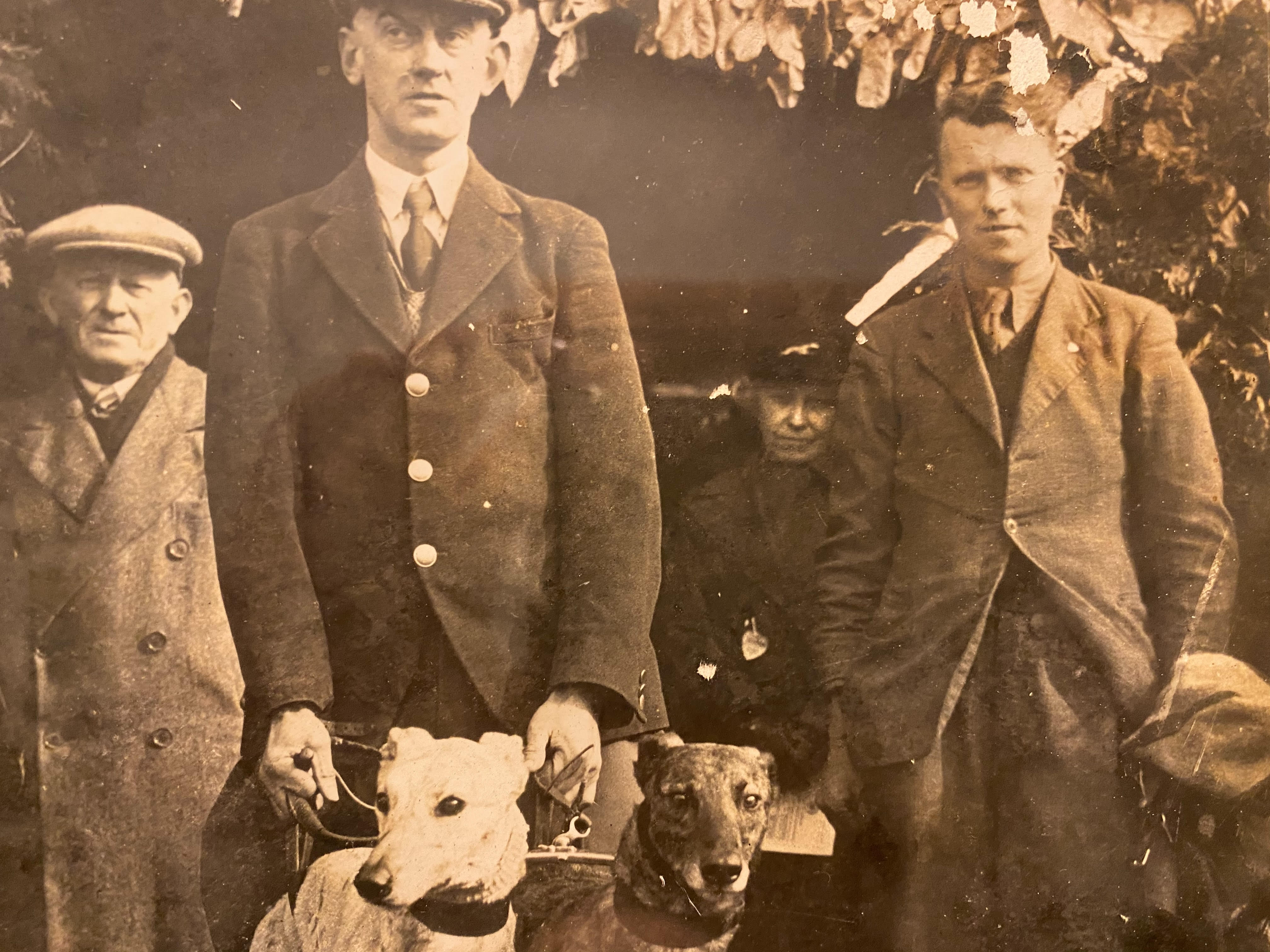
Another greyhound enthusiast was Richard Behan, (Tarmon), a familiar sight, along the Tarmon road in the 1950’s and 60’s, were Richard, his children, or helpers walking a big number of dogs. He traversed the country to many venues and had many successes, particularly with ‘Boscháil’ and of course ‘Crompán Monarch’, which won the prestigious Waterloo Cup. Joe Torpey recalled walking those greyhounds in his younger years.
Coursing
The original coursing field (30 acres) was in Carradotia (now part of the Moneypoint Power Station). Former owners were Currans, Nolans and Bonfields. It was accepted as a perfect field to test all the attributes of a dog, due to its undulating terrain.
The coursing field was so big, that it could facilitate the landing of a small plane in the early 1930s. The children of Killimer School ran out to catch a rare view of a plane back then.
The field was closed during the war years and was tilled; one had to feel sorry for the unfortunate pair of horses that had to plough it. Tom Nugent recalled in c.1966 helping Michael Meehan, assisting in the cutting and harvesting of oats in the said field. The fact that the oats had lodged (flattened) made it a very difficult week’s work.
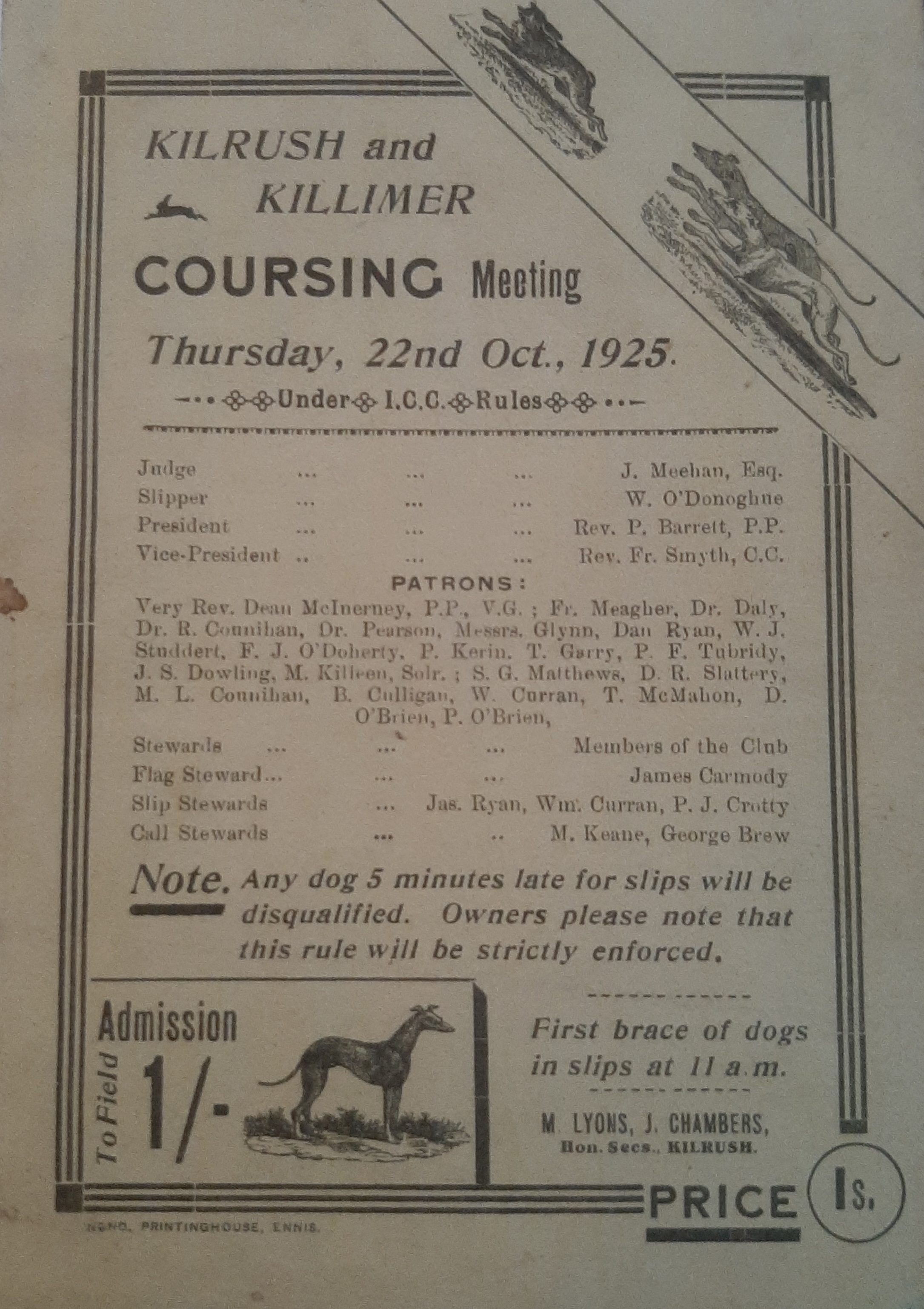
In the early 1900s there were two coursing meetings, unlike the present day when there is one meeting at the end of the year. There were fewer stakes then.
The catching of hares for the coursing usually started in September, as the hares would be required for the November meeting. Groups of 50, or more, would walk the fields and rouse the hares and guide them in the direction of the nets, which were set in gaps, or hare runs. The trapped hares would be taken to the enclosure, where they were fed with oats, sally bark and grass; in more recent times they are immunised for different diseases. While in captivity they were trained by giving them runs to get them used to the escape route, which they would then recognise on coursing day.
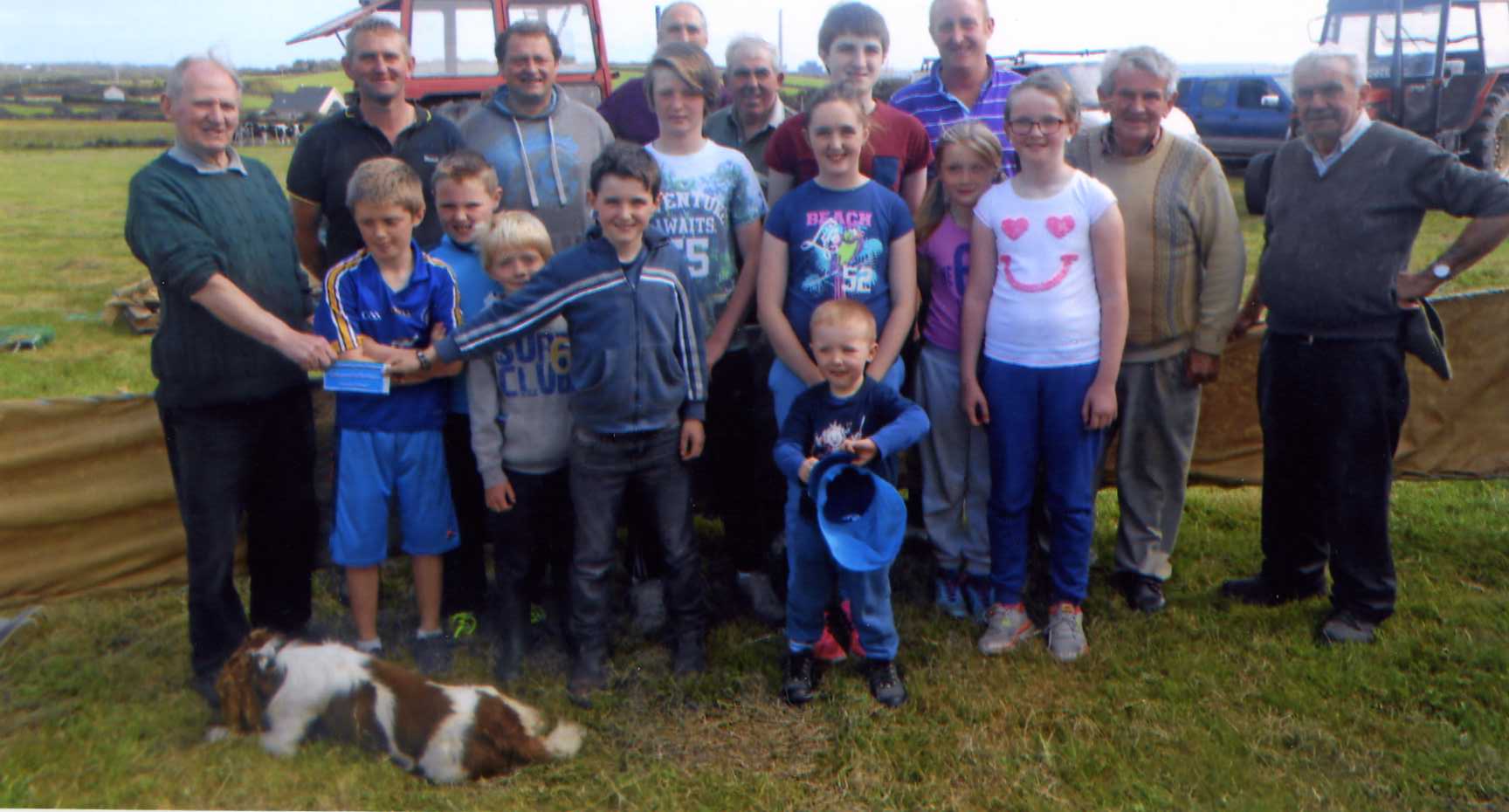
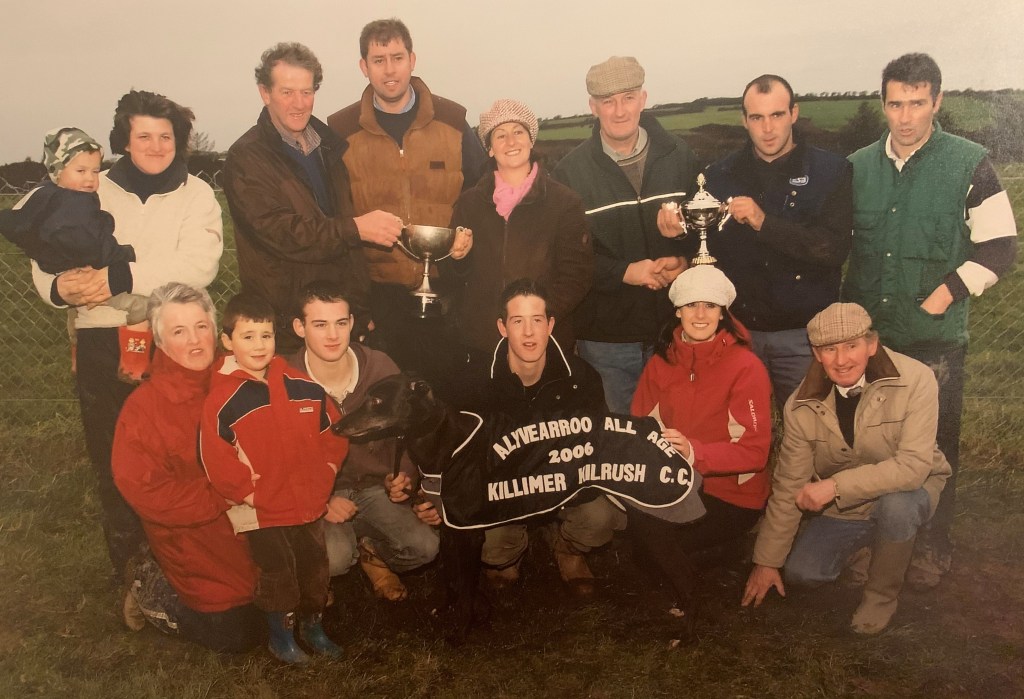
Nowadays a vet and a member of the animal rights movement and an overseer from the Coursing Council check the health of the hares. The hares are released after the coursing. The coursing day is the highlight of the year for the greyhound owners. A hare is released by a hare dispatcher. Each of the greyhounds wears different coloured collars, usually red or white, and when the hare gains a good distance the slipper releases both hounds. The judge, on horseback, rides parallel to the hounds to determine who wins. The judge raises the appropriate colour (red or white) to indicate the winner. This process continues with the elimination of dogs, until only two are left to contest the final. The competitions are known as stakes, such as All Age Dog Stake, All Age Bitch Stake, Puppy Stake, Maiden Stake, Hare Catchers and Members Stake. The winner receives a nomination for the main coursing contest in Clonmel, Co Tipperary.
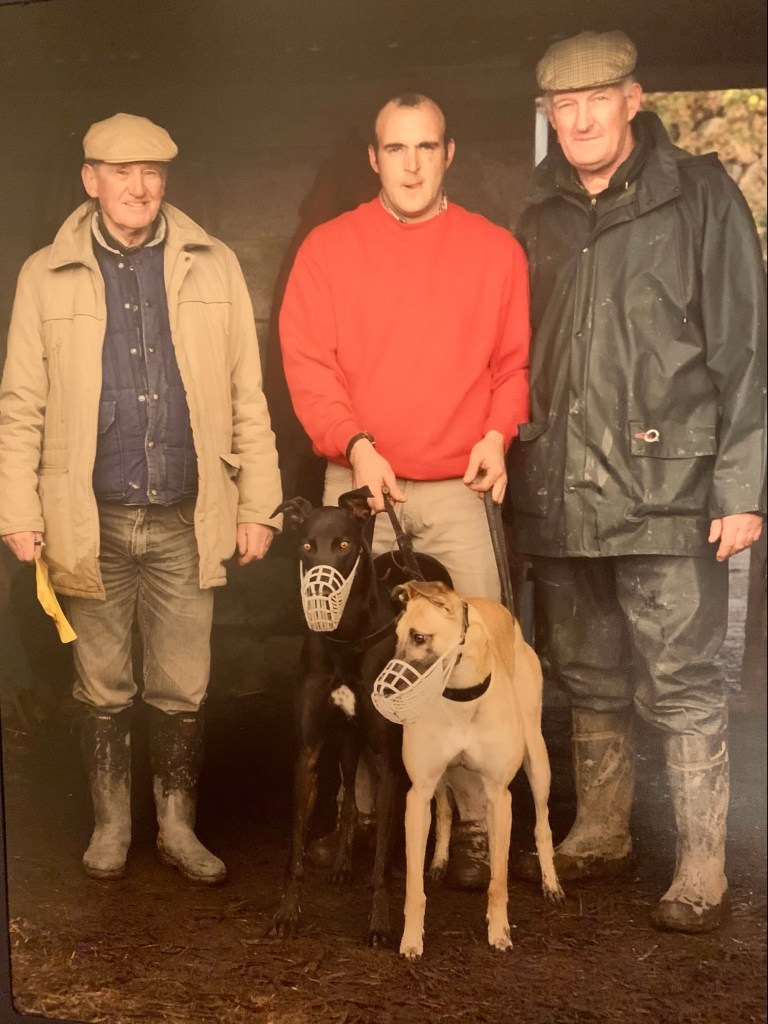
The quality of coursing has much improved in recent years; the dogs are muzzled to prevent injury to the hare and with better feeding and treatment very few hares are harmed. It is very rare nowadays that a hare gets killed. The presentation of trophies is held at the field and the connections usually adjourn to the local hostelry to discuss the day’s events. The highlight of the year for the coursing families in the 1970’s was the dinner dance, but this event has been discontinued.
In olden times Coursing Day was mostly a ‘man’s day out’. The local school children got a day off for the coursing and were sure of some fun and excitement. Lots of sideshows were the order of the day; peddlers and wheeler-dealers were all there for a ‘kill’. They sold items from camphor balls (moth repellents) to pig’s crubeens, bugles and colourful toys to windfall apples – you name it, they had it. Porter and other alcoholic drinks were also sold to quench the thirst of the adults. Plenty of entertainment was available for the young at heart – ring boards, a firing range (airgun), 3-card trick, any method of getting money was used, not forgetting the Wheel of Fortune. All the children loved to see the man with the monkey on his shoulder. Back then, before the era of TV or travel, this was top class entertainment.
The breeding and rearing of greyhounds for the coursing was a popular pursuit. Those especially interested were:
(Prefix means that all their dogs started with this name)
- James Hogan with ‘Docker Mack’
- Richard Behan, (Tarmon) with ‘Crompán Monarch’
- John Joe Mulqueen, (Molougha)
- Jimmy Keane, (Derrylough) with the prefix ‘Debbie’
- John Moran,( Knock)– granduncle of Vincent Kelly,(Knock)
- Sean and Brendan Crowley, (Tullagower)
- Noel and Tommy McMahon, (Kilcarroll)
- Mikey Browne, (Molougha)
- James McMahon, (Gortnasceach)
- Dan Cunningham, (Donail)
- Murt Cunningham with ‘Dingle Flyer’
- Joe Kelly, (Moneen) with ‘Go on the Mac’
- Anthony Clohessy and Denis Clohessy, (Moneen) with the prefix ‘Scattery’
- J.J. O’Dea, (Derrylough)
- Seamus Browne, (Moyne)
- John and Lawrence Meaney, (Burrane and Tullybrack)
- Josie Kelly, (Ballymacrinnan)
- Pat and Denis Cleary, (Carrodotia)
- P.J.Lillis, (Ballymacrinan)
- Paddy Martin, (Ballymacrinan)
- Jimmy Browne, ( Ballymacrinan)
- John O’Sullivan, (Burrane)
- Marty O’Connell, (Burrane)
Track dogs:
- Pat Madigan, (Clooneylisane)
- Geraldine Ryan, (Burrane)
- Anne McInerney/Breen, (Donogrogue Castle)
- John Meaney, (Burrane)
Horses
On the 12th of December there were races at Glin,
When Martin O’Donnell and his hunter came in.
He won his 1st race on a horse called ‘Woodbine’,
But I’m sorry to say that he won there no coin.
It was the cause of the rider the bridle being slack.
Going over the regulation, the mare broke her back.
When O’Donnell saw this he jumped into despair,
So he shouldered his saddle and headed off for Clare.
They were not long out when the boat sprang a leak.
When O Donnell saw this he jumped in the boat,
And swore by an oath, that if he ever reached the shore
He’d race Coleman no more.
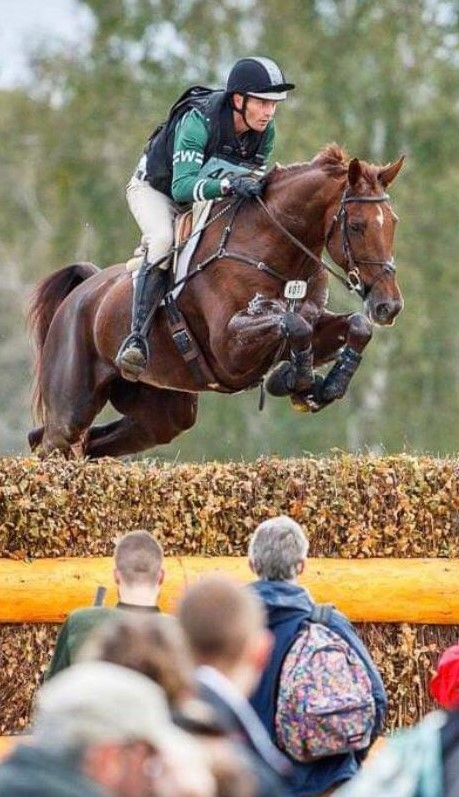
The above verse from the ballad ‘Races of Glin’ records the O’Donnell family of Granatooha, who were keen horsemen. Many will remember Mickey O’Donnell’s passion for horses, which was passed down from his father Martin (mentioned in the poem). Mickey displayed this passion even by his attire, as he wore riding breeches into his old age. He applied his skills locally, as a jockey, in Point to Point races in Tullycrine. These races were held annually on St Patrick’s Day. He also rode at the Strand Races in Kilkee, as well as other race meetings. Unfortunately he had to retire early in his career, when he fell off his horse and broke his back, but he continued his equine interests by breeding horses.
His nephew Tommie Brew (Knockerra East) followed in his footsteps. He rode horses in major races for Michael Carmody (Henry St. Kilrush) including the famous horse ‘Money Moonbeam’. Benedict Ryan had great stories to tell of Tommy’s commitment to his responsibility. He would race ‘Moonbeam’ up and down the bog field, building up stamina and strength in his steed. He would not leave the horse on the journey to the track; whether it was Northern Ireland or Cork, it did not matter – Tommy was at hand.
Other notable jockeys from times past were:
- Mattie Mulqueen, (Molougha).
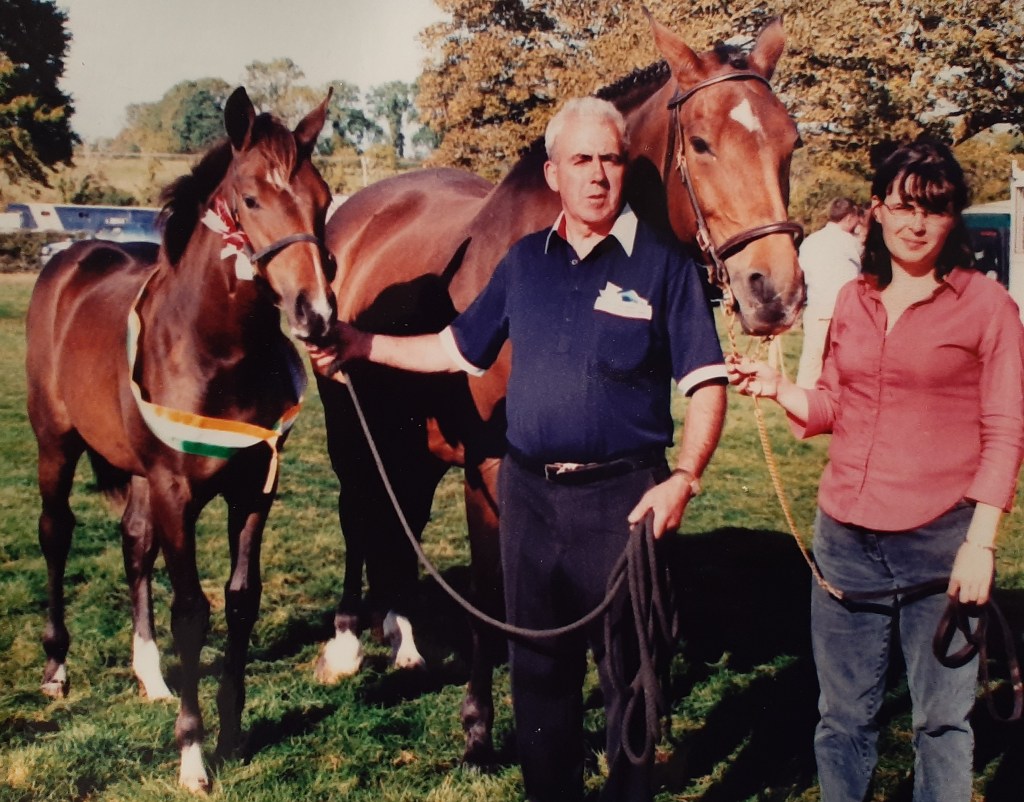
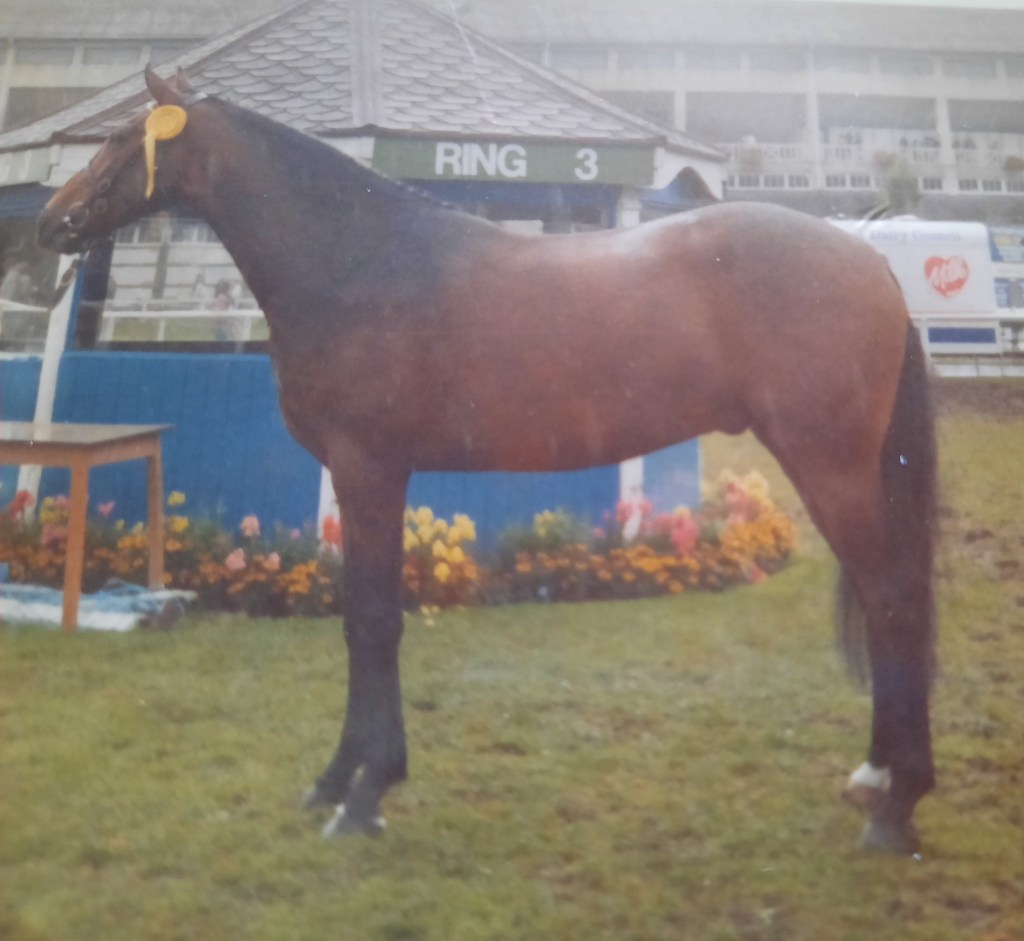
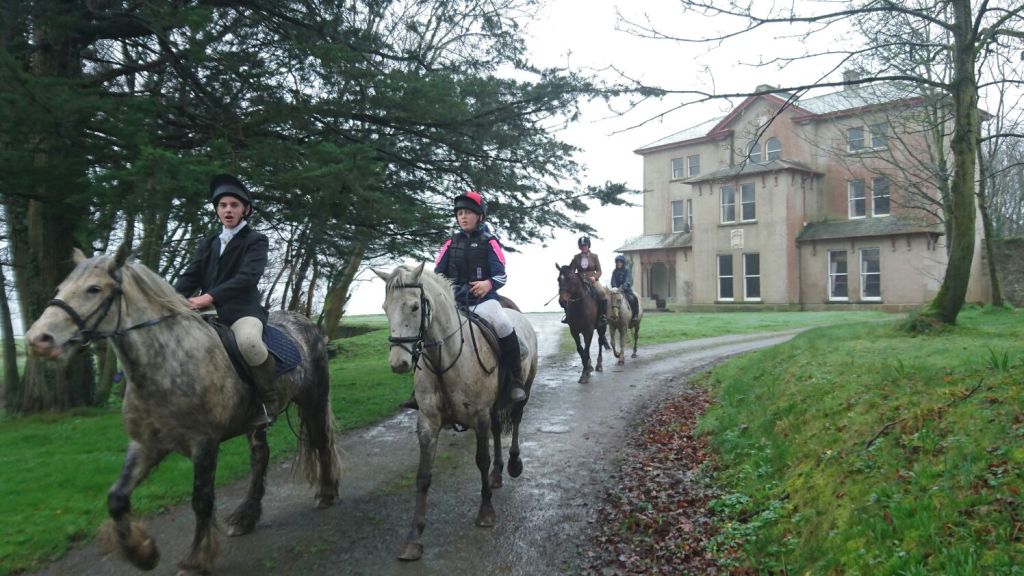
Horse and pony riding has always been an attractive sport and pastime, with many young people mastering the art and some showing great potential. Many young local riders put their skills to the test by participating in the annual hunt.
- Brian McMahon (Gortnasceach), qualified to ride at the Spring Show in Dublin.
- Katie O’Dea (Molougha), has won many awards both home and abroad.
This interest is continued today, as many enthusiasts train either in local riding schools, or stud farms – more for recreation than competitive riding.
Memoirs of Michael Carmody (Kilrush) on Horse Riding
‘My father, Mikey Carmody known as the *“The Blood”, at one stage of his growth, he had a racehorse called “Moonbeam”. There were race meetings in the forties at Kilrush and Kilkee. These were known as flapper meetings and “Moonbeam” could not be beaten by anything on four legs in West Clare. The main competition came from Bill Murphy of Lackyle, Labasheeda. Of his three daughters, two were competent but their “Evening Bells” had not the beating of “Moonbeam”. Serious competition came from Costello’s of Darragh, this side of Ennis, “Moonbeam” always outclassed.
Mickey O’Donnell, my father’s trainer, lived at Granatooha now on the Granatooha by-pass. He never knew how competent he was but his love of horses was unquestionable. Towards the end of his days he decided to breed the mare. The confinement though, in Mickey’s kitchen, was not a success as the foal died soon after birth. The flame in Mickey seemed to have been doused with all his hopes.
The racecourse seemed to change every year. Two I remember were at “Lucas’s” field a mile out of town on the Ennis Road and the other was on the land owned by a Hegarty Family on the edge of Vandeleur`s Wood on the Kildysart Road. Mickey`s aunt made a name for herself in the wood course as “Dashing Delia”. She was a Delia Reidy from Ballinagun, Cree.
We were reliably informed that Delia earned the title due to her enthusiastic sprints in the field near the “Grand” gate, back and across the central arena of the racing circuit, urging on her cousin, when to her horror, her skirt was lifted in the wind and no doubt some onlookers were quick on the tongue to re-christian her.’
*The nickname “Blood” Carmody, as Michael Carmody (Senior) Henry St. Kilrush was known by, was due to his interest in racehorsing.
Champion Showjumper ‘Carrol’s Trigger’ Bred in Molougha
Champion equestrian show jumper Paul Darragh rode ‘Carrol’s Trigger’ to victory in the 1987 Dublin Horse Show Irish-Trophy International Grand Prix of Ireland. The horse’s lineage can be traced back to Molougha and the Kilrush horse fair.
In the 1970s Sinon (Seanán) Mulqueen from Molougha sold the dam of ‘Carrol’s Trigger’, a chestnut filly, to John Greene of Moyralla, Kilmurry McMahon at the Kilrush horse fair. She was a year and a half old and sold for £250. The filly was sired by ‘Chilon’, a thoroughbred stallion, which stood at Jack Reidy’s stud in Kilrush. At that time stallions were leased out to stud owners across the country, by the Department of Agriculture, to improve the quality of Irish bloodstock. The stud farms were inspected regularly by Department representatives to ensure conditions, and care of the horses, were in line with Department guidelines. Many equine lovers will recall the annual visit of Mr Cooper, the veterinary surgeon.
When the chestnut filly was two years old, John Greene started to breed her. Her third foal, ‘Carrol’s Trigger’ born in 1978, was a colt by ‘Coevers’, then standing with Joe McNamara from Clonkett, Cranny. The foal was considered undersized, attaining only 15 hands 3ins. The mare and her foal were brought back to Kilrush horse fair, where they were sold to one of the Kennelly brothers from Templemore, Co. Tipperary for £1,200.
‘Carrol’s Trigger’s’ dam was accidentally shot in a hunting accident. When ‘Carrol’s Trigger’ was a three year old, he was sold at Goresbridge, Co Kilkenny. Paul Darragh bought ‘Carrol’s Trigger’ and went on to win the afore mentioned prize at the Dublin Horse Show, where he competed against Eddie Macken and Gerry Mullins. A month later, Darragh and ‘Carrol’s Trigger’ joined Eddie Macken, Gerry Mullins and John Ledingham on the winning Irish team in the Belgian Nations Cup at Chaudfontaine. ‘Carrol’s Trigger’ was sold in Belgium, but his fate after that is unknown. What an honour for Seanán that his horse had been so successful.
Hunting
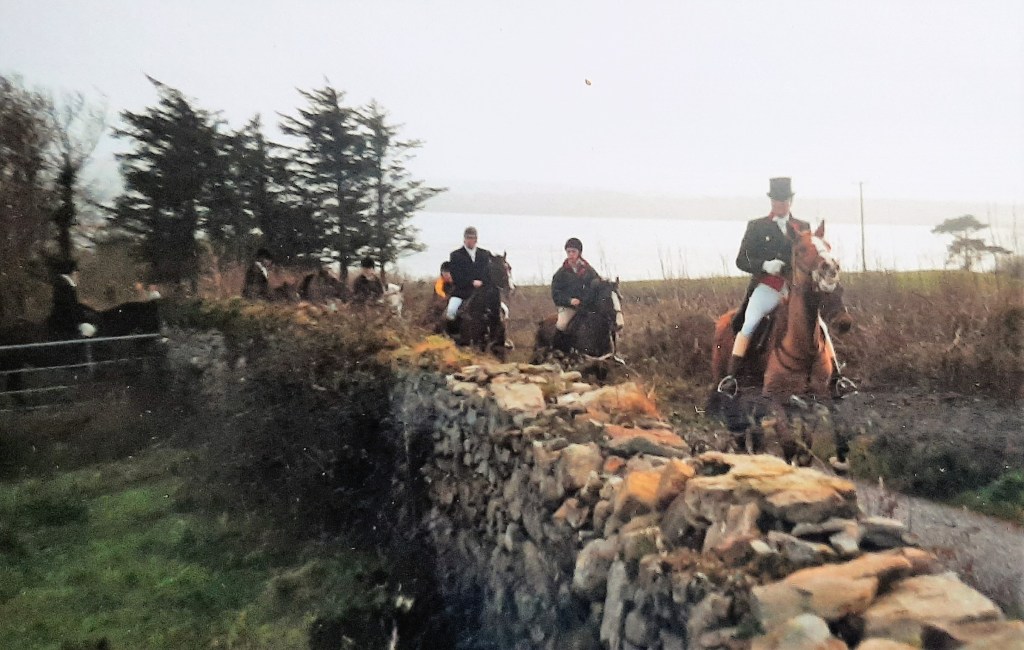
Gone are the days when the tenants of the Kilmore Estate were required to care for the beagle pack – each house had to keep two dogs. The dogs had to be well minded and fed by the tenants during the closed season. When the hunting season was due to commence the tenants returned the dogs to Mr. Hickman’s Kilmore House for inspection. If the dogs were not in good condition the tenant incurred severe penalties, such as a whipping from Mr Hickman. The hunt was a gala day for the landlords and the invited guests, as they traversed Upper and Lower Burrane and surrounding townlands. What a spectacle it was; magnificent horses ridden by dapper jockeys, swift eager beagles, all on the scent of a wily fox , who knew the hills of Burrane far better that the riders. At least, if they did not have a fox, they had some view over the estuary and beyond. A bowl of punch on the lawn of Bessborough House was the order of the day.
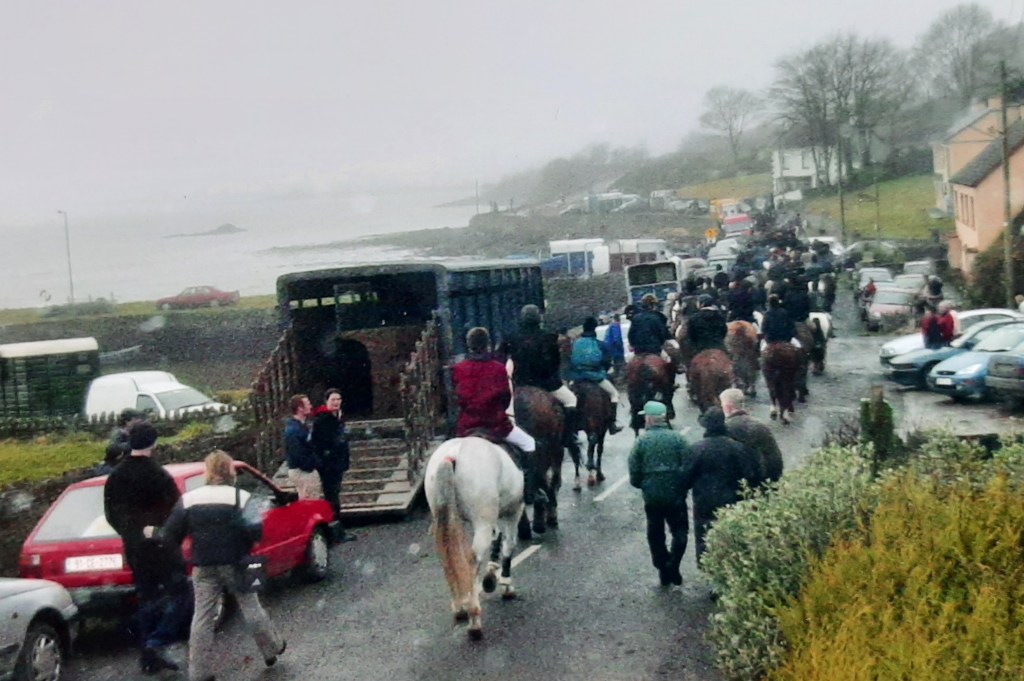
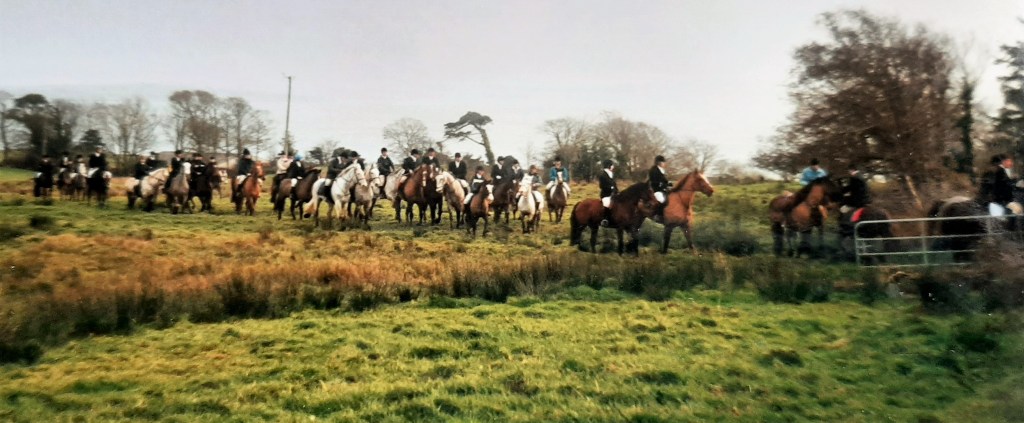
The original hunt was a live animal hunt which included deer (which were taken in from East Clare), fox or hare as quarry. This followed an open countryside course. The present day hunt has a predetermined course known as a drag hunt, which follows a laid scent. The route enters the land at Oaklands, Knock and continues to Upper Burrane, on to Donogrogue crossing the road at Poulnadaree, traversing Bessborough, on to Lower Burrane and concludes in Knock. The highlight of the hunt today is seeing the horses gallop over Burrane Hill, best viewed from the Lower Burrane Road.
In the 1960’s, before the pub opened in Killimer, drinks known as the ‘stirrup drink’ were served at Donogrogue Castle, compliments of Mary and Joe McInerney, similar to the Bessborough Estate custom of Mr Robert C. Reeves. Today a stop is taken at ‘The Brogue’, giving spectators an opportunity to view the horses and jockeys and dogs at close range. The culmination of the event is the finale in ‘The Hut’, in the picturesque village of Knock where a great evening is enjoyed by all. Up to 120 horses participate and in more recent times many of the jockeys are young, in contrast to when it was an adult-only sport. It is still probably one of the biggest hunts in the county. Denis Hassett has taken his role of co-ordinating the hunt course very seriously down through the years.
‘Hunt in Knock on St Stephen’s Day’
author unknown
In that neat little village,
that’s built on a rock,
The mob being strong
and the horseman being true
The captain rode out
With his ‘Beauty’ in view.
The next in the rush,
Like the wind in the trees,
was that hard riding hero,
bold volunteer Reeves.
Tom Studdert, Dick Barclay
And two or three more,
Rode as forward as ever
Till all things were o’er.
The gay little doctor
was there to be sure.
Far better able
to kill than to cure.
He fared better that day
Than St Stephens famed bird.
 Killimer Local History