-
St. Senan and St. Imy
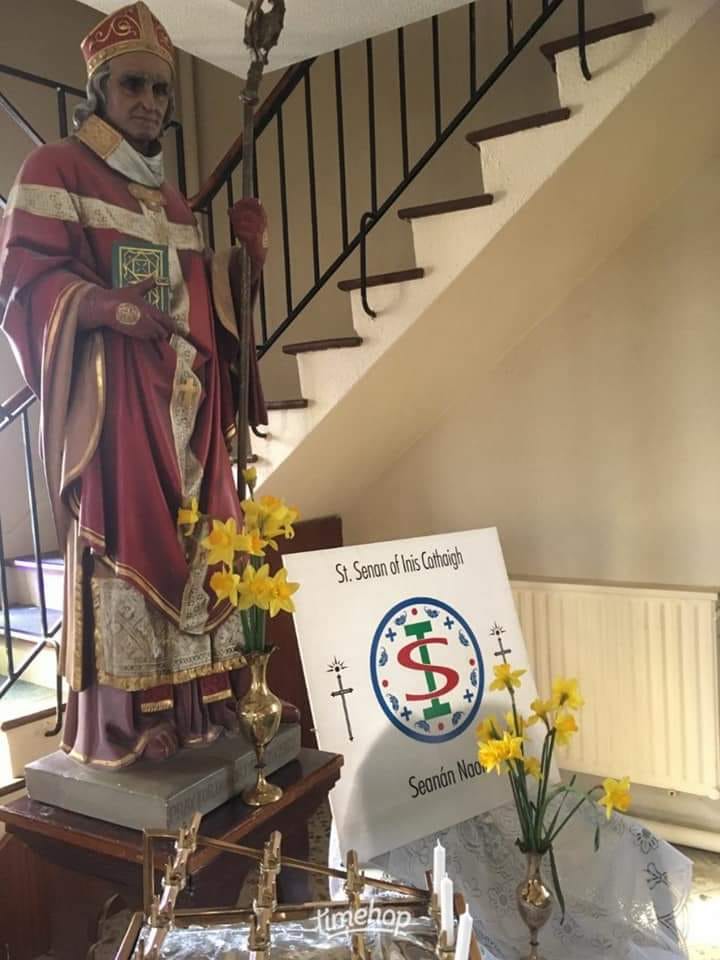
Few parishes have the unique distinction of having the birthplace of two saints, brother and sister, Senan and Imy. Many local children down through the years are named in their honour. Senan was born in 488A.D. and went on to become recognised as one of the Twelve Apostles of Ireland. He travelled much of Ireland and even the continent before returning home and setting up his monastery on Scattery Island. St Senan gained respect and became renowned abroad, partly due to his international pilgrimages.
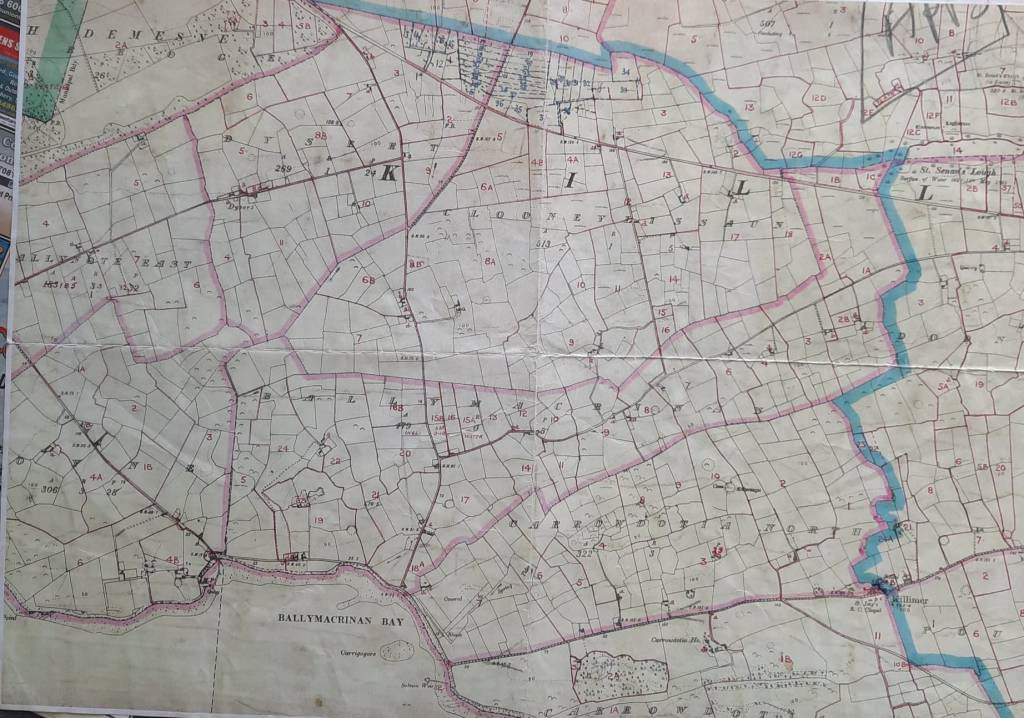
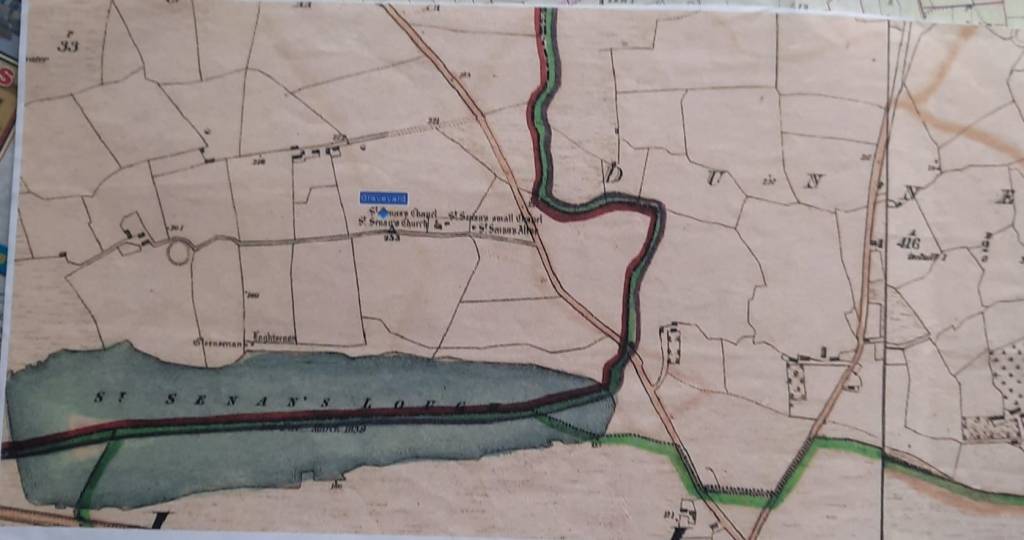
In 488 A.D. Senan was born to Erchan and Congella. Many miraculous happenings associated with St Senan have survived due to folklore, one being that during his birth his mother held on to a bush and it blossomed, which was quite unusual for the month of March and afterwards was known as Congella’s bush, also while Senan was walking with his mother when he was quite young, they got very thirsty, Senan pulled a rush and squeezed it and water appeared – the water continued to flow until a lake was formed which is now St Senan’s Lough. A prophecy says that if the lake forms in to the shape of a fiddle it would signify the end of the world! The story is also told of Senan’s wish to go to a spiritual gathering, his father ordered him to stay at home to keep the crows from eating the corn. Tradition has it that Senan when all the family had gone, commanded the crows to go into the shed, he then joined the prayer gathering much to the annoyance of his father – when they got home the crows were still in the shed and of course the corn safe.
As Senan got older his life centred on prayer, fasting and wishing to consecrate his life to God. He accordingly placed himself under the guidance of Cassidan a monk originally from South West Cork, then he moved to Kilmanagh (Ossary) under the tutorship of Natalis to the monastery to continue his preparation for the religious life, from there his work led him as priest and later as bishop to many places Enniscorthy, Iniscarra on the river Lee, Wales, Cornwall, France and Rome. Later returning back home to Clare where he founded his monastery on Inis Cathaigh (Scattery Island). Many men who became monks joined him there. The story goes that as water was very scarce on the island, the monks were often obliged to carry water to the island from the mainland not only for themselves but also for their domestic animals. Senan had a vision one night, when an angel directed him to a spot and in the morning there was a well of pure fresh water at that spot.
On Inis Cathaigh there was a dangerous Cathach (snake). Senan is believed to have banished him off the island and it is said that Cathach did not stop until he landed in Doolough Lake. (It is ironic that the parish is now supplied by water from that lake).
Senan and his monks and laymen constructed many buildings including six churches, a school, a scriptorium and the round tower, which was one of the tallest in Ireland also it has the distinction of being one of two round towers with the entrance doors at ground level. Many people in West Clare helped in the buildings on the island by donating stones and other materials, in thanksgiving for cures and even miracles.
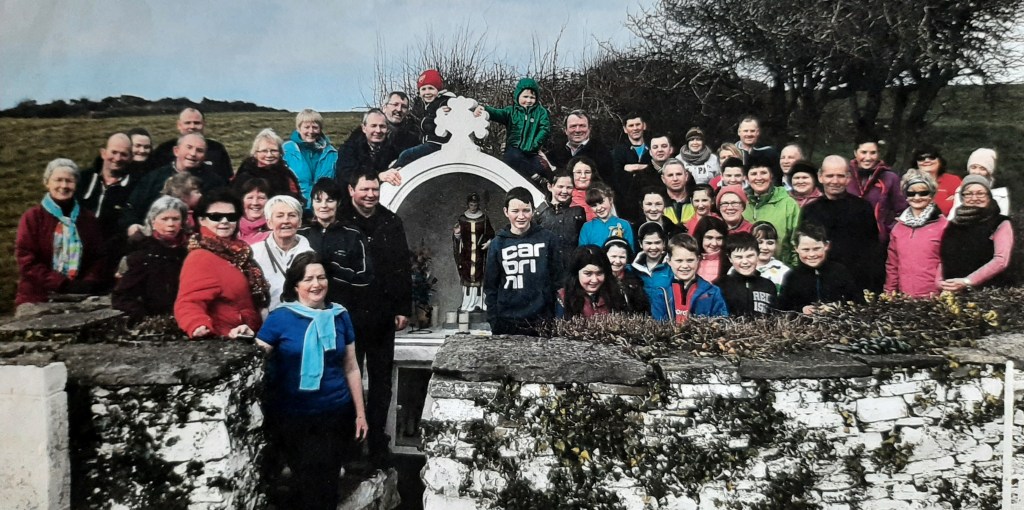
Senan and his monks spread the Christian message to all the communities in the surrounding areas, and also established an order for women at Kylenagallach in Carrigaholt Parish. It is believed that Senan had banned women from the island. The story goes that one brave lady “Ceannaire” insisted on visiting the island but died before getting on the land and was buried on the shore! Senan died in Kylenagallach in 544 and was buried on the island at Leaba Seanain. The feast of St Senan is March 8th and his birthplace in Molougha has been a place of pilgrimage over the years. The day for the pilgrimage is June 29th. The pilgrimage consists of “Rounds” and saying the rosary repeatedly.
The water from the well at Molougha is valued as a cure for various things. It is particularly valued as a cure for horses and other animals. It is supposed to protect cabbage from caterpillars. It is also credited with curing blindness and other disabilities.
Home
 Killimer Local History